Schulz Nadine, Chaachouay Hassan, Nytko Katarzyna J, Weyland Mathias S, Roos Malgorzata, Füchslin Rudolf M, Guscetti Franco, Scheidegger Stephan, Rohrer Bley Carla
Division of Radiation Oncology, Vetsuisse Faculty University of Zurich, CH-8057 Zurich, Switzerland.
Center for Applied Biotechnology and Molecular Medicine (CABMM), University of Zurich, CH-8057 Zurich, Switzerland.
Int J Mol Sci. 2017 Jun 1;18(6):1176. doi: 10.3390/ijms18061176.
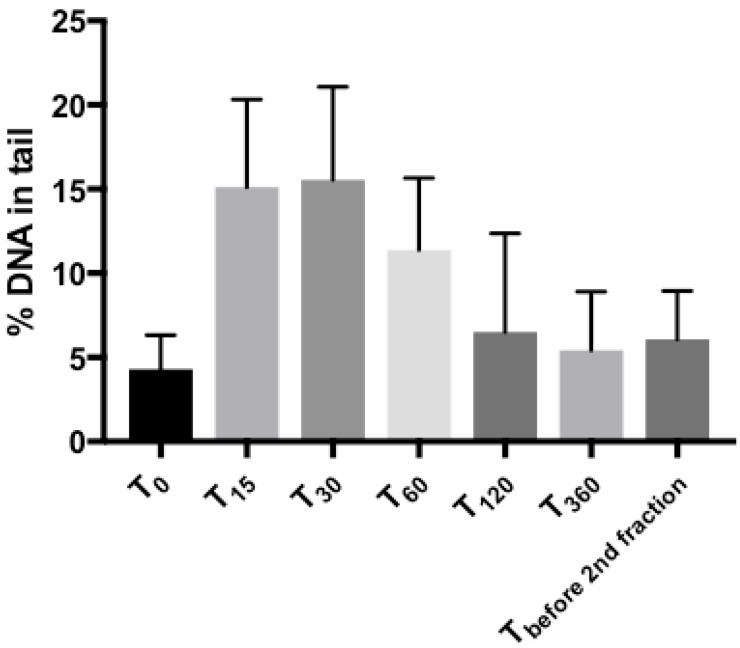
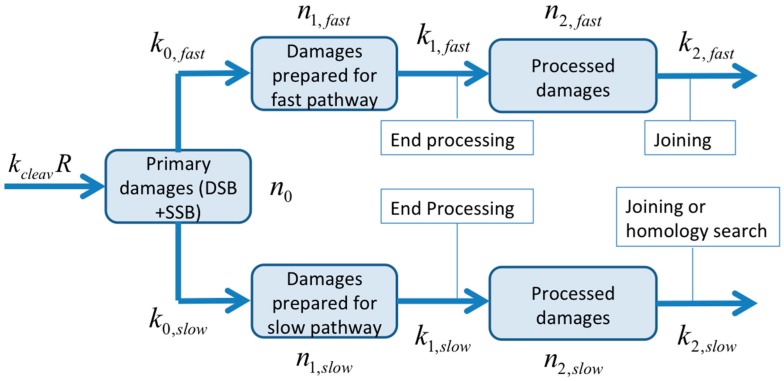
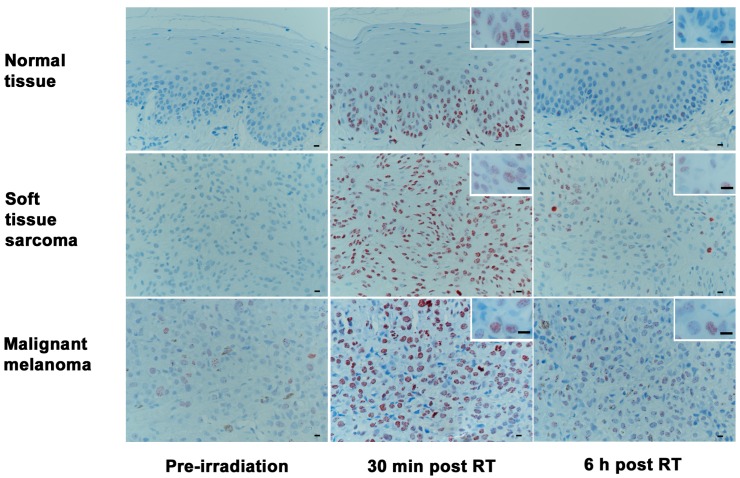
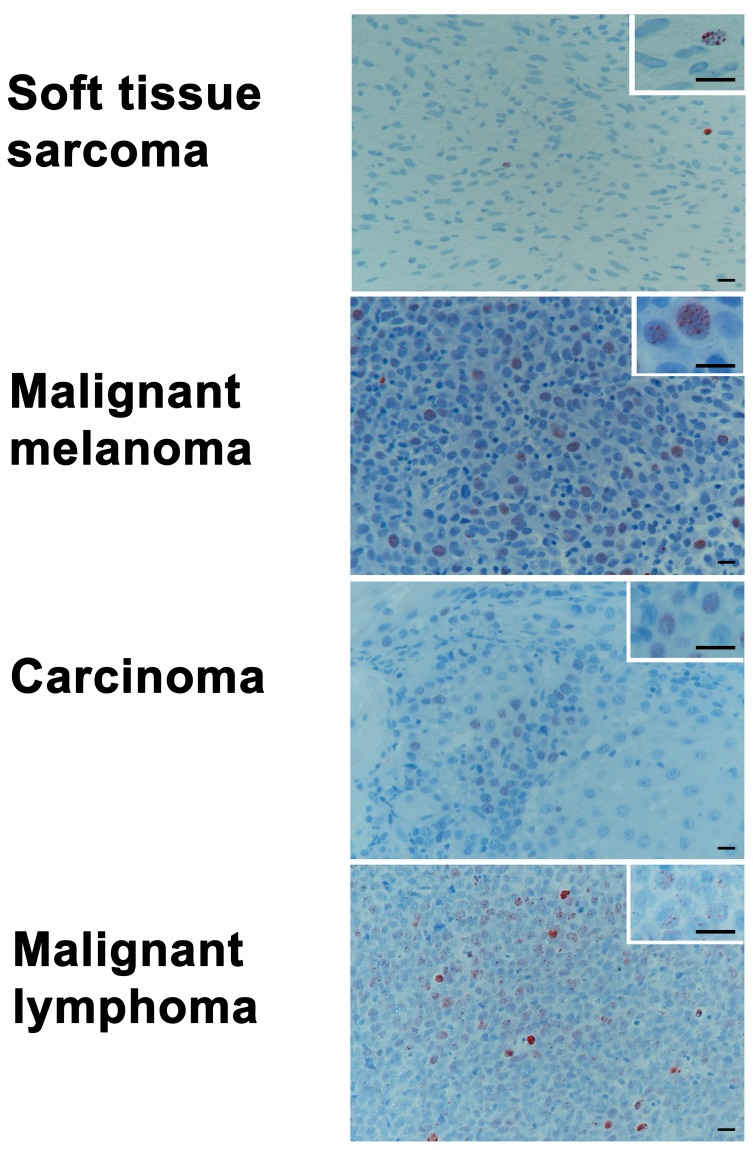
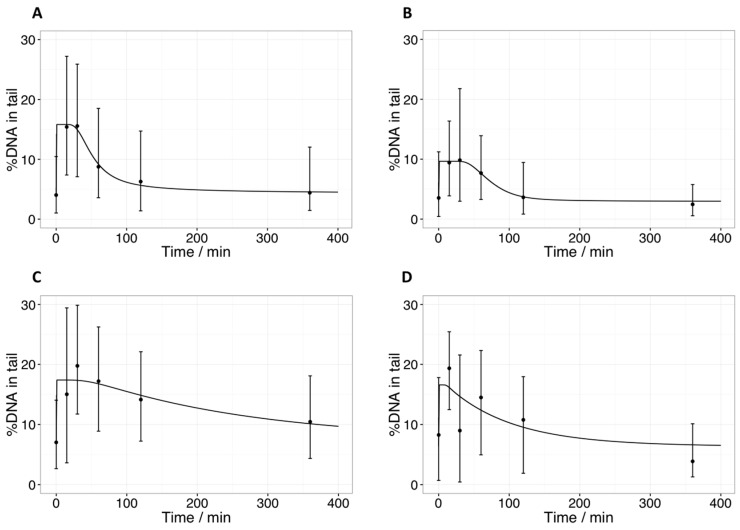
Time resolved data of DNA damage and repair after radiotherapy elucidates the relation between damage, repair, and cell survival. While well characterized in vitro, little is known about the time-course of DNA damage response in tumors sampled from individual patients. Kinetics of DNA damage after radiotherapy was assessed in eight dogs using repeated in vivo samples of tumor and co-irradiated normal tissue analyzed with comet assay and phosphorylated H2AX (γH2AX) immunohistochemistry. In vivo results were then compared (in silico) with a dynamic mathematical model for DNA damage formation and repair. Maximum %DNA in tail was observed at 15-60 min after irradiation, with a rapid decrease. Time-courses of γH2AX-foci paralleled these findings with a small time delay and were not influenced by covariates. The evolutionary parameter search based on %DNA in tail revealed a good fit of the DNA repair model to in vivo data for pooled sarcoma time-courses, but fits for individual sarcoma time-courses suffer from the heterogeneous nature of the in vivo data. It was possible to follow dynamics of comet tail intensity and γH2AX-foci during a course of radiation using a minimally invasive approach. DNA repair can be quantitatively investigated as time-courses of individual patients by integrating this resulting data into a dynamic mathematical model.
放疗后DNA损伤与修复的时间分辨数据阐明了损伤、修复与细胞存活之间的关系。虽然在体外已得到充分表征,但对于从个体患者采集的肿瘤中DNA损伤反应的时间进程却知之甚少。使用彗星试验和磷酸化H2AX(γH2AX)免疫组织化学对八只犬的肿瘤及共同照射的正常组织进行重复的体内采样,评估放疗后DNA损伤的动力学。然后将体内结果与DNA损伤形成和修复的动态数学模型进行(计算机模拟)比较。照射后15 - 60分钟观察到尾部DNA百分比最高,随后迅速下降。γH2AX焦点的时间进程与这些发现平行,但有一小段时间延迟,且不受协变量影响。基于尾部DNA百分比的进化参数搜索显示,DNA修复模型与合并的肉瘤时间进程的体内数据拟合良好,但个体肉瘤时间进程的拟合受到体内数据异质性的影响。使用微创方法可以在放疗过程中跟踪彗星尾强度和γH2AX焦点的动态变化。通过将这些结果数据整合到动态数学模型中,可以将DNA修复作为个体患者的时间进程进行定量研究。