Liu Xiang-Ping, Yu Long-Xi
United States Department of Agriculture-Agricultural Research Service, Plant Germplasm Introduction and Testing ResearchProsser, WA, United States.
College of Animal Science and Veterinary Medicine, Heilongjiang Bayi Agricultural UniversityDaqing, China.
Front Plant Sci. 2017 May 24;8:853. doi: 10.3389/fpls.2017.00853. eCollection 2017.
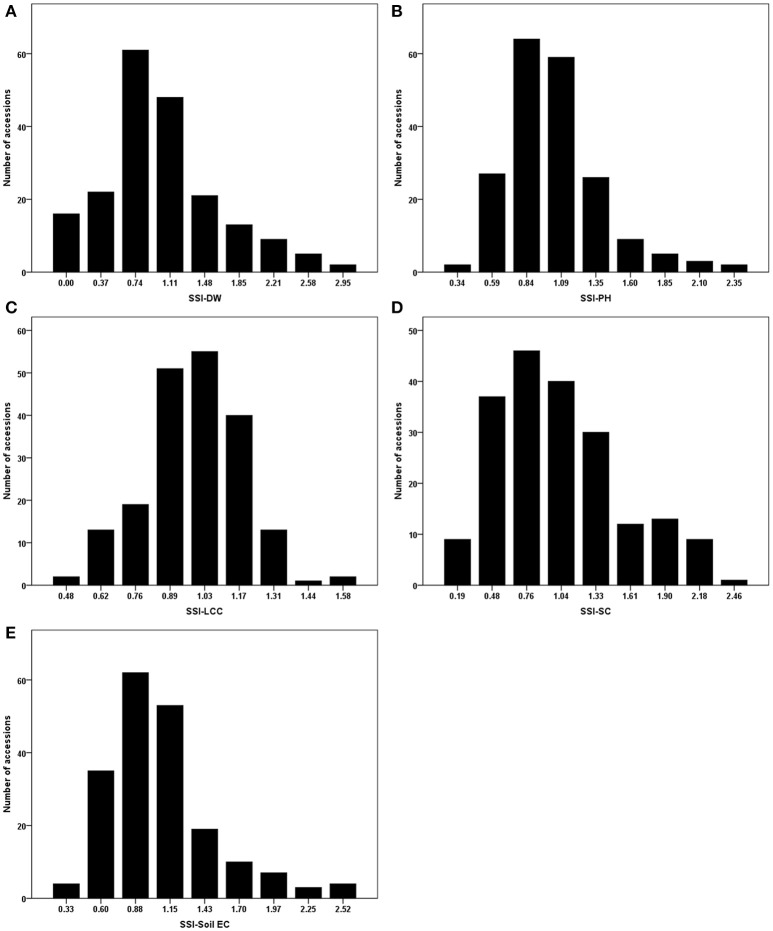
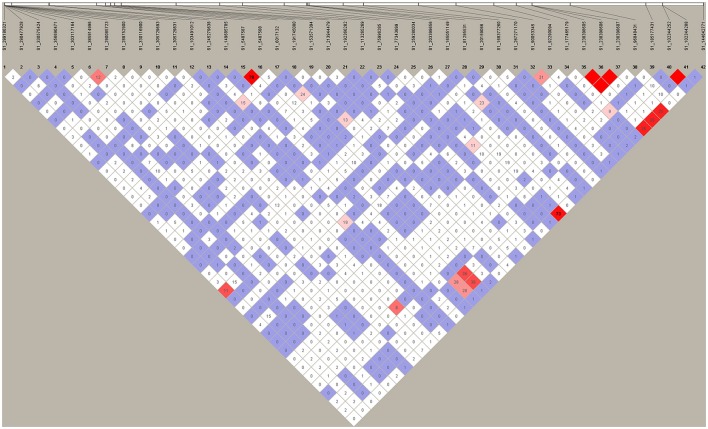
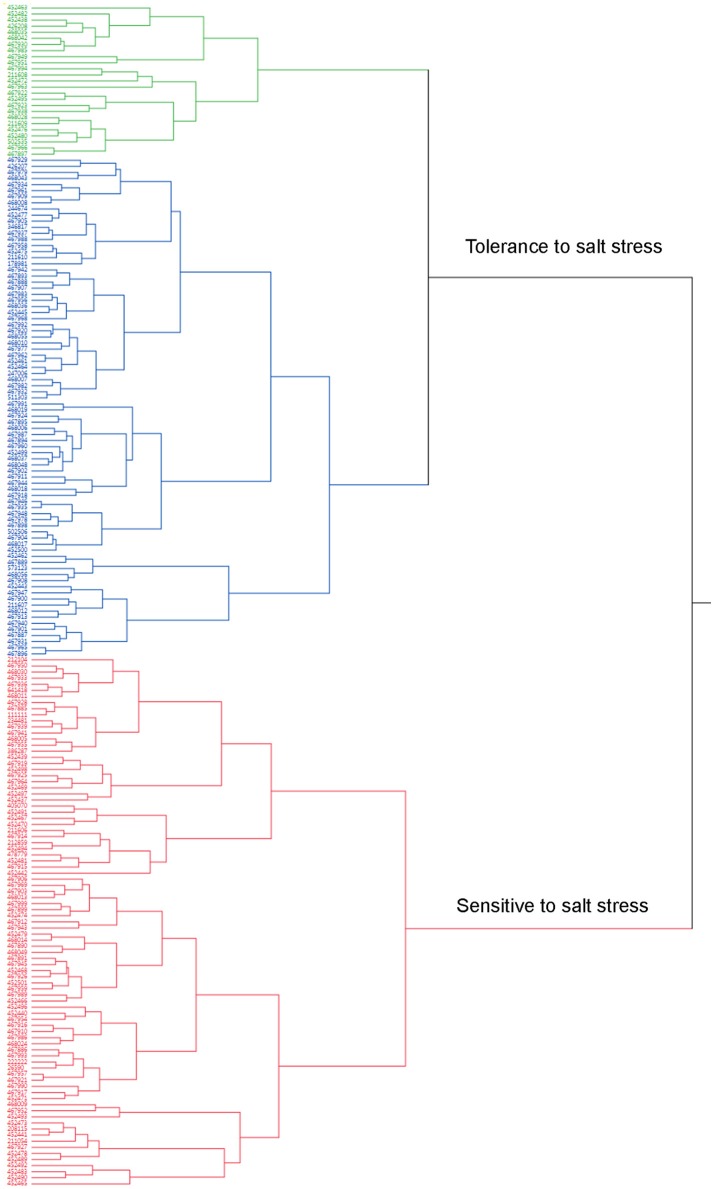
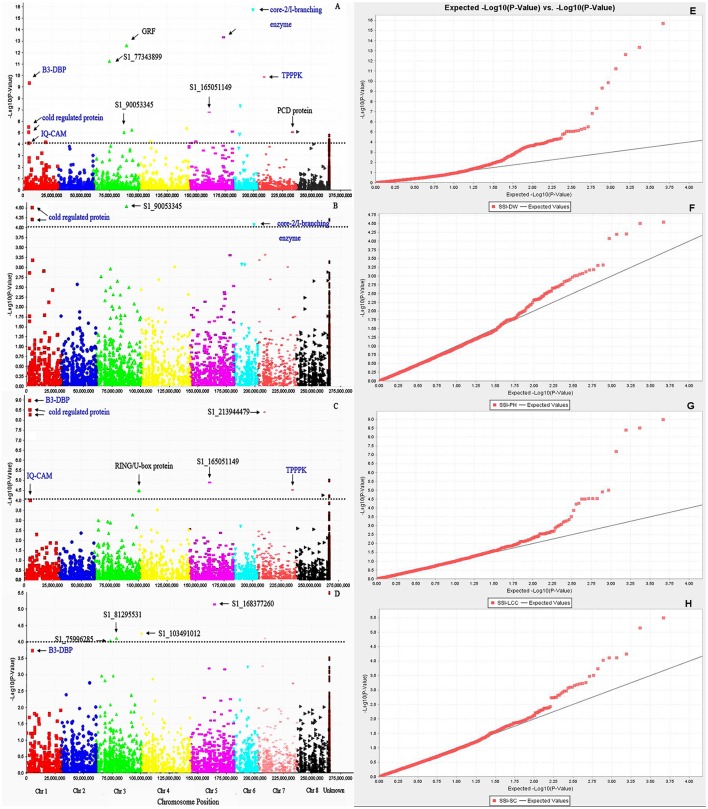
Salinity tolerance is highly desirable to sustain alfalfa production in marginal lands that have been rendered saline. In this study, we used a diverse panel of 198 alfalfa accessions for mapping loci associated with plant growth and forage production under salt stress using genome-wide association studies (GWAS). The plants were genotyped using genotyping-by-sequencing (GBS). A greenhouse procedure was used for phenotyping four agronomic and physiological traits affected by salt stress, including dry weight (DW), plant height (PH), leaf chlorophyll content (LCC), and stomatal conductance (SC). For each trait, a stress susceptibility index (SSI) was used to evaluate plant performance under stressed and non-stressed conditions. Marker-trait association identified a total of 42 markers significantly associated with salt tolerance. They were located on all chromosomes except chromosome 2 based on the alignment of their flanking sequences to the reference genome (). Of those identified, 13 were associated with multiple traits. Several loci identified in the present study were also identified in previous reports. BLAST search revealed that 19 putative candidate genes linked to 24 significant markers. Among them, B3 DNA-binding protein, Thiaminepyrophosphokinase and IQ calmodulin-binding motif protein were identified among multiple traits in the present and previous studies. With further investigation, these markers and candidates would be useful for developing markers for marker-assisted selection in breeding programs to improve alfalfa cultivars with enhanced tolerance to salt stress.
耐盐性对于维持在已盐碱化的边际土地上的苜蓿生产非常重要。在本研究中,我们使用了由198份苜蓿种质组成的多样化群体,通过全基因组关联研究(GWAS)来定位与盐胁迫下植物生长和牧草产量相关的基因座。使用简化基因组测序(GBS)对植株进行基因分型。采用温室试验程序对受盐胁迫影响的四个农艺和生理性状进行表型分析,包括干重(DW)、株高(PH)、叶片叶绿素含量(LCC)和气孔导度(SC)。对于每个性状,使用胁迫敏感性指数(SSI)来评估植株在胁迫和非胁迫条件下的表现。标记-性状关联分析共鉴定出42个与耐盐性显著相关的标记。根据其侧翼序列与参考基因组的比对,它们位于除2号染色体外的所有染色体上。在鉴定出的标记中,有13个与多个性状相关。本研究中鉴定出的几个基因座在先前的报道中也有发现。BLAST搜索显示,19个推定的候选基因与24个显著标记相关。其中,B3 DNA结合蛋白、硫胺素焦磷酸激酶和IQ钙调蛋白结合基序蛋白在本研究和先前研究的多个性状中均有鉴定。通过进一步研究,这些标记和候选基因将有助于在育种计划中开发用于标记辅助选择的标记,以培育出对盐胁迫耐受性增强的苜蓿品种。