Sanad Marwa N M E, Campbell Kimberley Garland, Gill Kulvinder S
Crop and Soil Sciences Department, Washington State University, Pullman, WA, USA.
Genetics and Cytology Department, National Research Center, Giza, Egypt.
Bot Stud. 2016 Dec;57(1):35. doi: 10.1186/s40529-016-0149-3. Epub 2016 Nov 3.
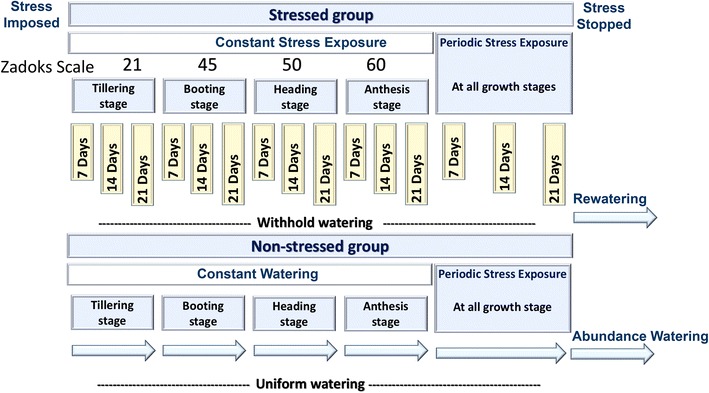
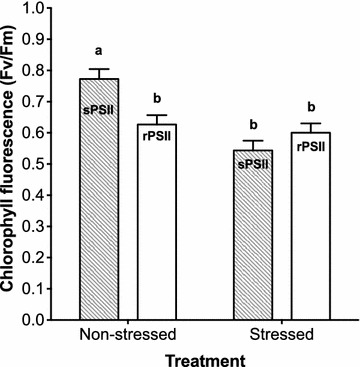
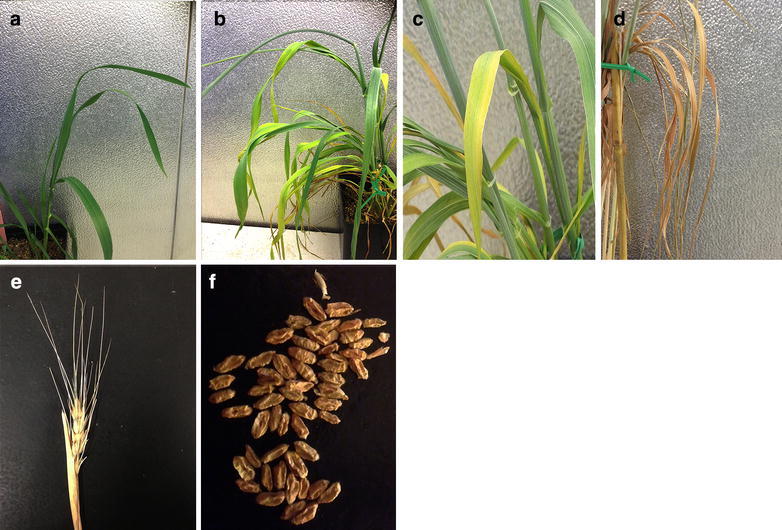
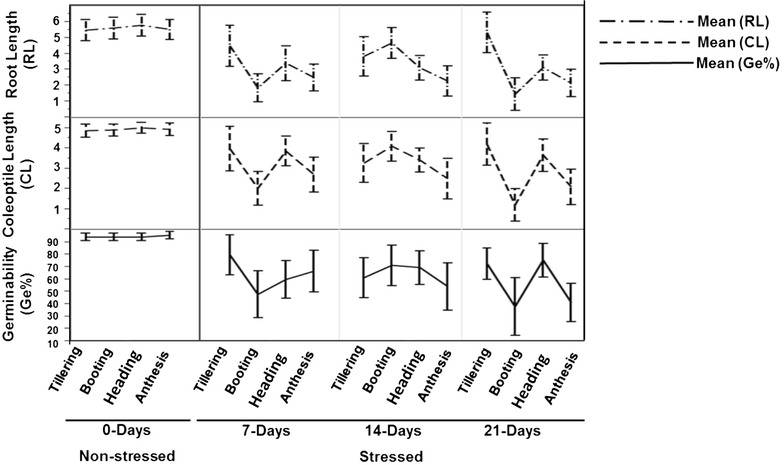
Developing drought-tolerant crops critically depends on the efficient response of a genotype to the limited water availability, a trait known as phenological plasticity. Our understanding of the phenological plasticity remains limited, in particular, about its relationships with plant developmental program. Here, we examined the plastic response of spring wheat at tillering, booting, heading, and anthesis stages to constant or periodic drought stress. The response was assessed by morphological and physiological parameters including symptoms.
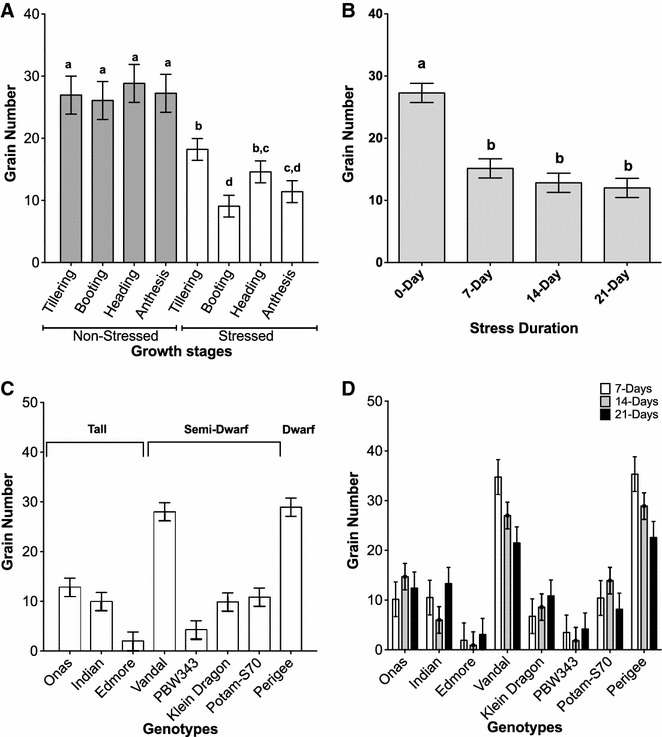
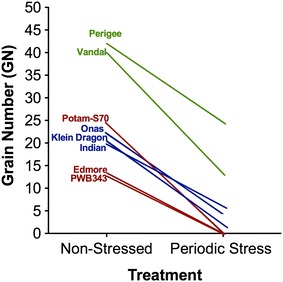
The dynamics of morphological symptoms were indicators of the plasticity identification of drought. We found that spring wheat exhibits higher phenological plasticity during tillering stage followed by the heading stage, while booting and anthesis stages are the most sensitive. Also, the adaptive response is thought to be influenced with the plant height genes. Furthermore, periodic stress caused more pronounced inhibition of yield than the constant stress, with limited resistance resolution under long period.
Our study shows the importance of considering the phenological plasticity in designing screens for drought tolerance in spring wheat and proposes tillering as the most informative stage for capturing genotypes with tolerance to limit water availability.
培育耐旱作物关键取决于基因型对有限水分可利用性的有效响应,这一特性被称为物候可塑性。我们对物候可塑性的理解仍然有限,尤其是其与植物发育程序的关系。在此,我们研究了春小麦在分蘖期、孕穗期、抽穗期和开花期对持续或周期性干旱胁迫的可塑性响应。通过包括症状在内的形态学和生理学参数评估该响应。
形态症状动态是干旱可塑性识别的指标。我们发现春小麦在分蘖期表现出较高的物候可塑性,其次是抽穗期,而孕穗期和开花期最为敏感。此外,适应性响应被认为受株高基因影响。此外,周期性胁迫比持续胁迫对产量的抑制作用更明显,长期胁迫下抗性恢复有限。
我们的研究表明在设计春小麦耐旱筛选时考虑物候可塑性的重要性,并提出分蘖期是筛选耐有限水分基因型最具信息价值的阶段。