Platform Technologies and Science, GlaxoSmithKline, Stevenage SG1 2NY, UK.
EastChem School of Chemistry, University of Edinburgh, Edinburgh EH9 3FJ, UK.
Nat Commun. 2017 Jun 12;8:15827. doi: 10.1038/ncomms15827.
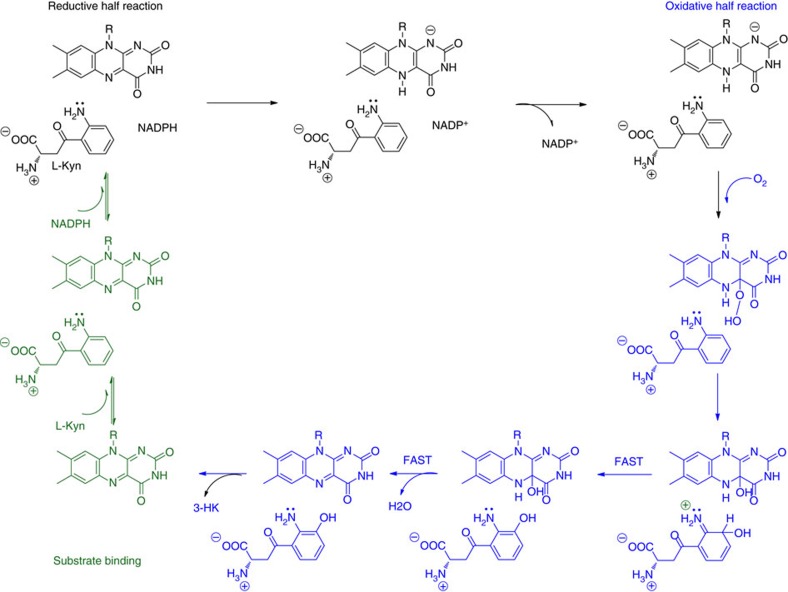
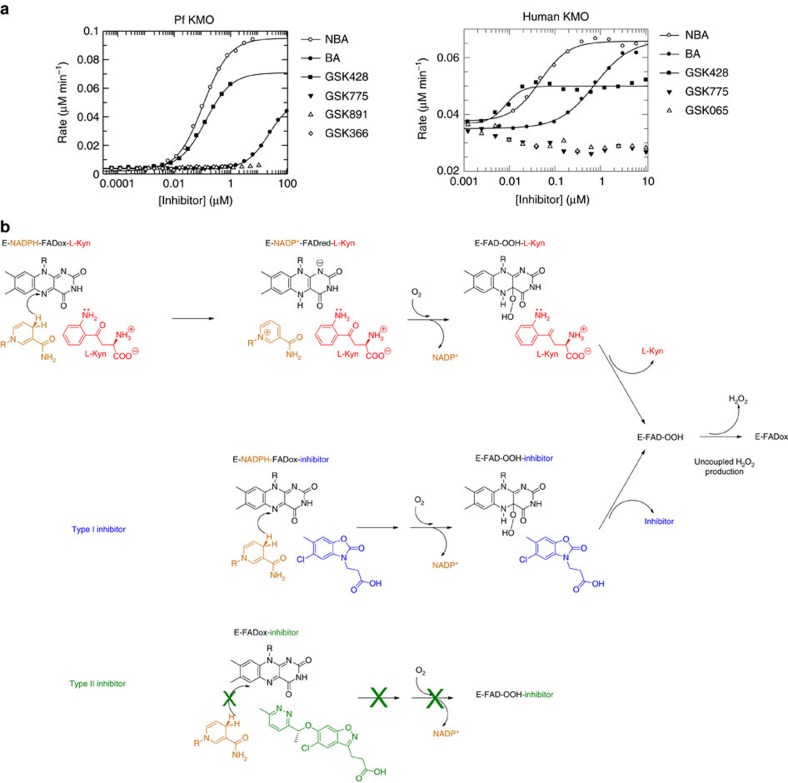
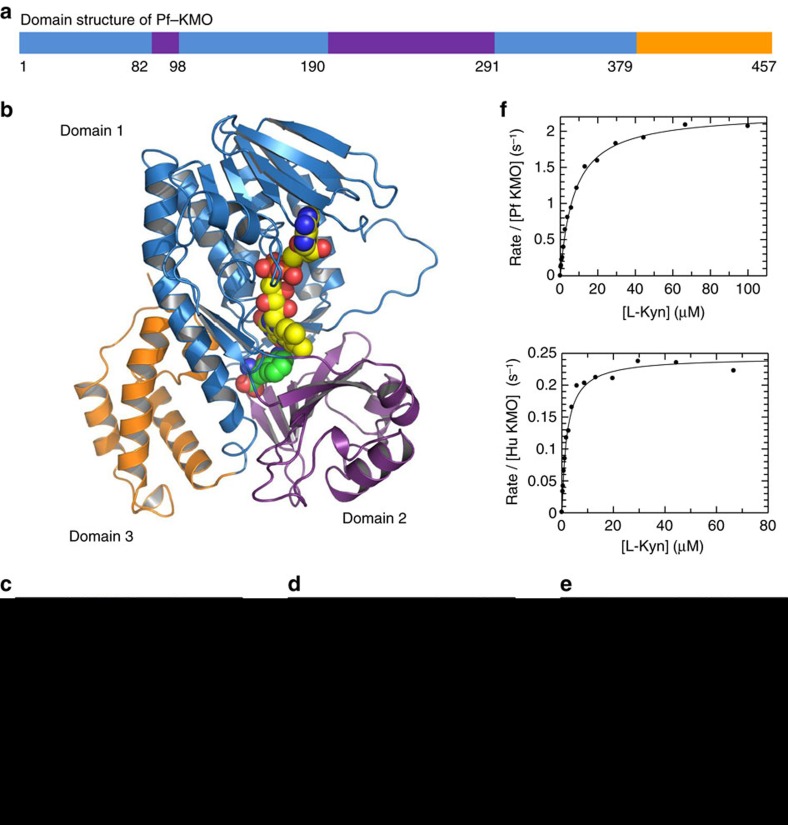
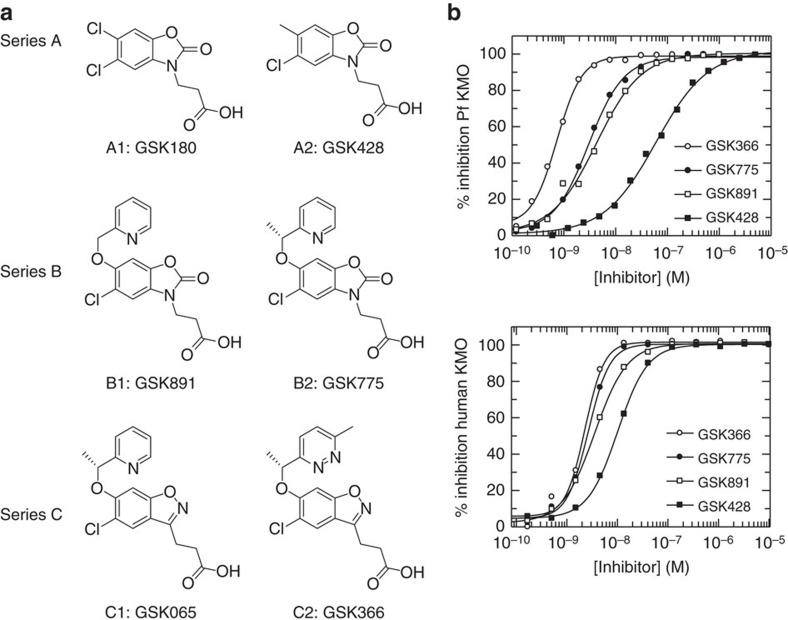
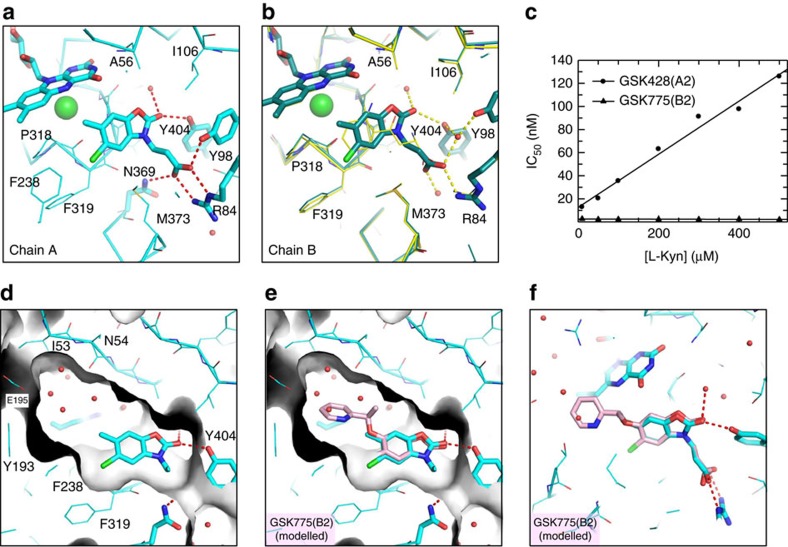
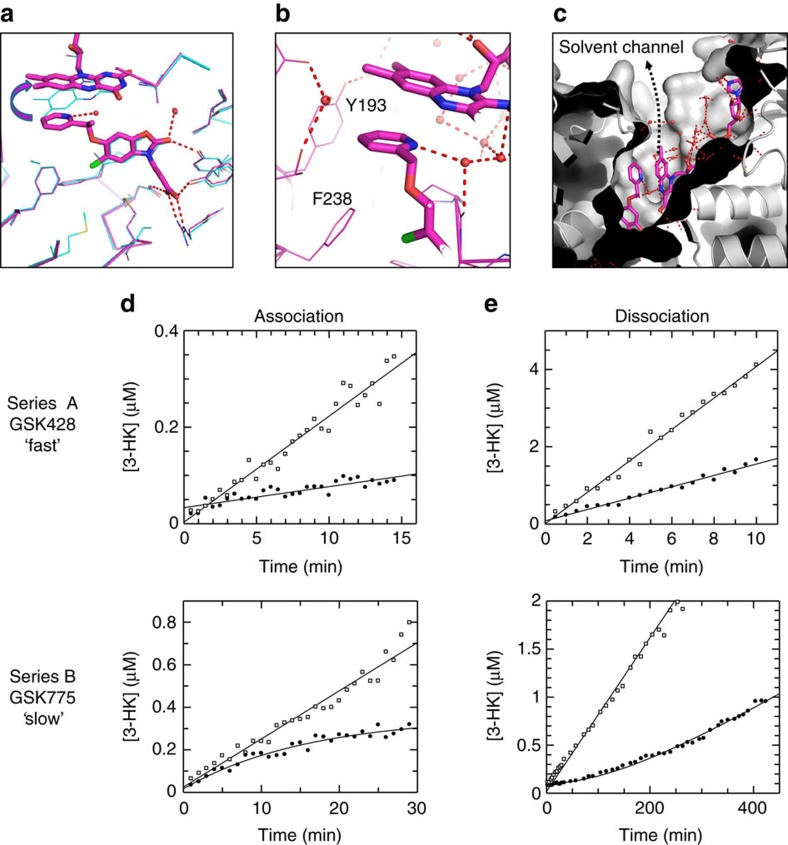
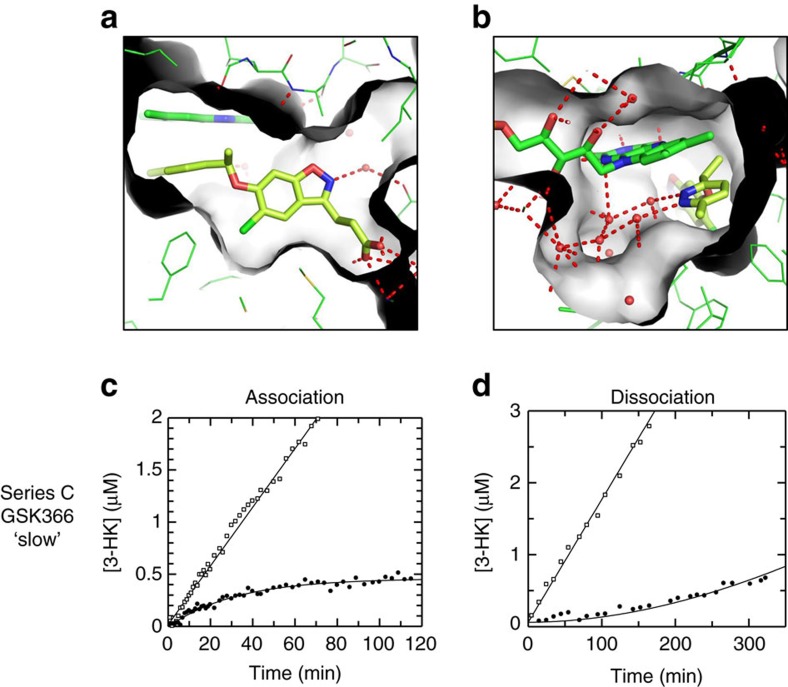
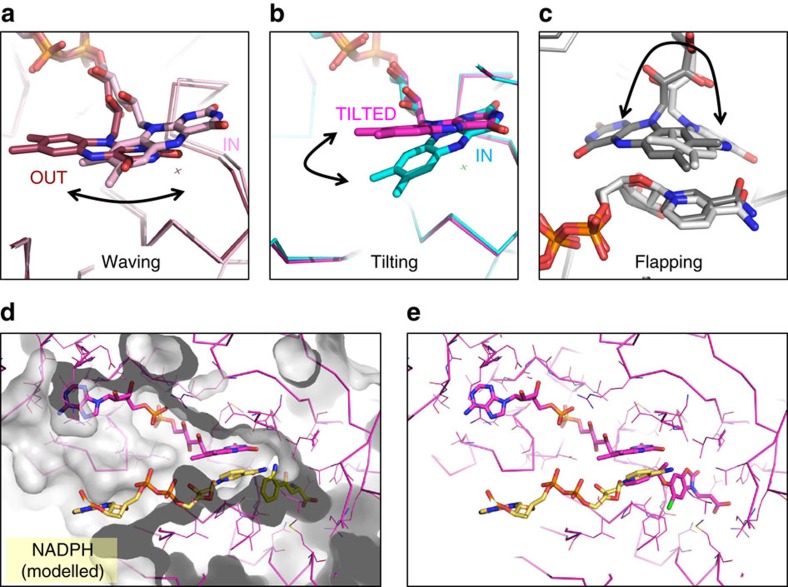
Kynurenine-3-monooxygenase (KMO) is a key FAD-dependent enzyme of tryptophan metabolism. In animal models, KMO inhibition has shown benefit in neurodegenerative diseases such as Huntington's and Alzheimer's. Most recently it has been identified as a target for acute pancreatitis multiple organ dysfunction syndrome (AP-MODS); a devastating inflammatory condition with a mortality rate in excess of 20%. Here we report and dissect the molecular mechanism of action of three classes of KMO inhibitors with differentiated binding modes and kinetics. Two novel inhibitor classes trap the catalytic flavin in a previously unobserved tilting conformation. This correlates with picomolar affinities, increased residence times and an absence of the peroxide production seen with previous substrate site inhibitors. These structural and mechanistic insights culminated in GSK065(C1) and GSK366(C2), molecules suitable for preclinical evaluation. Moreover, revising the repertoire of flavin dynamics in this enzyme class offers exciting new opportunities for inhibitor design.
犬尿氨酸-3-单加氧酶(KMO)是色氨酸代谢中一种关键的黄素腺嘌呤二核苷酸(FAD)依赖性酶。在动物模型中,KMO 抑制已显示出在亨廷顿病和阿尔茨海默病等神经退行性疾病中的益处。最近,它被确定为急性胰腺炎多器官功能障碍综合征(AP-MODS)的靶点;这是一种破坏性的炎症性疾病,死亡率超过 20%。在这里,我们报告并剖析了具有不同结合模式和动力学的三类 KMO 抑制剂的作用机制。两种新型抑制剂类将催化黄素固定在以前未观察到的倾斜构象中。这与皮摩尔亲和力、延长的停留时间以及与以前的底物结合位点抑制剂中观察到的过氧化物产生相吻合。这些结构和机制上的见解最终得到了 GSK065(C1)和 GSK366(C2)两种分子,它们适合进行临床前评估。此外,对该酶类中黄素动力学的改变提供了激动人心的抑制剂设计新机会。