Dalle Carbonare Luca, Mottes Monica, Malerba Giovanni, Mori Antonio, Zaninotto Martina, Plebani Mario, Dellantonio Alessandra, Valenti Maria Teresa
Department of Medicine, Internal Medicine, Section D, University of Verona, Piazzale Scuro, 10, 37134 Verona, Italy.
Department of Neurosciences, Biomedicine and Movement Sciences, University of Verona, Piazzale Scuro, 10, 37134 Verona, Italy.
Int J Mol Sci. 2017 Jun 13;18(6):1261. doi: 10.3390/ijms18061261.
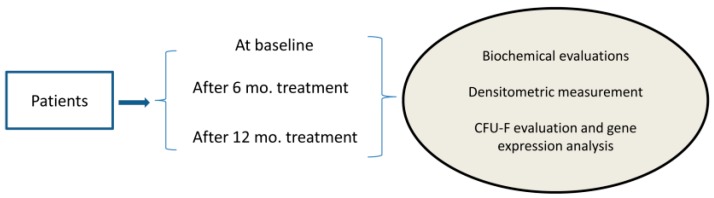
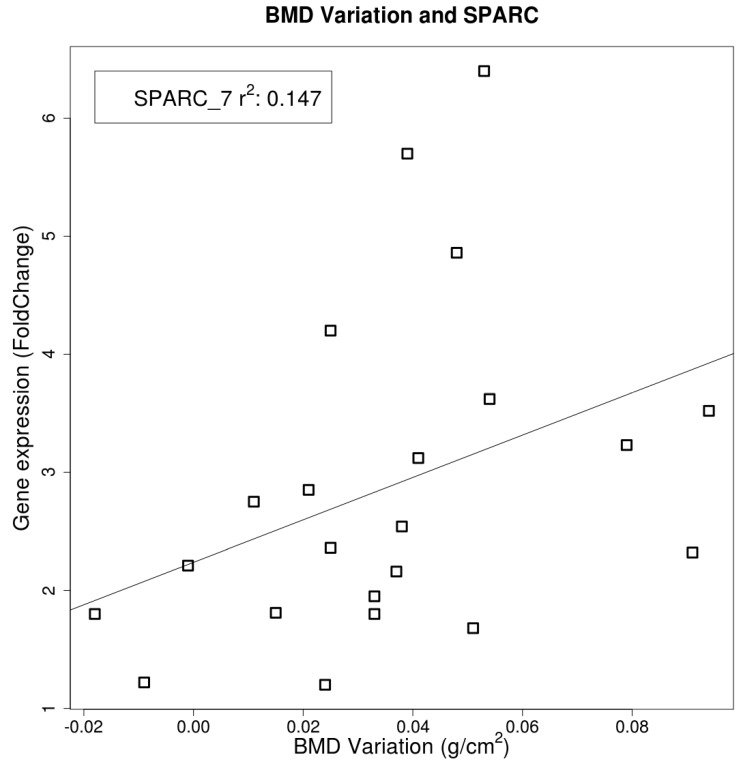
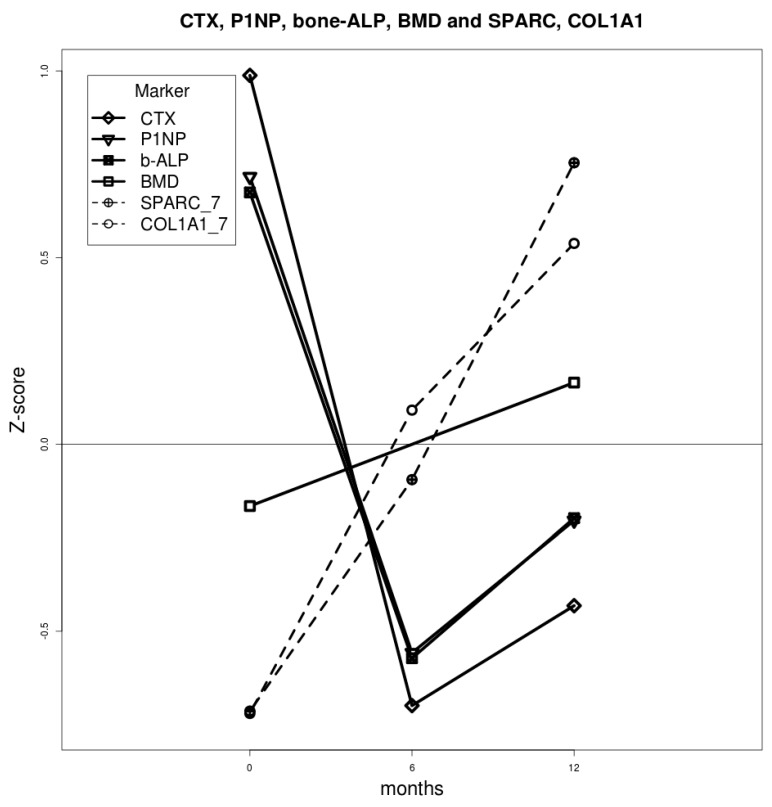
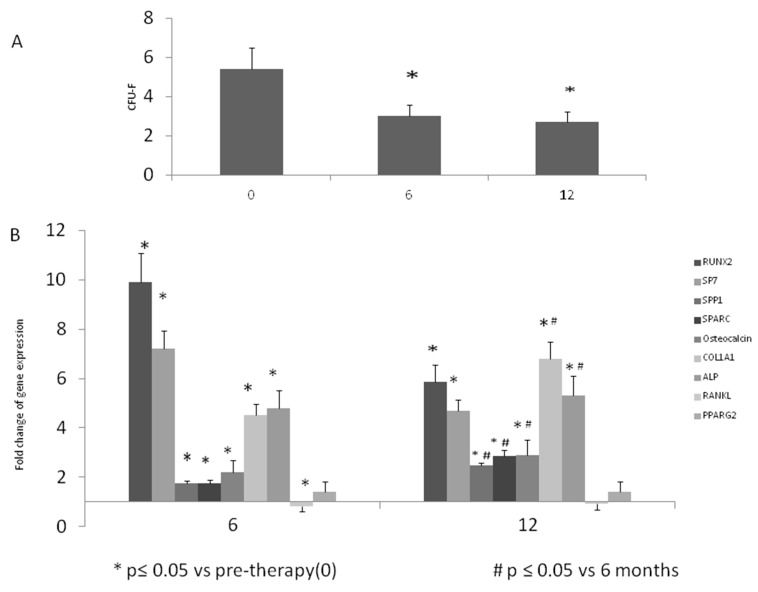
Bisphosphonates are well known inhibitors of osteoclast activity and thus may be employed to influence osteoblast activity. The present study was designed to evaluate the in vivo effects of zoledronic acid (ZA) on the proliferation and osteoblastic commitment of mesenchymal stem cells (MSC) in osteoporotic patients. We studied 22 postmenopausal osteoporotic patients. Densitometric, biochemical, cellular and molecular data were collected before as well as after 6 and 12 months of ZA treatment. Peripheral blood MSC-like cells were quantified by colony-forming unit fibroblastic assay; their osteogenic differentiation potential was evaluated after 3 and 7 days of induction, respectively. Circulating MSCs showed significantly increased expression levels of osteoblastic marker genes such as Runt-related transcription factor 2 (), and Osteonectin () during the 12 months of monitoring time. Lumbar bone mineral density (BMD) variation and SPARC gene expression correlated positively. Bone turnover marker levels were significantly lowered after ZA treatment; the effect was more pronounced for C terminal telopeptide (CTX) than for Procollagen Type 1 N-Terminal Propeptide (P1NP) and bone alkaline phosphatase (bALP). Our findings suggest a discrete anabolic activity supported by osteogenic commitment of MSCs, consequent to ZA treatment. We confirm its anabolic effects in vivo on osteogenic precursors.
双膦酸盐是众所周知的破骨细胞活性抑制剂,因此可用于影响成骨细胞活性。本研究旨在评估唑来膦酸(ZA)对骨质疏松症患者间充质干细胞(MSC)增殖和成骨细胞定向分化的体内作用。我们研究了22名绝经后骨质疏松症患者。在ZA治疗前以及治疗6个月和12个月后收集了骨密度、生化、细胞和分子数据。通过集落形成单位成纤维细胞试验对外周血中类似MSC的细胞进行定量;分别在诱导3天和7天后评估其成骨分化潜能。在12个月的监测期内,循环中的间充质干细胞显示成骨细胞标记基因如Runt相关转录因子2()和骨连接蛋白()的表达水平显著增加。腰椎骨密度(BMD)变化与SPARC基因表达呈正相关。ZA治疗后骨转换标志物水平显著降低;对C末端肽(CTX)的影响比对I型前胶原N末端前肽(P1NP)和骨碱性磷酸酶(bALP)的影响更明显。我们的研究结果表明,ZA治疗后,间充质干细胞的成骨定向分化支持了一种离散的合成代谢活性。我们证实了其在体内对成骨前体细胞的合成代谢作用。