Xie Xinni, Chen Wei, Zhang Ning, Yuan Mei, Xu Cheng, Zheng Zhibing, Li Hua, Wang Lili
Beijing Institute of Pharmacology and ToxicologyBeijing, China.
State Key Laboratory of Toxicology and Medical CountermeasuresBeijing, China.
Front Pharmacol. 2017 May 30;8:317. doi: 10.3389/fphar.2017.00317. eCollection 2017.
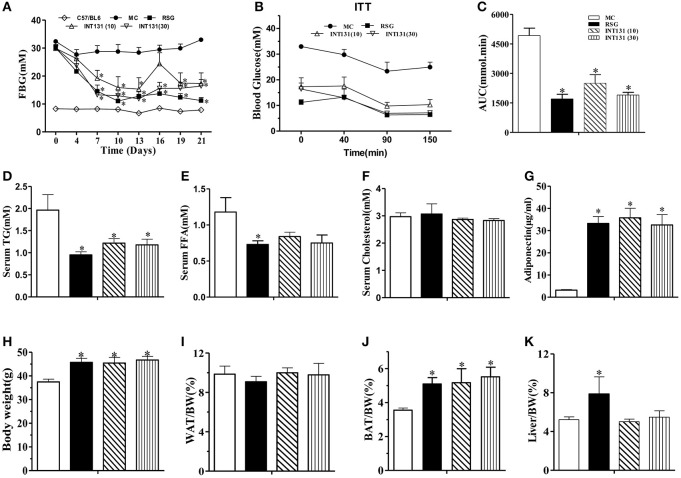
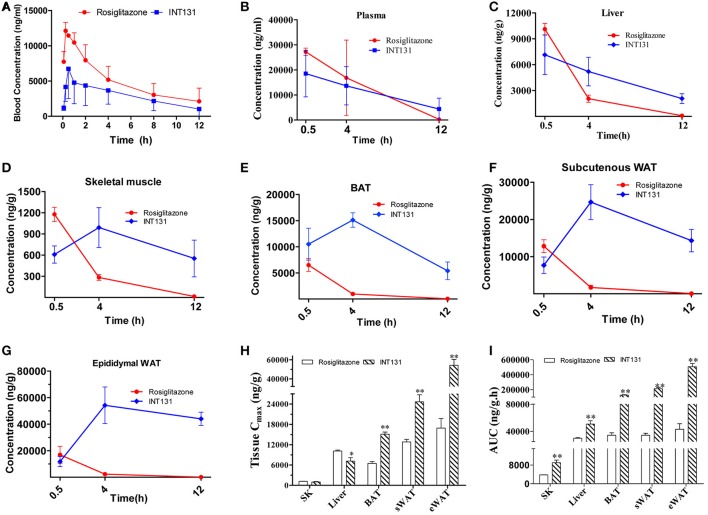
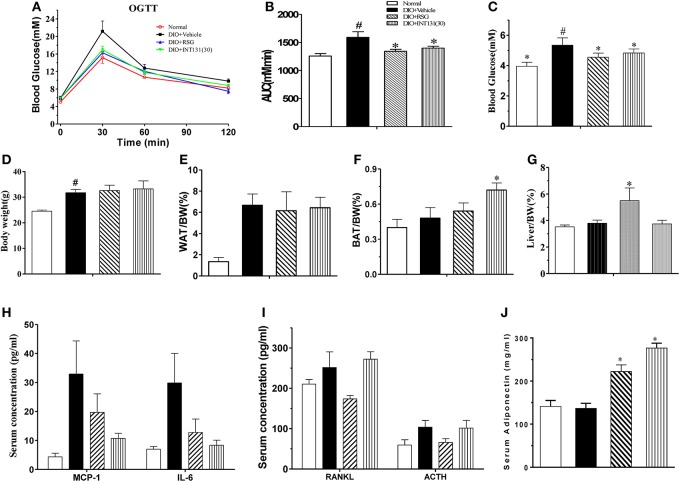
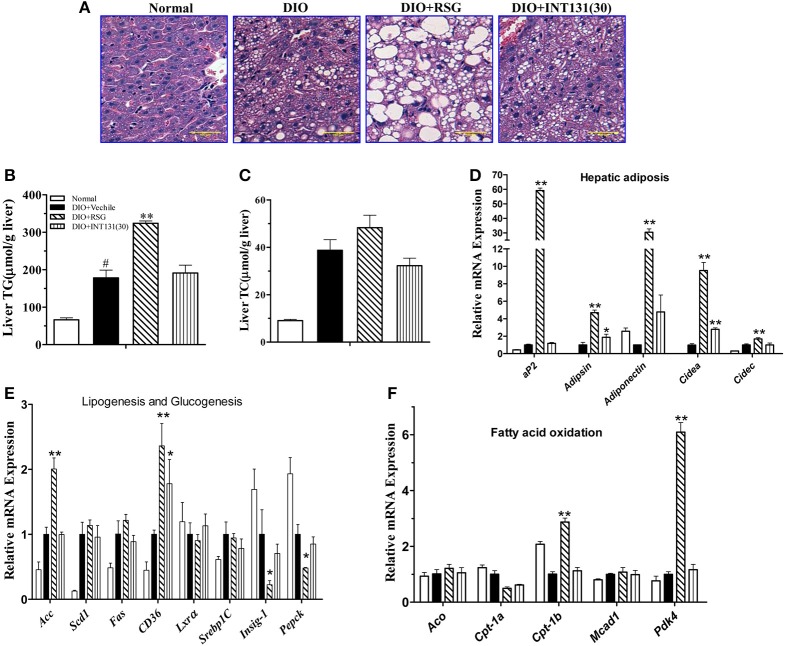
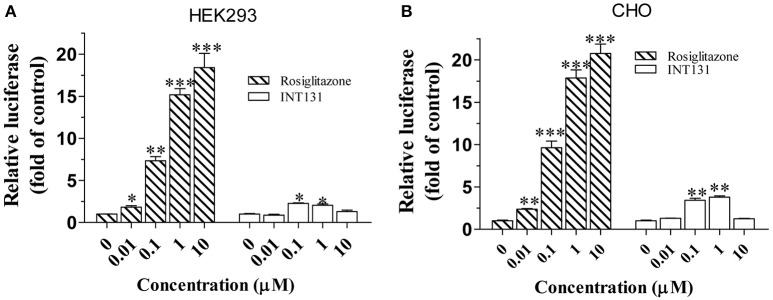
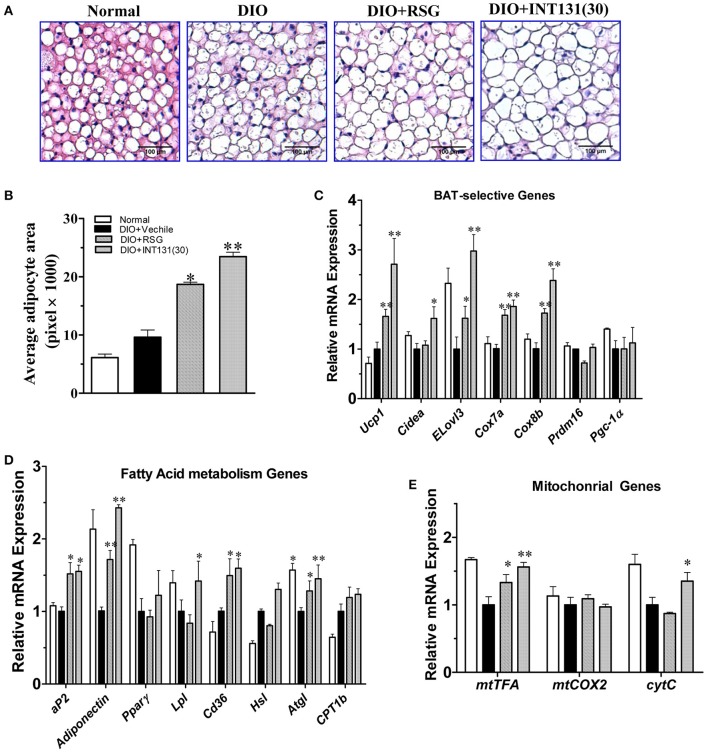
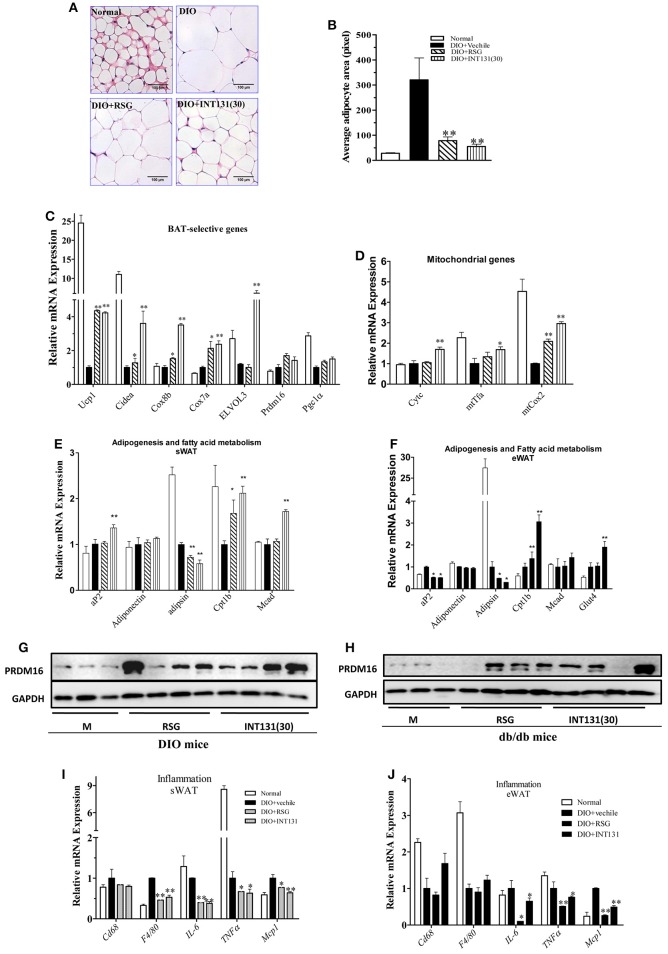
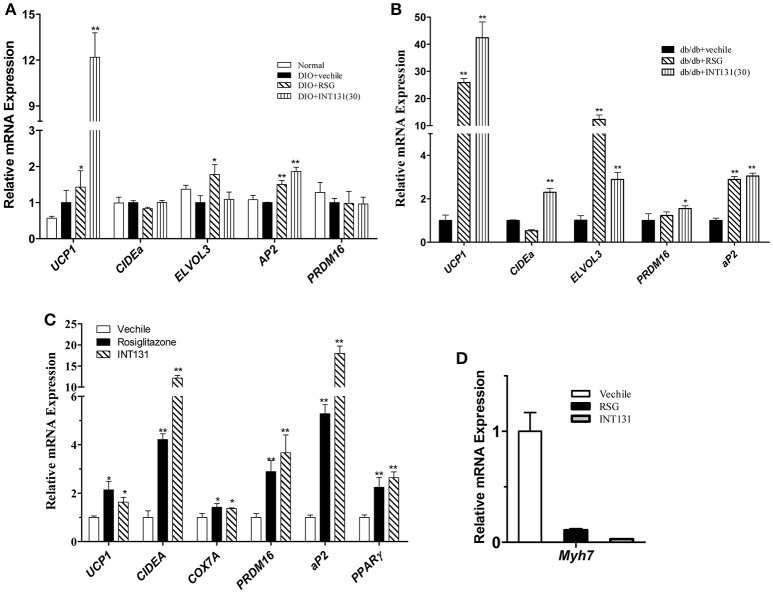
The mechanisms underlying the enhancement of insulin sensitivity by selective peroxisome proliferator-activated receptor γ modulators (sPPARγMs) are still not completely known. Here, the representative sPPARγM, INT131, was used as a probe to investigate the insulin-sensitizing mechanisms of sPPARγM in the context of tissue selective compound distribution and PPARγ regulation. First, 30 mg kg INT131 was observed to produce an insulin-sensitizing effect comparable to that of 10 mg kg rosiglitazone (RSG) in both db/db and DIO mice using the oral glucose and insulin tolerance tests. Similar to RSG, INT131 significantly increased brown adipose tissue (BAT) mass and adipocyte size and up-regulated the expression of BAT-specific genes. Compared with RSG, INT131 exhibited greater potency in inducing white adipose tissue (WAT) browning, decreasing adipocyte size, and increasing BAT-specific and function-related gene expression in subcutaneous WAT (sWAT). However, it did not induce hepatomegaly or hepatic steatosis, which is associated with lower levels of lipogenic genes expression. Pharmacokinetic analysis reveals that in contrast with RSG, INT131 shows higher Cmax, and much longer residency time (AUC), as well relatively lower elimination rate in adipose tissues and skeletal muscle, this demonstrated INT131 distributed predominantly in adipose tissue. Whereas, INT131 was less abundant in the liver. These results thus suggest that the tissue-selective distribution underlies INT131's selective PPARγ modulation. Compounds favoring adipose tissue may aid in development of better, safer sPPARγM to address the insulin resistance of diabetes.
选择性过氧化物酶体增殖物激活受体γ调节剂(sPPARγMs)增强胰岛素敏感性的潜在机制仍不完全清楚。在此,以代表性的sPPARγM即INT131作为探针,在组织选择性化合物分布和PPARγ调节的背景下研究sPPARγM的胰岛素增敏机制。首先,通过口服葡萄糖和胰岛素耐量试验观察到,在db/db和饮食诱导肥胖(DIO)小鼠中,30 mg/kg的INT131产生的胰岛素增敏作用与10 mg/kg的罗格列酮(RSG)相当。与RSG相似,INT131显著增加棕色脂肪组织(BAT)的质量和脂肪细胞大小,并上调BAT特异性基因的表达。与RSG相比,INT131在诱导白色脂肪组织(WAT)褐变、减小脂肪细胞大小以及增加皮下WAT(sWAT)中BAT特异性和功能相关基因表达方面表现出更强的效力。然而,它不会诱发肝肿大或肝脂肪变性,这与较低水平的脂肪生成基因表达有关。药代动力学分析表明,与RSG相比,INT131具有更高的最大血药浓度(Cmax)和更长的驻留时间(曲线下面积,AUC),并且在脂肪组织和骨骼肌中的消除率相对较低,这表明INT131主要分布在脂肪组织中。而INT131在肝脏中的含量较少。因此,这些结果表明组织选择性分布是INT131选择性PPARγ调节的基础。有利于脂肪组织的化合物可能有助于开发更好、更安全的sPPARγM,以解决糖尿病的胰岛素抵抗问题。