Lokki A Inkeri, Kaartokallio Tea, Holmberg Ville, Onkamo Päivi, Koskinen Lotta L E, Saavalainen Päivi, Heinonen Seppo, Kajantie Eero, Kere Juha, Kivinen Katja, Pouta Anneli, Villa Pia M, Hiltunen Leena, Laivuori Hannele, Meri Seppo
Immunobiology, Research Programs Unit, University of Helsinki, Helsinki, Finland.
Medical and Clinical Genetics, University of Helsinki and Helsinki University Hospital, Helsinki, Finland.
Front Immunol. 2017 May 29;8:589. doi: 10.3389/fimmu.2017.00589. eCollection 2017.
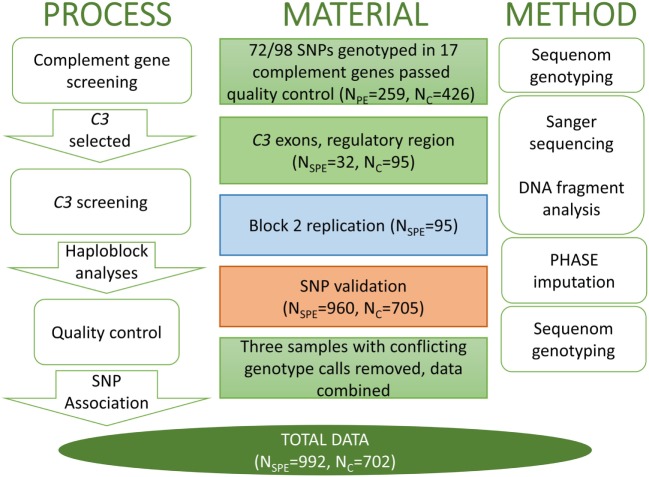
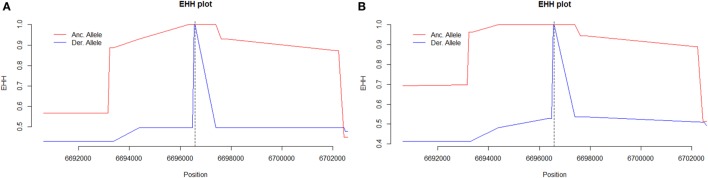
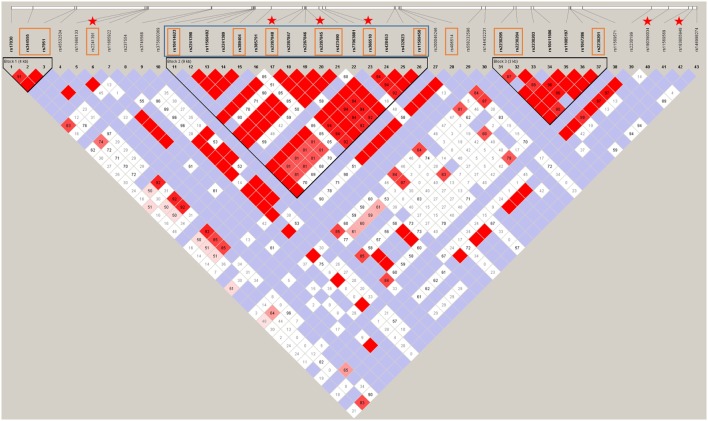
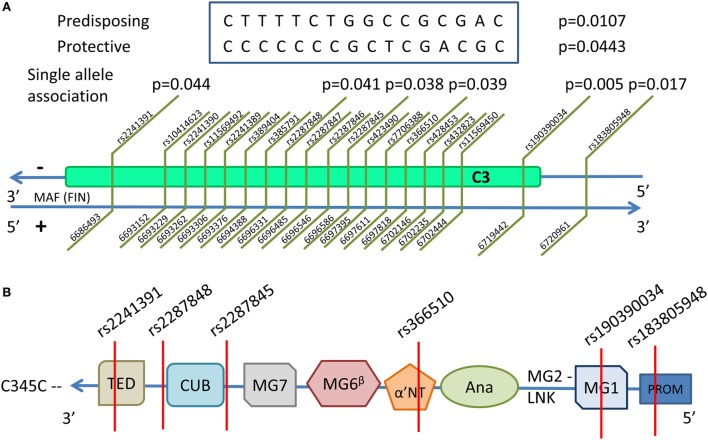
Preeclampsia (PE) is a common vascular disease of pregnancy with genetic predisposition. Dysregulation of the complement system has been implicated, but molecular mechanisms are incompletely understood. In this study, we determined the potential linkage of severe PE to the most central complement gene, . Three cohorts of Finnish patients and controls were recruited for a genetic case-control study. Participants were genotyped using Sequenom genotyping and Sanger sequencing. Initially, we studied 259 Finnish patients with severe PE and 426 controls from the Southern Finland PE and the Finnish population-based PE cohorts. We used a custom-made single nucleotide polymorphism (SNP) genotyping assay consisting of 98 SNPs in 18 genes that encode components of the complement system. Following the primary screening, was selected as the candidate gene and consequently Sanger sequenced. Fourteen SNPs from were also genotyped by a Sequenom panel in 960 patients with severe PE and 705 controls, including already sequenced individuals. Three of the 43 SNPs observed within were associated with severe PE: rs2287845 ( = 0.038, OR = 1.158), rs366510 ( = 0.039, OR = 1.158), and rs2287848 ( = 0.041, OR = 1.155). We also discovered 16 SNP haplotypes with extreme linkage disequilibrium in the middle of the gene with a protective ( = 0.044, OR = 0.628) or a predisposing ( = 0.011, OR = 2.110) effect to severe PE depending on the allele combination. Genetic variants associated with PE are located in key domains of C3 and could thereby influence the function of C3. This is, as far as we are aware, the first candidate gene in the complement system with an association to a clinically relevant PE subphenotype, severe PE. The result highlights a potential role for the complement system in the pathogenesis of PE and may help in defining prognostic and therapeutic subgroups of preeclamptic women.
子痫前期(PE)是一种常见的具有遗传易感性的妊娠血管疾病。补体系统失调与之相关,但分子机制尚不完全清楚。在本研究中,我们确定了重度PE与最核心的补体基因的潜在联系。招募了三组芬兰患者和对照组进行遗传病例对照研究。使用Sequenom基因分型和桑格测序对参与者进行基因分型。最初,我们研究了来自芬兰南部PE队列和基于芬兰人群的PE队列的259例重度PE芬兰患者和426例对照。我们使用了一种定制的单核苷酸多态性(SNP)基因分型检测方法,该方法由18个编码补体系统成分的基因中的98个SNP组成。经过初步筛选,选择该基因作为候选基因并进行桑格测序。来自该基因的14个SNP也通过Sequenom检测板在960例重度PE患者和705例对照中进行基因分型,包括已经测序的个体。在该基因中观察到的43个SNP中有3个与重度PE相关:rs2287845(P = 0.038,OR = 1.158)、rs366510(P = 0.039,OR = 1.158)和rs2287848(P = 0.041,OR = 1.155)。我们还在该基因中部发现了16个具有极端连锁不平衡的SNP单倍型,根据等位基因组合,对重度PE有保护作用(P = 0.044,OR = 0.628)或易患作用(P = 0.011,OR = 2.110)。与PE相关的基因变异位于C3的关键结构域,因此可能影响C3的功能。据我们所知,这是补体系统中第一个与临床相关的PE亚表型——重度PE相关的候选基因。该结果突出了补体系统在PE发病机制中的潜在作用,并可能有助于确定子痫前期女性的预后和治疗亚组。