Sherub Sherub, Fiedler Wolfgang, Duriez Olivier, Wikelski Martin
Ugyen Wangchuck Institute for Conservation and Environment Research, Lamai Goempa, Bumthang, Bhutan.
Department of Migration and Immuno-Ecology, Max-Planck Institute of Ornithology, Am Obstberg 1, 78315, Radolfzell, Germany.
J Comp Physiol A Neuroethol Sens Neural Behav Physiol. 2017 Jul;203(6-7):531-542. doi: 10.1007/s00359-017-1180-x. Epub 2017 Jun 13.
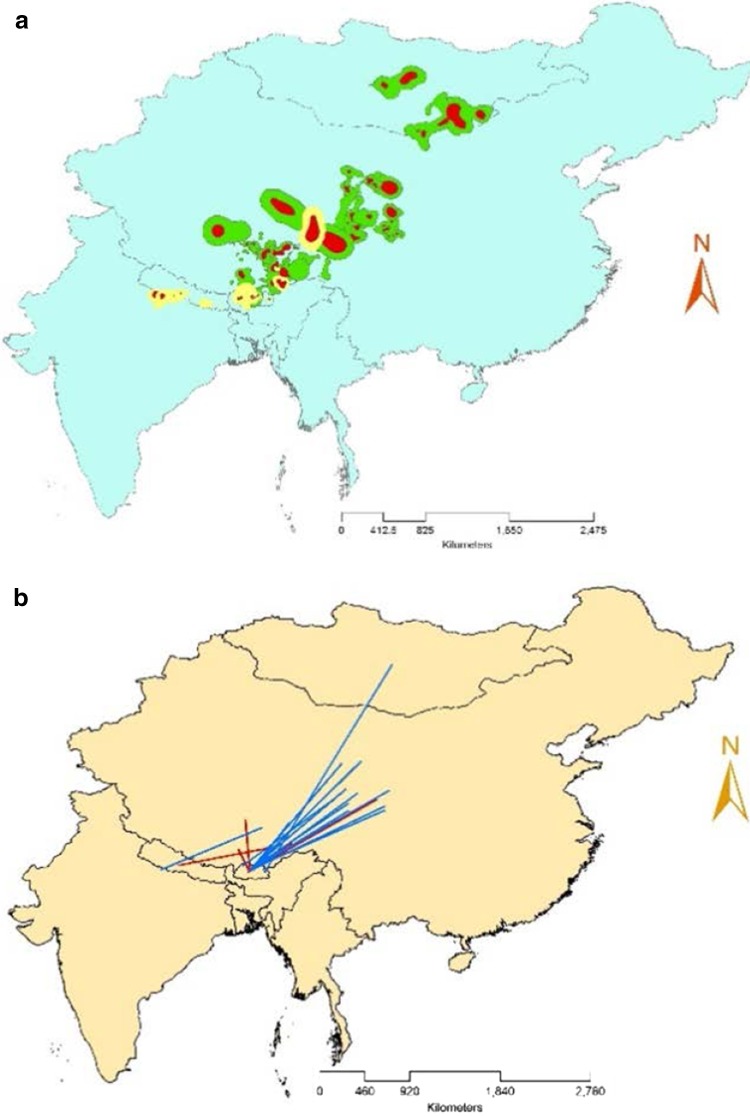
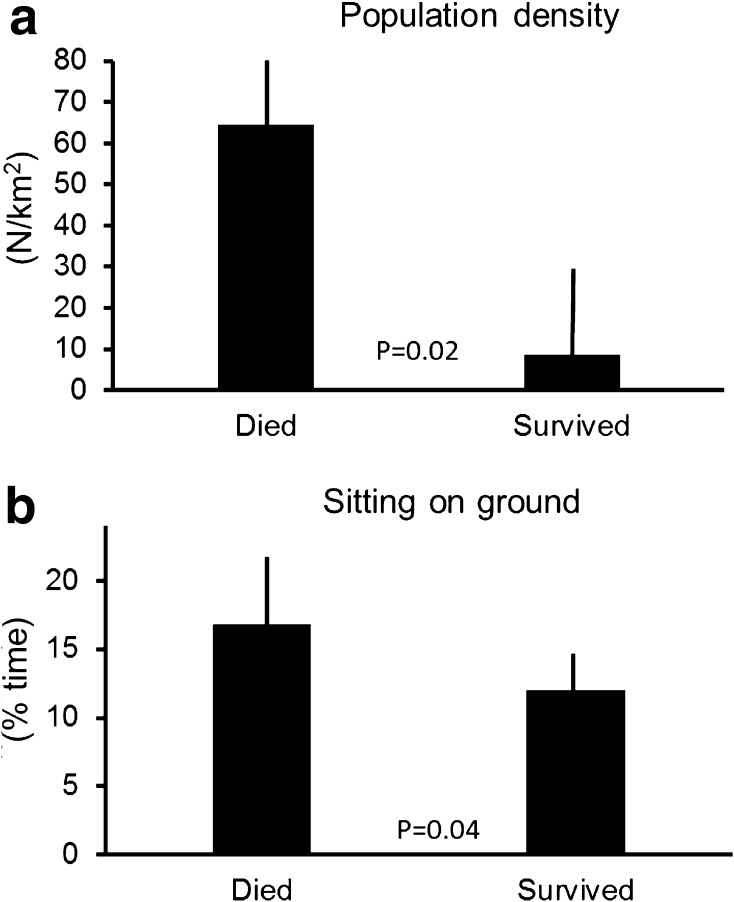
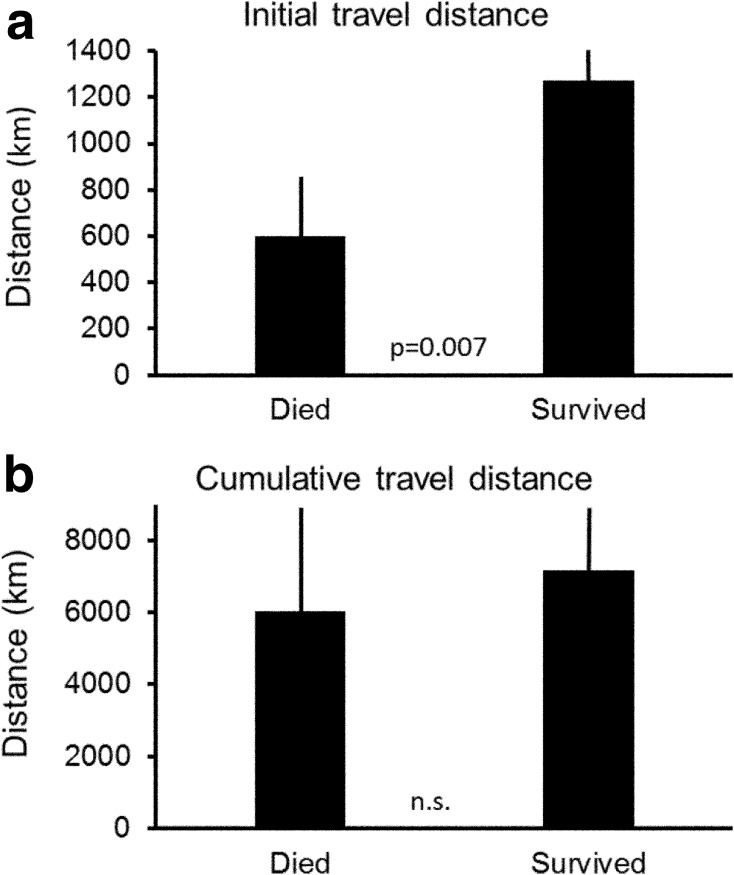
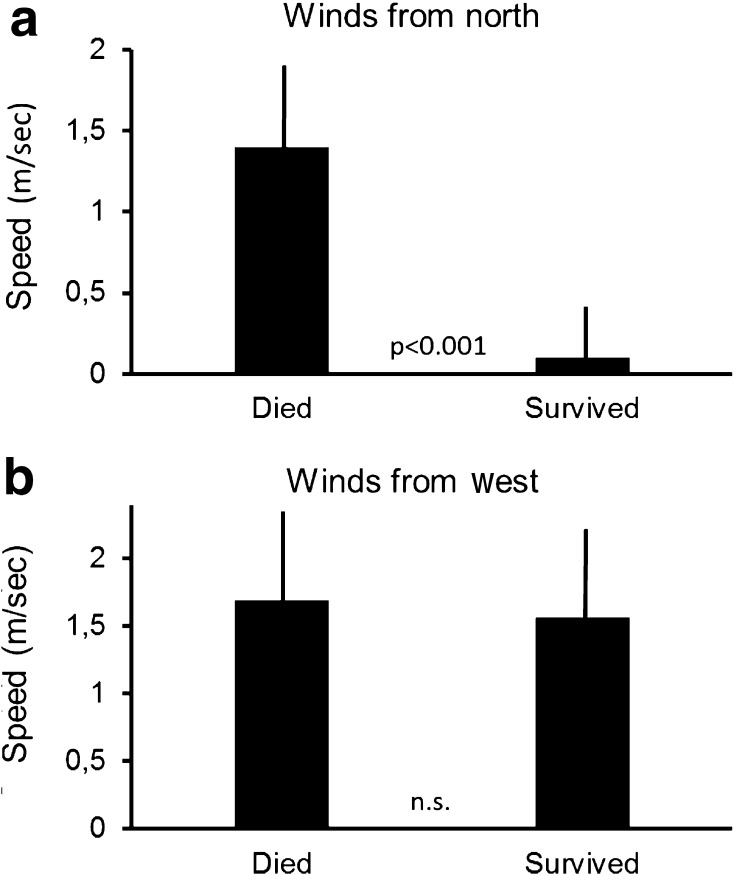
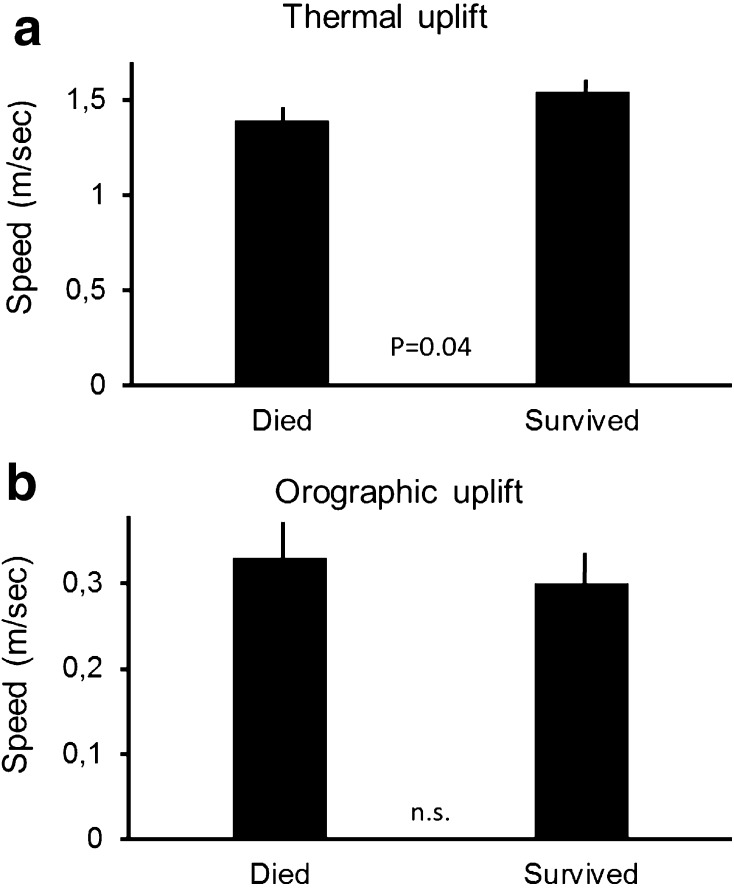
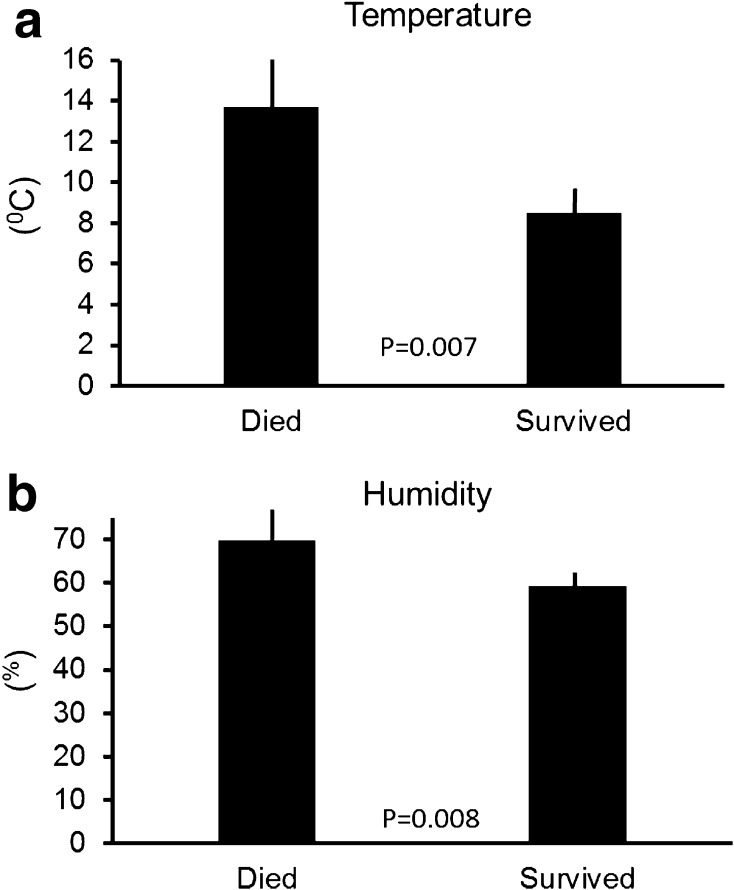
Bio-logging, the on-animal deployment of miniaturised electronic data recorders, allows for the study of location, body position, and physiology of individuals throughout their ontogeny. For terrestrial animals, 1 Hz GPS-position, 3D-body acceleration, and ambient temperature provide standard data to link to the physiology of life histories. Environmental context is added at ever finer scales using remote sensing earth observation data. Here we showcase the use of such bio-logging approaches in a conservation physiology study on endangered Himalayan vultures (Gyps himalayensis). We determine environmental, behavioural, and physiological causes of survival in immature birds that roam from wintering sites in India, Bhutan, and Nepal towards summer areas in Tibet and Mongolia. Five of 18 immature griffons died during one year. Individuals that died had failed to migrate sufficiently far northward (>1500 km) in spring. Individuals likely died if they flew against headwinds from the north or were less able to find thermal updrafts. Surviving individuals migrated to cold and dry areas with low population density. We highlight flight experience, long distance movements, and remote places with low human population as factors critical for the survival of Himalayan vultures. High-resolution bio-logging studies can advance conservation management by pinpointing where and why migratory animals have problems and die.
生物记录,即将小型电子数据记录器部署在动物身上,能够对个体在整个个体发育过程中的位置、身体姿势和生理状况进行研究。对于陆生动物而言,1赫兹的全球定位系统(GPS)位置、三维身体加速度和环境温度提供了与生活史生理状况相关联的标准数据。利用遥感地球观测数据,能在更精细的尺度上补充环境背景信息。在此,我们展示了此类生物记录方法在一项针对濒危的喜马拉雅兀鹫(Gyps himalayensis)的保护生理学研究中的应用。我们确定了从印度、不丹和尼泊尔的越冬地向西藏和蒙古的夏季区域迁徙的未成熟鸟类生存的环境、行为和生理原因。18只未成熟的兀鹫中有5只在一年中死亡。死亡的个体在春季未能向北迁徙足够远的距离(超过1500公里)。如果个体逆风向北飞行,或者较难找到热上升气流,它们可能会死亡。存活的个体迁徙到了人口密度低的寒冷干燥地区。我们强调飞行经验、长距离移动以及人口稀少的偏远地区是喜马拉雅兀鹫生存的关键因素。高分辨率生物记录研究可以通过查明迁徙动物出现问题和死亡的地点及原因,来推动保护管理工作。