Gong Kai, Qu Bo, Wang Cairu, Zhou Jingsong, Liao Dongfa, Zheng Wei, Pan Xianming
Department of Orthopaedics, Chengdu Military General Hospital, No. 270 Rongdu Road, Chengdu, Sichuan 610083, China.
Mol Cells. 2017 Jun 30;40(6):393-400. doi: 10.14348/molcells.2017.0018. Epub 2017 Jun 14.
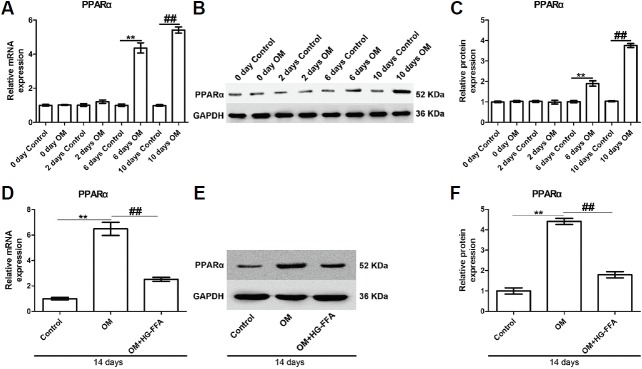
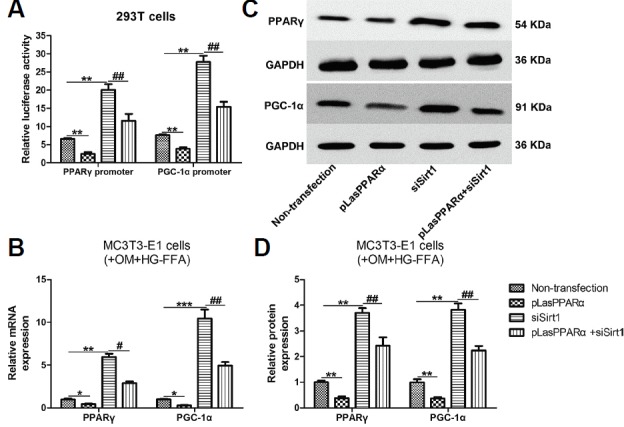
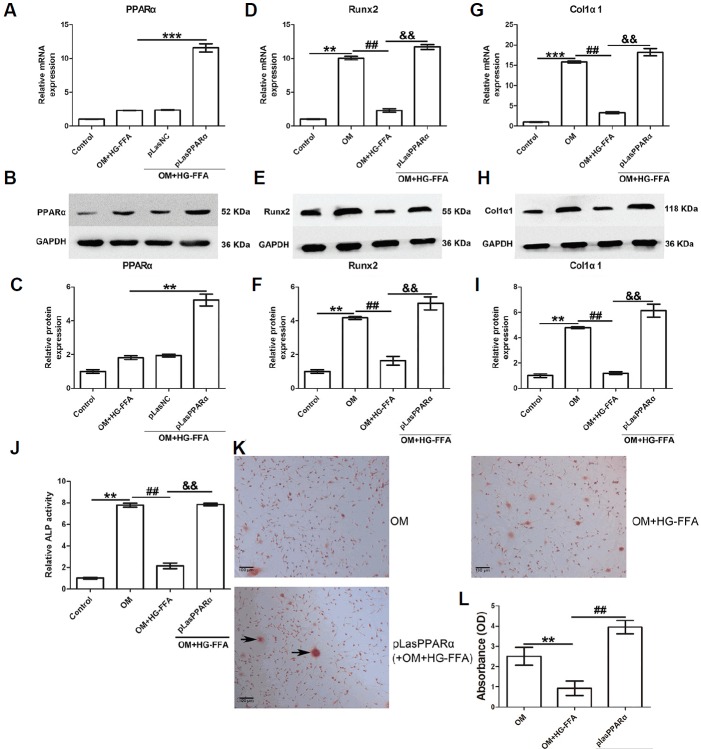
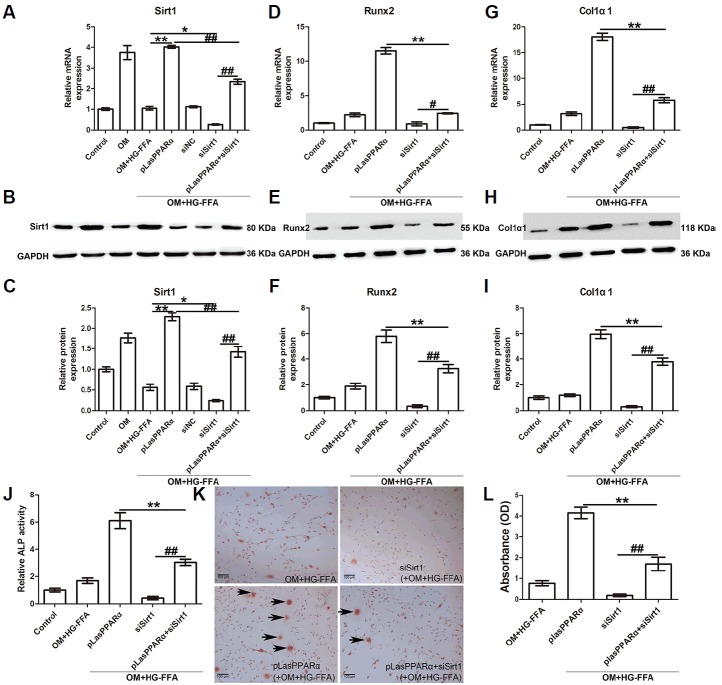
Type 2 diabetes mellitus (T2DM) is a chronic metabolic disease characterized by lack of insulin and high glucose levels. T2DM can cause bone loss and fracture, thus leading to diabetic osteoporosis. Promoting osteogenic differentiation of osteoblasts may effectively treat diabetic osteoporosis. We previously reported that Sirtuin 1 (Sirt1), a NAD-dependent deacetylase, promotes osteogenic differentiation through downregulation of peroxisome proliferator-activated receptor (PPAR) γ. We also found that miR-132 regulates osteogenic differentiation by downregulating Sirt1 in a PPARβ/δ-dependent manner. The ligand-activated transcription factor, PPARα, is another isotype of the peroxisome proliferator-activated receptor family that helps maintain bone homeostasis and promot bone formation. Whether the regulatory role of PPARα in osteogenic differentiation is mediated via Sirt1 remains unclear. In the present study, we aimed to determine this role and the underlying mechanism by using high glucose (HG) and free fatty acids (FFA) to mimic T2DM in MC3T3-E1 cells. The results showed that HG-FFA significantly inhibited expression of PPARα, Sirt1 and osteogenic differentiation, but these effects were markedly reversed by PPARα overexpression. Moreover, siSirt1 attenuated the positive effects of PPARα on osteogenic differentiation, suggesting that PPARα promotes osteogenic differentiation in a Sirt1-dependent manner. Luciferase activity assay confirmed interactions between PPARα and Sirt1. These findings indicate that PPARα promotes osteogenic differentiation via the Sirt1-dependent signaling pathway.
2型糖尿病(T2DM)是一种慢性代谢性疾病,其特征为胰岛素缺乏和血糖水平升高。T2DM可导致骨质流失和骨折,进而引发糖尿病性骨质疏松症。促进成骨细胞的成骨分化可能有效治疗糖尿病性骨质疏松症。我们之前报道过,烟酰胺腺嘌呤二核苷酸(NAD)依赖性去乙酰化酶沉默调节蛋白1(Sirt1)通过下调过氧化物酶体增殖物激活受体(PPAR)γ来促进成骨分化。我们还发现,miR-132以PPARβ/δ依赖性方式通过下调Sirt1来调节成骨分化。配体激活转录因子PPARα是过氧化物酶体增殖物激活受体家族的另一种同型物,有助于维持骨稳态并促进骨形成。PPARα在成骨分化中的调节作用是否通过Sirt1介导仍不清楚。在本研究中,我们旨在通过使用高糖(HG)和游离脂肪酸(FFA)在MC3T3-E1细胞中模拟T2DM来确定这一作用及其潜在机制。结果表明,HG-FFA显著抑制PPARα、Sirt1的表达和成骨分化,但PPARα过表达可明显逆转这些作用。此外,小干扰RNA(si)Sirt1减弱了PPARα对成骨分化的积极作用,表明PPARα以Sirt1依赖性方式促进成骨分化。荧光素酶活性测定证实了PPARα与Sirt1之间的相互作用。这些发现表明,PPARα通过Sirt1依赖性信号通路促进成骨分化。