Institut Universitaire de Cardiologie et de Pneumologie de Québec, Quebec, Canada.
Department of Molecular Medicine, Laval University, Quebec, Canada.
Cancer Epidemiol Biomarkers Prev. 2018 Apr;27(4):363-379. doi: 10.1158/1055-9965.EPI-16-0794. Epub 2017 Jun 14.
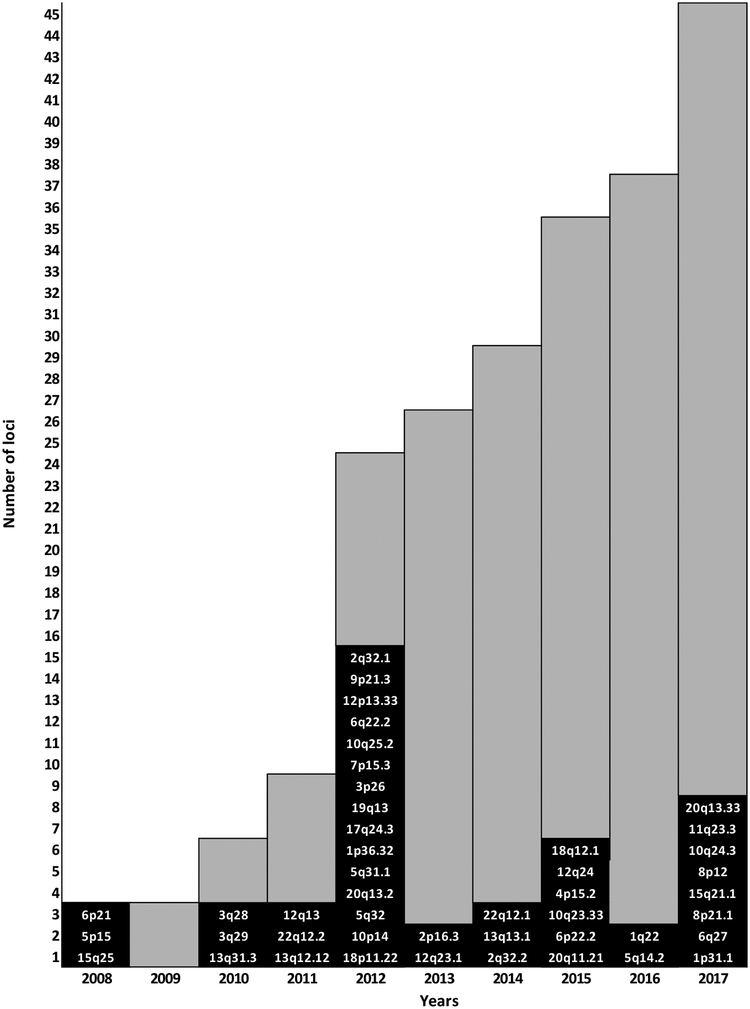
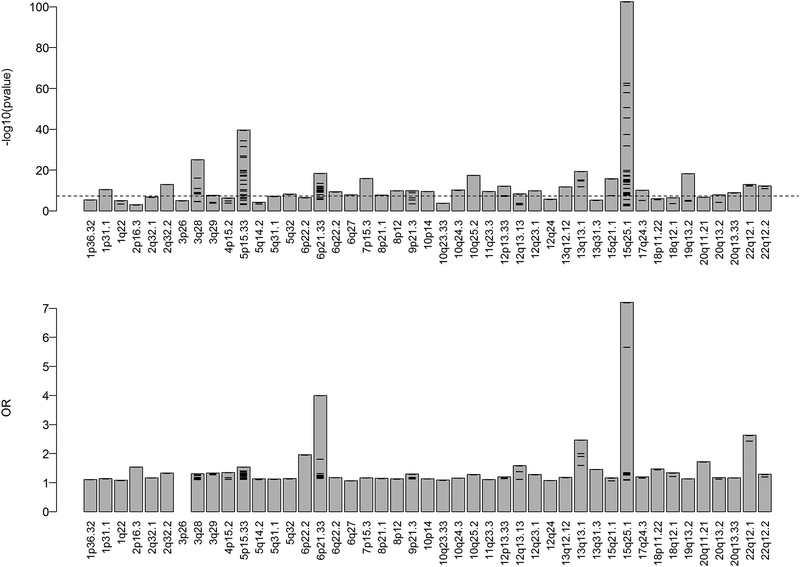
Genome-wide association studies (GWAS) were successful to identify genetic factors robustly associated with lung cancer. This review aims to synthesize the literature in this field and accelerate the translation of GWAS discoveries into results that are closer to clinical applications. A chronologic presentation of published GWAS on lung cancer susceptibility, survival, and response to treatment is presented. The most important results are tabulated to provide a concise overview in one read. GWAS have reported 45 lung cancer susceptibility loci with varying strength of evidence and highlighted suspected causal genes at each locus. Some genetic risk loci have been refined to more homogeneous subgroups of lung cancer patients in terms of histologic subtypes, smoking status, gender, and ethnicity. Overall, these discoveries are an important step for future development of new therapeutic targets and biomarkers to personalize and improve the quality of care for patients. GWAS results are on the edge of offering new tools for targeted screening in high-risk individuals, but more research is needed if GWAS are to pay off the investment. Complementary genomic datasets and functional studies are needed to refine the underlying molecular mechanisms of lung cancer preliminarily revealed by GWAS and reach results that are medically actionable.
全基因组关联研究(GWAS)成功地确定了与肺癌密切相关的遗传因素。本综述旨在综合该领域的文献,并加速 GWAS 发现转化为更接近临床应用的结果。本文按时间顺序介绍了已发表的关于肺癌易感性、生存和治疗反应的 GWAS。最重要的结果以表格形式列出,以便在一次阅读中提供简明概述。GWAS 已经报道了 45 个肺癌易感性位点,其证据强度各不相同,并突出了每个位点的可疑因果基因。一些遗传风险位点已经细化为更同质的肺癌患者亚组,包括组织学亚型、吸烟状况、性别和种族。总的来说,这些发现是未来开发新的治疗靶点和生物标志物的重要一步,旨在为患者提供个性化和改善护理质量。GWAS 结果为高危人群的靶向筛查提供了新的工具,但如果要回报投资,还需要更多的研究。需要互补的基因组数据集和功能研究来细化 GWAS 初步揭示的肺癌潜在分子机制,并取得具有医学可操作性的结果。