Institute of Neuroscience, Henry Wellcome Building for Neuroecology, Newcastle University, Framlington Place, Newcastle upon Tyne, NE2 4HH, United Kingdom.
Laboratory of Sensorimotor Research, National Eye Institute, National Institutes of Health, Bldg 49 Room 2A50, Bethesda, MD, 20892-4435, USA.
Sci Rep. 2017 Jun 14;7(1):3496. doi: 10.1038/s41598-017-03732-7.
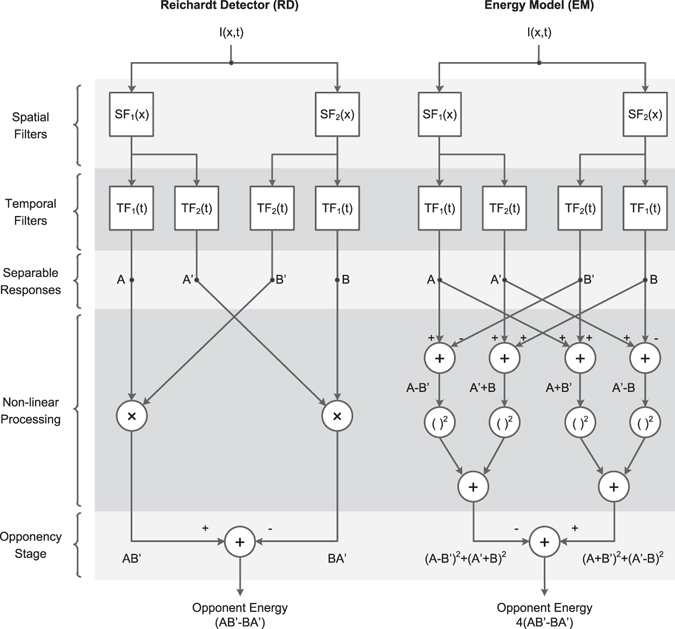
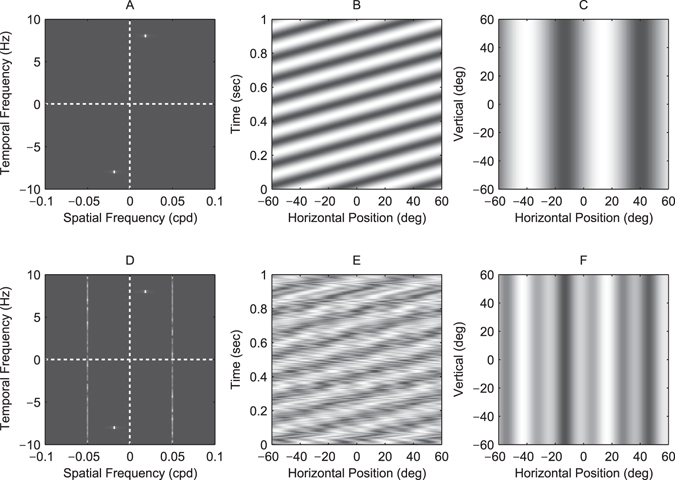
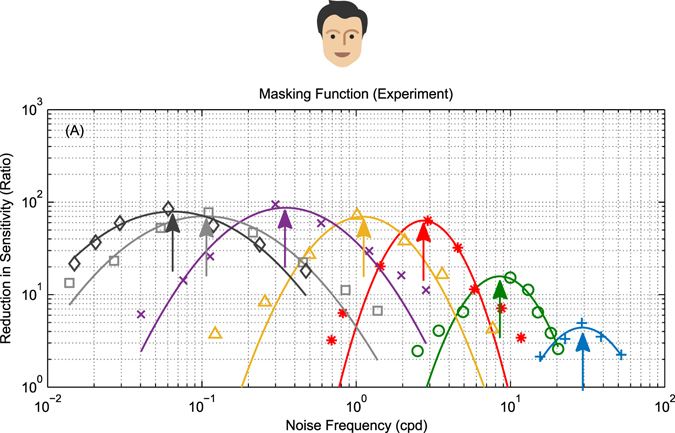
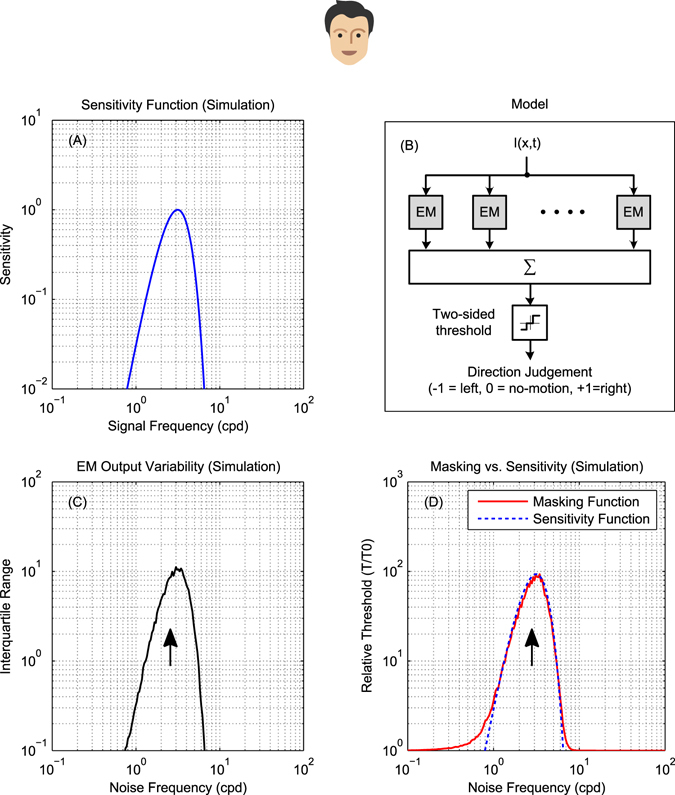
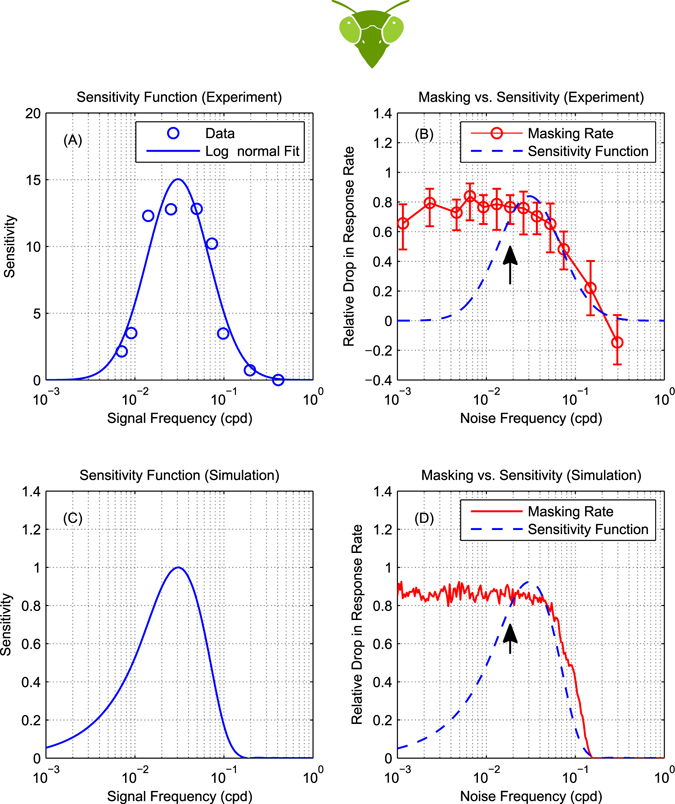
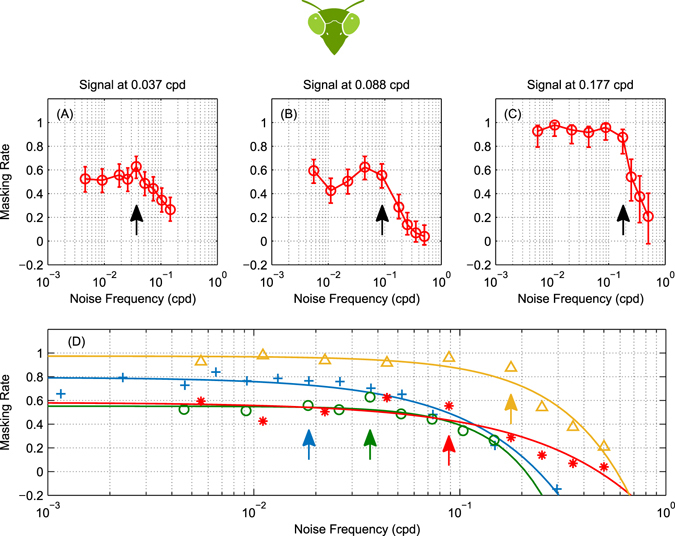
The motion energy model is the standard account of motion detection in animals from beetles to humans. Despite this common basis, we show here that a difference in the early stages of visual processing between mammals and insects leads this model to make radically different behavioural predictions. In insects, early filtering is spatially lowpass, which makes the surprising prediction that motion detection can be impaired by "invisible" noise, i.e. noise at a spatial frequency that elicits no response when presented on its own as a signal. We confirm this prediction using the optomotor response of praying mantis Sphodromantis lineola. This does not occur in mammals, where spatially bandpass early filtering means that linear systems techniques, such as deriving channel sensitivity from masking functions, remain approximately valid. Counter-intuitive effects such as masking by invisible noise may occur in neural circuits wherever a nonlinearity is followed by a difference operation.
运动能量模型是从甲虫到人等动物运动检测的标准解释。尽管有这个共同的基础,我们在这里表明,哺乳动物和昆虫之间视觉处理早期阶段的差异导致该模型产生截然不同的行为预测。在昆虫中,早期滤波是空间低通的,这就产生了一个惊人的预测,即运动检测可能会被“不可见”的噪声损害,即当以信号形式单独呈现时不会引起反应的空间频率的噪声。我们使用 praying mantis Sphodromantis lineola 的光感受器反应来证实这一预测。这在哺乳动物中不会发生,在哺乳动物中,空间带通早期滤波意味着线性系统技术,例如从掩蔽函数中推导出通道灵敏度,仍然基本有效。在非线性后面跟着差分运算的任何神经回路中,都可能出现类似掩蔽的反直觉效应。