Institute of Physical and Information Technologies, CSIC, C/Serrano, 144, 28006 Madrid, Spain.
Servicio de Microbiología Clínica, Hospital Central de la Defensa Gómez-Ulla, Glorieta del Ejército, s/n, 28047 Madrid, Spain.
Sensors (Basel). 2017 Jun 15;17(6):1395. doi: 10.3390/s17061395.
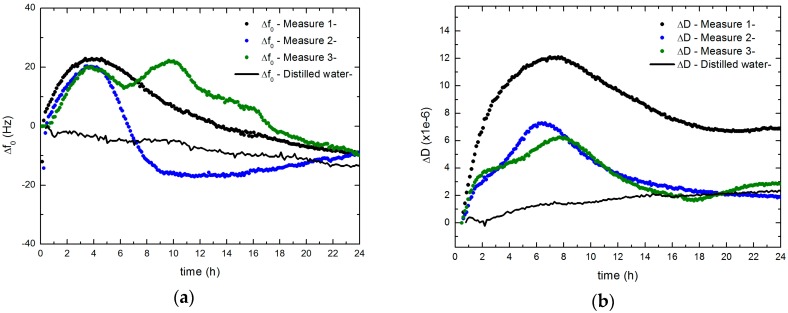
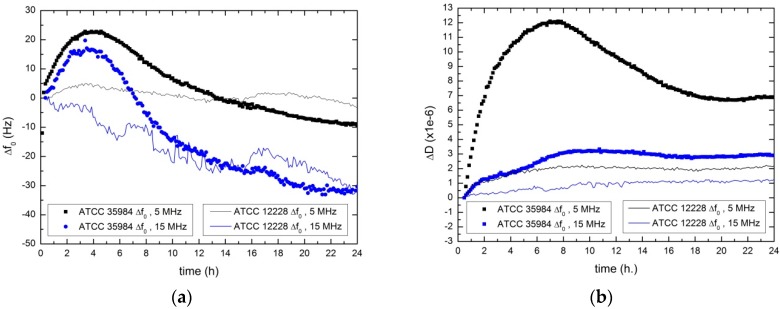
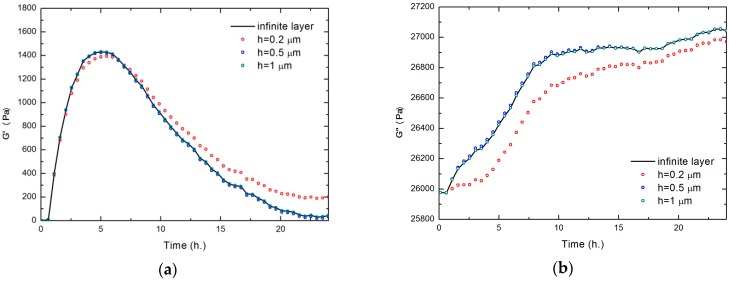
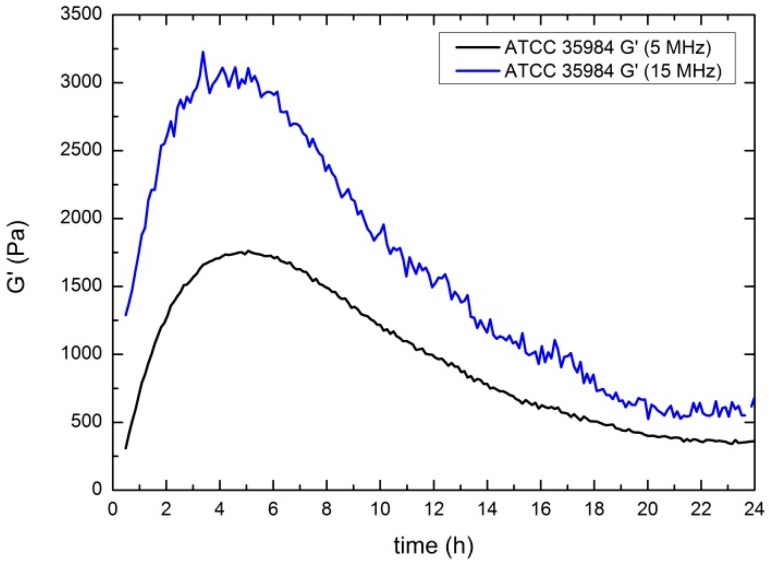
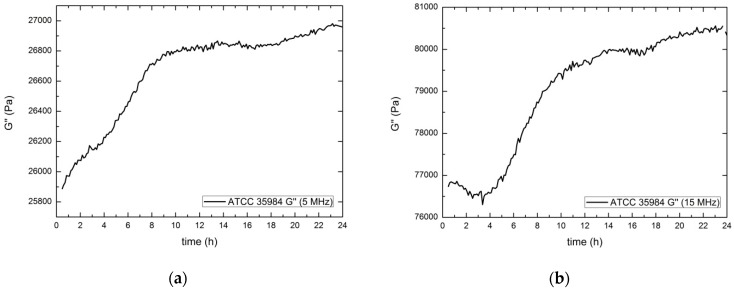
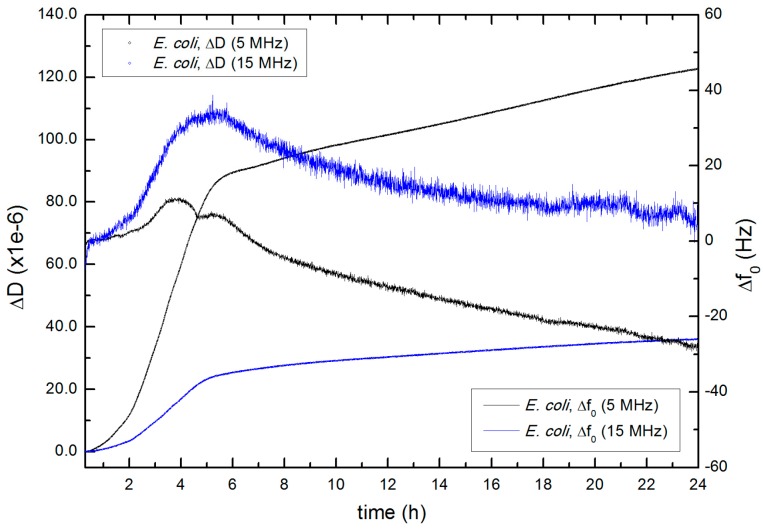
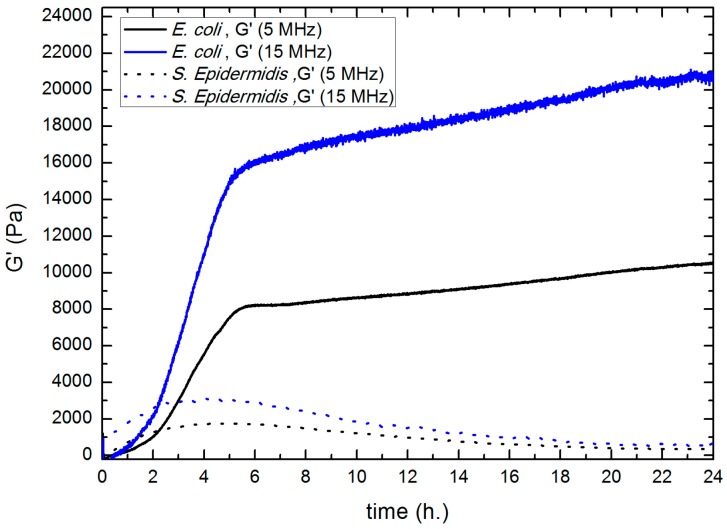
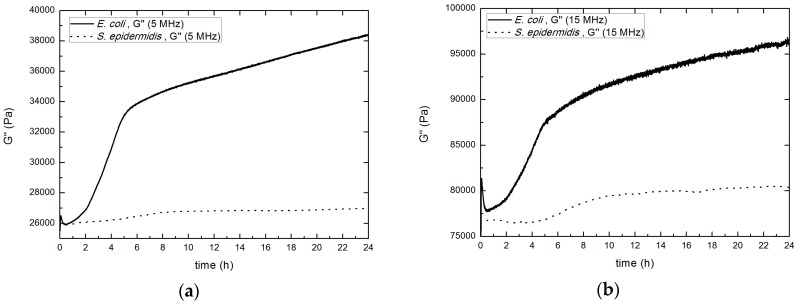
This work analyzes some key aspects of the behavior of sensors based on piezoelectric Thickness Shear Mode (TSM) resonators to study and monitor microbial biofilms. The operation of these sensors is based on the analysis of their resonance properties (both resonance frequency and dissipation factor) that vary in contact with the analyzed sample. This work shows that different variations during the microorganism growth can be detected by the sensors and highlights which of these changes are indicative of biofilm formation. TSM sensors have been used to monitor in real time the development of and biofilms, formed on the gold electrode of the quartz crystal resonators, without any coating. Strains with different ability to produce biofilm have been tested. It was shown that, once a first homogeneous adhesion of bacteria was produced on the substrate, the biofilm can be considered as a semi-infinite layer and the quartz sensor reflects only the viscoelastic properties of the region immediately adjacent to the resonator, not being sensitive to upper layers of the biofilm. The experiments allow the microrheological evaluation of the complex shear modulus (* = ' + ″) of the biofilm at 5 MHz and at 15 MHz, showing that the characteristic parameter that indicates the adhesion of a biofilm for the case of and , is an increase in the resonance frequency shift of the quartz crystal sensor, which is connected with an increase of the real shear modulus, related to the elasticity or stiffness of the layer. In addition both the real and the imaginary shear modulus are frequency dependent at these high frequencies in biofilms.
这项工作分析了基于压电厚度剪切模式(TSM)谐振器的传感器行为的一些关键方面,以研究和监测微生物生物膜。这些传感器的操作基于它们的共振特性(共振频率和耗散因子)的分析,这些特性在与被分析样品接触时会发生变化。这项工作表明,传感器可以检测到微生物生长过程中的不同变化,并强调了哪些变化表明形成了生物膜。TSM 传感器已被用于实时监测在石英晶体谐振器的金电极上形成的 和 生物膜的发展,而无需任何涂层。已经测试了具有不同生物膜形成能力的菌株。结果表明,一旦在基底上产生了细菌的第一均匀附着,生物膜可以被视为半无限层,石英传感器仅反映与谐振器相邻的区域的粘弹性特性,而对生物膜的上层不敏感。实验允许对生物膜的复剪切模量(* = '+ ″)进行微流变学评估,在 5 MHz 和 15 MHz 下,结果表明,对于 和 的情况,指示生物膜附着的特征参数是石英晶体传感器的共振频率偏移增加,这与实剪切模量的增加有关,与层的弹性或刚度有关。此外,在这些高频下,生物膜中的实剪切和虚剪切模量都是频率相关的。