Liu Ken, Zhang Xiang, Xu Weiqi, Chen Jinbiao, Yu Jun, Gamble Jennifer R, McCaughan Geoffrey W
Institute of Digestive Disease, The Chinese University of Hong Kong, Hong Kong, China.
Department of Medicine and Therapeutics, The Chinese University of Hong Kong, Hong Kong, China.
Clin Transl Gastroenterol. 2017 Jun 15;8(6):e98. doi: 10.1038/ctg.2017.28.
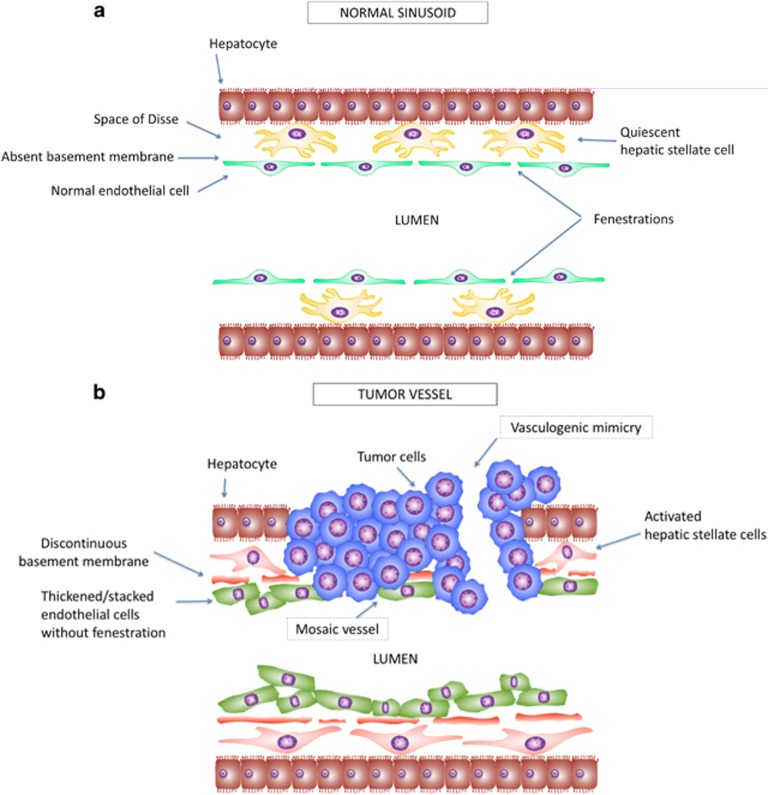
Traditional treatments for intermediate or advanced stage hepatocellular carcinoma (HCC) such as transarterial chemoembolization (TACE) and anti-angiogenesis therapies were developed to starve tumor blood supply. A new approach of normalizing structurally and functionally abnormal tumor vasculature is emerging. While TACE improves survival in selected patients, the resulting tumor hypoxia stimulates proliferation, angiogenesis, treatment resistance and metastasis, which limits its overall efficacy. Vessel normalization decreases hypoxia and improves anti-tumor immune infiltrate and drug delivery. Several pre-clinical agents aimed at normalizing tumor vasculature in HCC appear promising. Although anti-angiogenic agents with vessel normalizing potential have been trialed in advanced HCC with modest results, to date their primary intention had been to starve the tumor. Judicious use of anti-angiogenic therapies is required to achieve vessel normalization yet avoid excessive pruning of vessels. This balance, termed the normalization window, is yet uncharacterized in HCC. However, the optimal class, dose and schedule of vascular normalization agents, alone or in combination with other therapies needs to be explored further.
针对中晚期肝细胞癌(HCC)的传统治疗方法,如经动脉化疗栓塞术(TACE)和抗血管生成疗法,旨在切断肿瘤的血液供应。一种使结构和功能异常的肿瘤血管正常化的新方法正在兴起。虽然TACE可提高部分患者的生存率,但由此导致的肿瘤缺氧会刺激肿瘤增殖、血管生成、产生治疗抵抗和转移,从而限制了其总体疗效。血管正常化可减少缺氧,并改善抗肿瘤免疫浸润和药物递送。几种旨在使HCC肿瘤血管正常化的临床前药物显示出前景。尽管具有血管正常化潜力的抗血管生成药物已在晚期HCC中进行试验,结果一般,但迄今为止,其主要目的一直是使肿瘤饥饿。需要明智地使用抗血管生成疗法,以实现血管正常化,同时避免过度的血管修剪。这种平衡,即所谓的正常化窗口,在HCC中尚未得到明确界定。然而,血管正常化药物的最佳类别、剂量和给药方案,单独使用或与其他疗法联合使用,仍需进一步探索。