Antell Gregory C, Dampier Will, Aiamkitsumrit Benjamas, Nonnemacher Michael R, Pirrone Vanessa, Zhong Wen, Kercher Katherine, Passic Shendra, Williams Jean, Liu Yucheng, James Tony, Jacobson Jeffrey M, Szep Zsofia, Wigdahl Brian, Krebs Fred C
Department of Microbiology and Immunology, Drexel University College of Medicine, Philadelphia, PA, USA.
Center for Molecular Virology and Translational Neuroscience, Institute for Molecular Medicine and Infectious Disease, Drexel University College of Medicine, Philadelphia, PA, USA.
Int J Genomics. 2017;2017:4081585. doi: 10.1155/2017/4081585. Epub 2017 May 17.
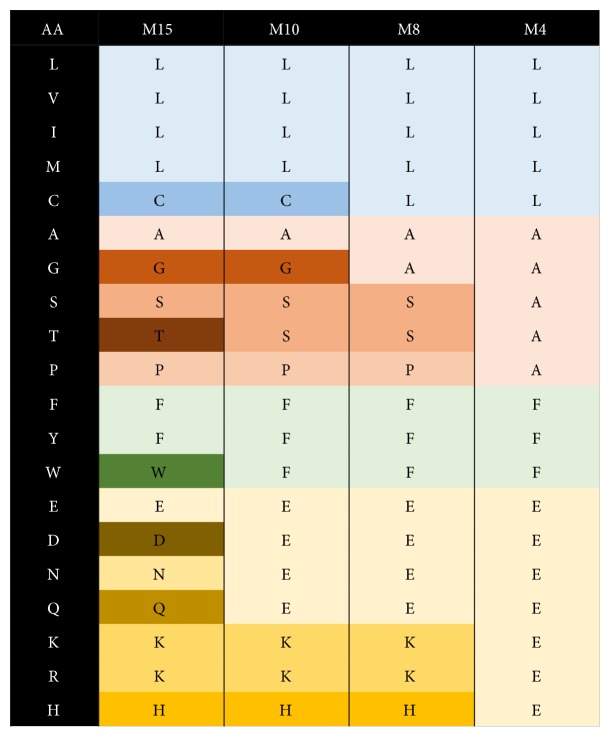
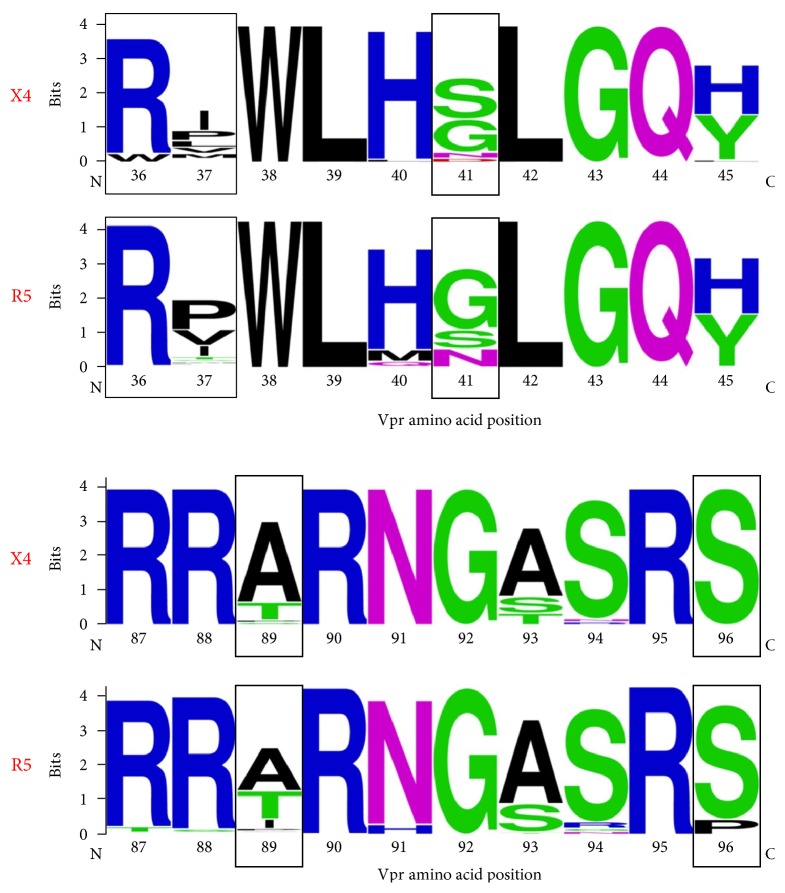
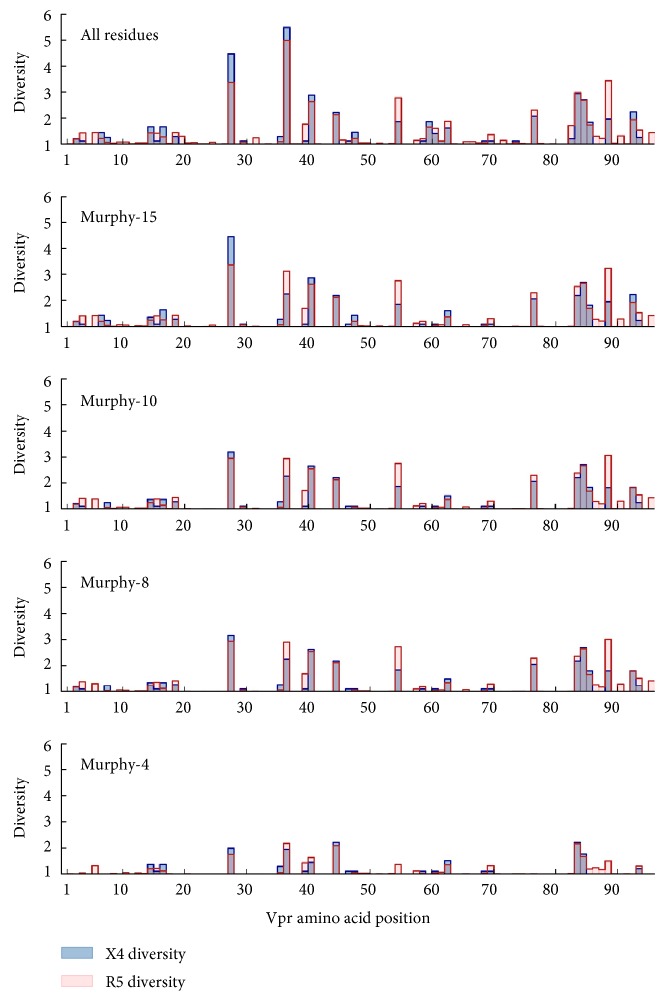
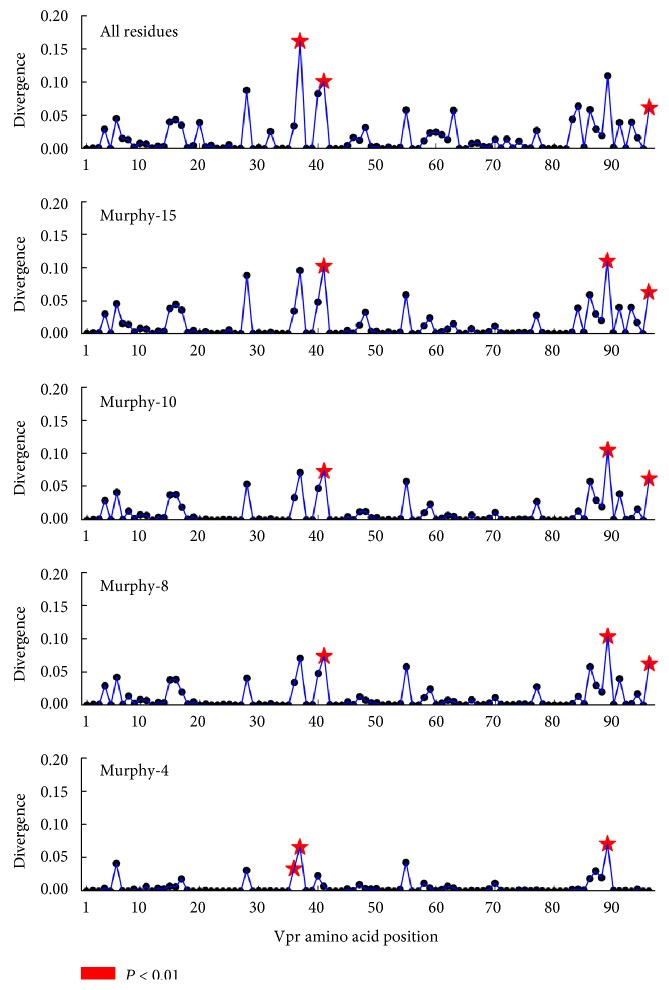
Vpr is an HIV-1 accessory protein that plays numerous roles during viral replication, and some of which are cell type dependent. To test the hypothesis that HIV-1 tropism extends beyond the envelope into the gene, studies were performed to identify the associations between coreceptor usage and Vpr variation in HIV-1-infected patients. Colinear HIV-1 Env-V3 and Vpr amino acid sequences were obtained from the LANL HIV-1 sequence database and from well-suppressed patients in the Drexel/Temple Medicine CNS AIDS Research and Eradication Study (CARES) Cohort. Genotypic classification of Env-V3 sequences as X4 (CXCR4-utilizing) or R5 (CCR5-utilizing) was used to group colinear Vpr sequences. To reveal the sequences associated with a specific coreceptor usage genotype, Vpr amino acid sequences were assessed for amino acid diversity and Jensen-Shannon divergence between the two groups. Five amino acid alphabets were used to comprehensively examine the impact of amino acid substitutions involving side chains with similar physiochemical properties. Positions 36, 37, 41, 89, and 96 of Vpr were characterized by statistically significant divergence across multiple alphabets when X4 and R5 sequence groups were compared. In addition, consensus amino acid switches were found at positions 37 and 41 in comparisons of the R5 and X4 sequence populations. These results suggest an evolutionary link between Vpr and gp120 in HIV-1-infected patients.
Vpr是一种HIV-1辅助蛋白,在病毒复制过程中发挥多种作用,其中一些作用依赖于细胞类型。为了验证HIV-1嗜性超出包膜基因范围的假设,开展了相关研究,以确定HIV-1感染患者中辅助受体使用情况与Vpr变异之间的关联。共线性HIV-1 Env-V3和Vpr氨基酸序列取自洛斯阿拉莫斯国家实验室(LANL)HIV-1序列数据库以及德雷塞尔大学/天普大学医学中心中枢神经系统艾滋病研究与根除研究(CARES)队列中病毒载量得到良好抑制的患者。根据Env-V3序列的基因型分类为X4(利用CXCR4的)或R5(利用CCR5的)来对共线性Vpr序列进行分组。为了揭示与特定辅助受体使用基因型相关的序列,对Vpr氨基酸序列进行了评估,以分析两组之间的氨基酸多样性和詹森-香农散度。使用了五种氨基酸字母表来全面检查涉及具有相似理化性质侧链的氨基酸替换的影响。当比较X4和R5序列组时,Vpr的第36、37、41、89和96位在多个字母表中呈现出具有统计学意义的差异。此外,在R5和X4序列群体的比较中,在第37和41位发现了共有氨基酸转换。这些结果表明在HIV-1感染患者中Vpr与gp120之间存在进化联系。