Medical Science Training Program, Indiana University School of Medicine, Indianapolis, IN, USA.
Department of Anesthesia, Indiana University School of Medicine, Indianapolis, IN, 46202, USA.
Sci Rep. 2017 Jun 16;7(1):3741. doi: 10.1038/s41598-017-03447-9.
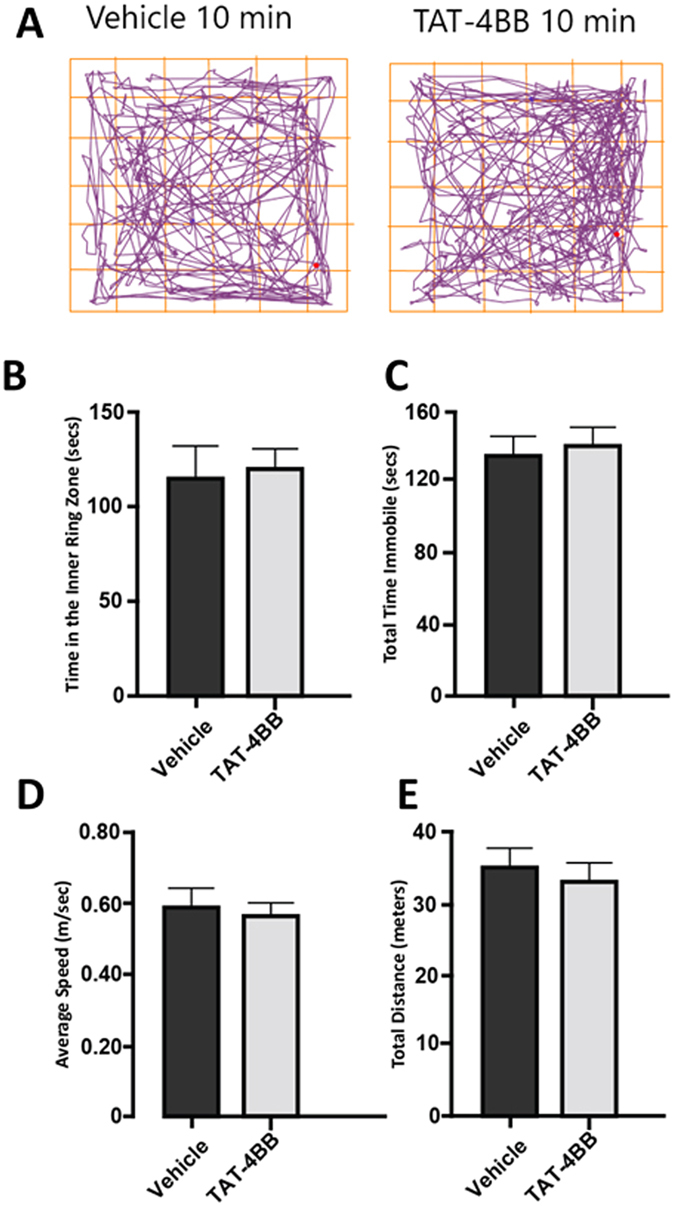
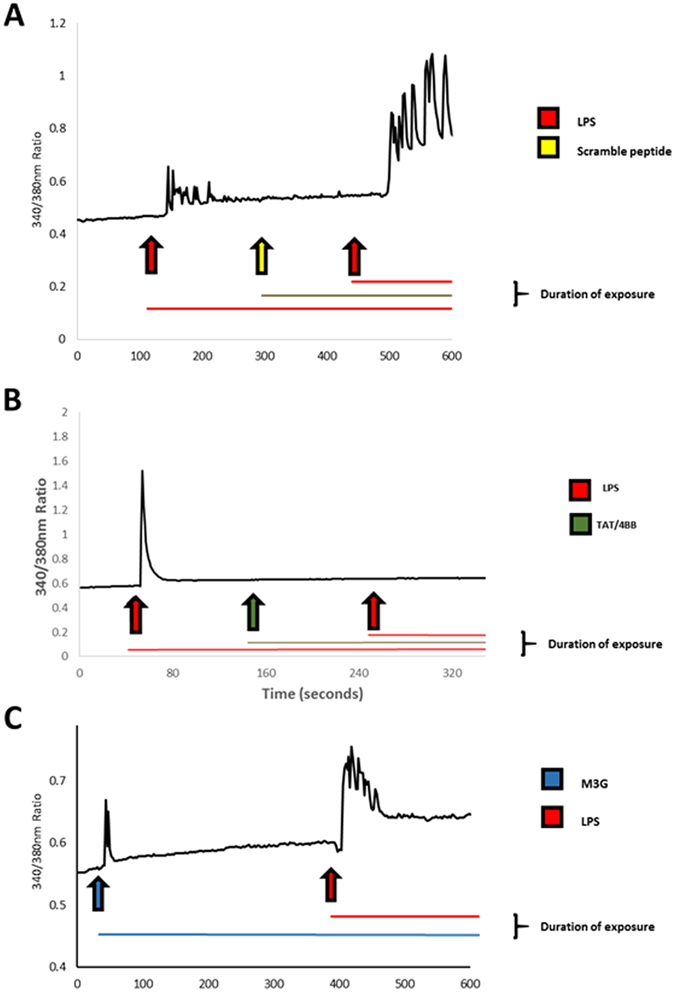
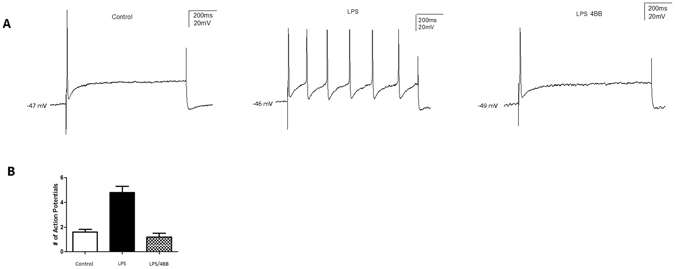
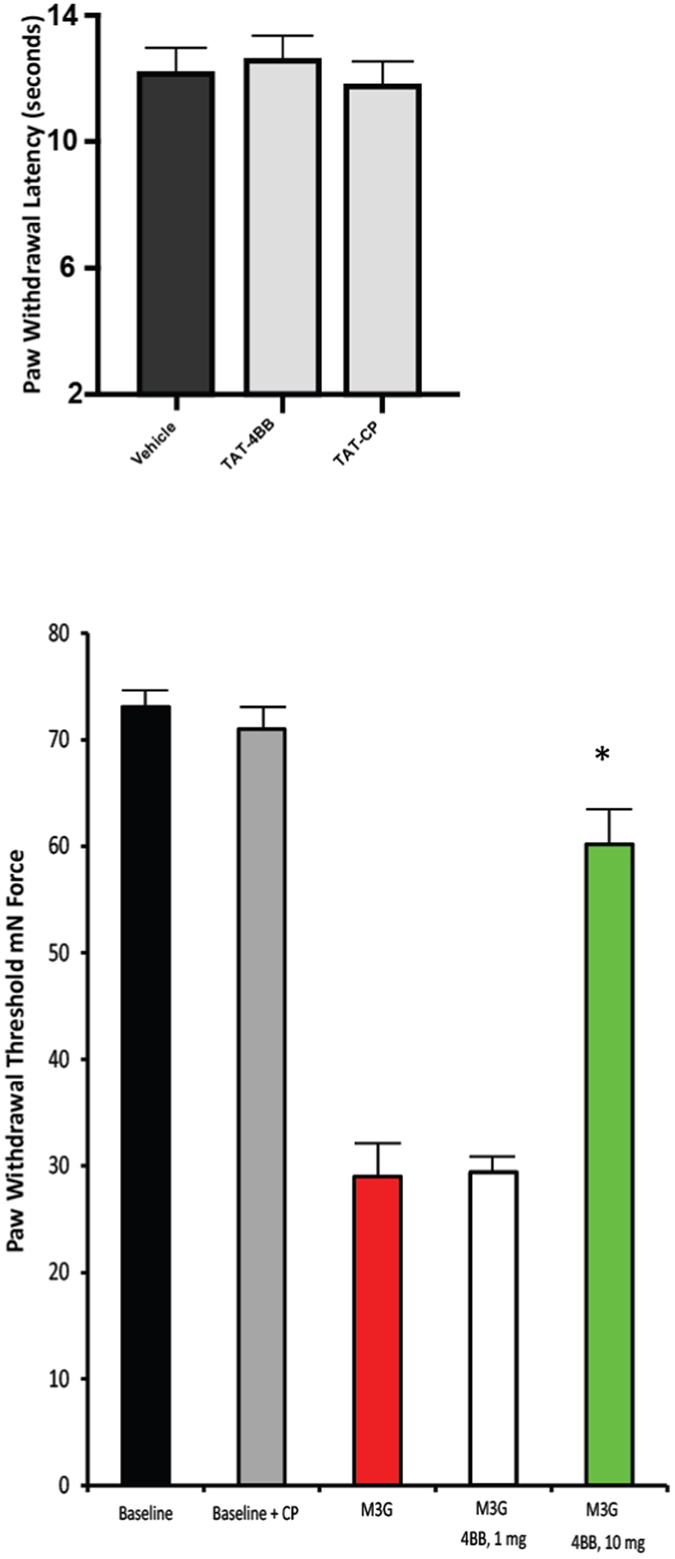
Accumulating evidence indicates that Toll-like receptor (TLR) signaling adapter protein interactions with Toll/Interleukin-1 Receptor (TIR) domains present in sensory neurons may modulate neuropathic pain states. Following ligand interaction with TLRs, TIR serves to both initiate intracellular signaling and facilitate recruitment of signaling adapter proteins to the intracytoplasmic domain. Although TLR TIR is central to a number of TLR signaling cascades, its role in sensory neurons is poorly understood. In this study we investigated the degree to which TLR TIR decoy peptide modified to include a TAT sequence (Trans-Activator of Transcription gene in HIV; TAT-4BB) affected LPS-induced intracellular calcium flux and excitation in sensory neurons, and behavioral changes due to TLR4 active metabolite, morphine-3-glucuronide (M3G) exposure in vivo. TAT-4BB inhibited LPS-induced calcium changes in a majority of sensory neurons and decreased LPS-dependent neuronal excitability in small diameter neurons. Acute systemic administration of the TAT-4BB reversed M3G-induced tactile allodynia in a dose-dependent manner but did not affect motor activity, anxiety or responses to noxious thermal stimulus. These data suggest that targeting TLR TIR domains may provide novel pharmacological targets to reduce or reverse TLR4-dependent pain behavior in the rodent.
越来越多的证据表明,Toll 样受体(TLR)信号适配器蛋白与感觉神经元中存在的 Toll/白细胞介素-1 受体(TIR)结构域的相互作用可能调节神经病理性疼痛状态。在配体与 TLR 相互作用后,TIR 既可以启动细胞内信号转导,又可以促进信号适配器蛋白向细胞内结构域募集。尽管 TLR TIR 是许多 TLR 信号级联反应的核心,但它在感觉神经元中的作用还知之甚少。在这项研究中,我们研究了 TLR TIR 诱饵肽经过修饰包含 TAT 序列(HIV 中的转录激活因子基因;TAT-4BB)的程度,这种修饰肽对 LPS 诱导的感觉神经元细胞内钙离子流和兴奋以及 TLR4 活性代谢物吗啡-3-葡糖苷酸(M3G)体内暴露引起的行为变化的影响。TAT-4BB 抑制了大多数感觉神经元中 LPS 诱导的钙变化,并降低了小直径神经元中 LPS 依赖性神经元兴奋性。急性全身给予 TAT-4BB 以剂量依赖的方式逆转了 M3G 诱导的触觉过敏,但不影响运动活动、焦虑或对有害热刺激的反应。这些数据表明,靶向 TLR TIR 结构域可能为减少或逆转啮齿动物 TLR4 依赖性疼痛行为提供新的药理学靶点。