Department of Anatomy, Graduate School of Medicine, Gunma University. 39-22 Showa-machi 3-chome, Maebashi, Gunma, 371-8511, Japan.
Department of Neurosurgery, Graduate School of Medicine, Gunma University. 39-22 Showa-machi 3-chome, Maebashi, Gunma, 371-8511, Japan.
Sci Rep. 2017 Jun 16;7(1):3645. doi: 10.1038/s41598-017-03900-9.
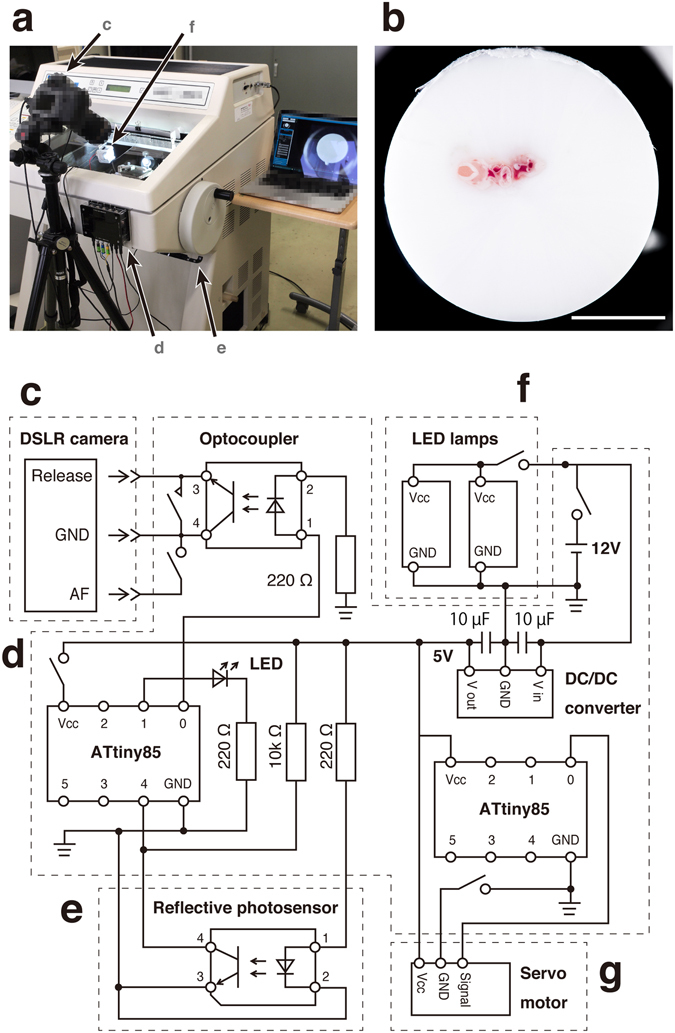
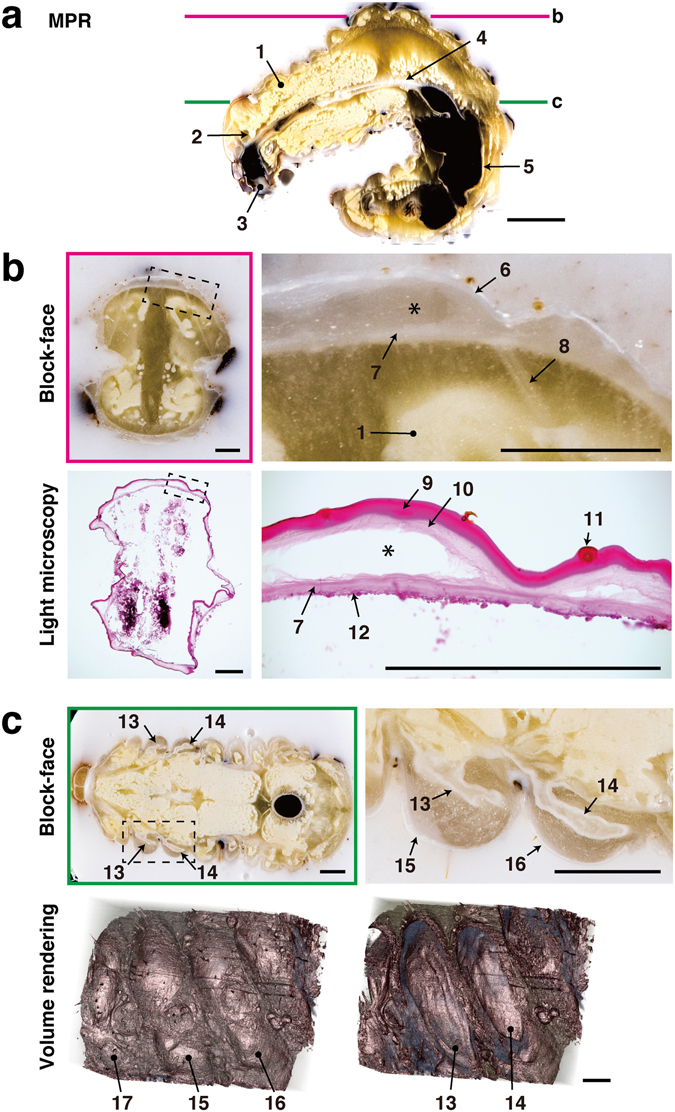
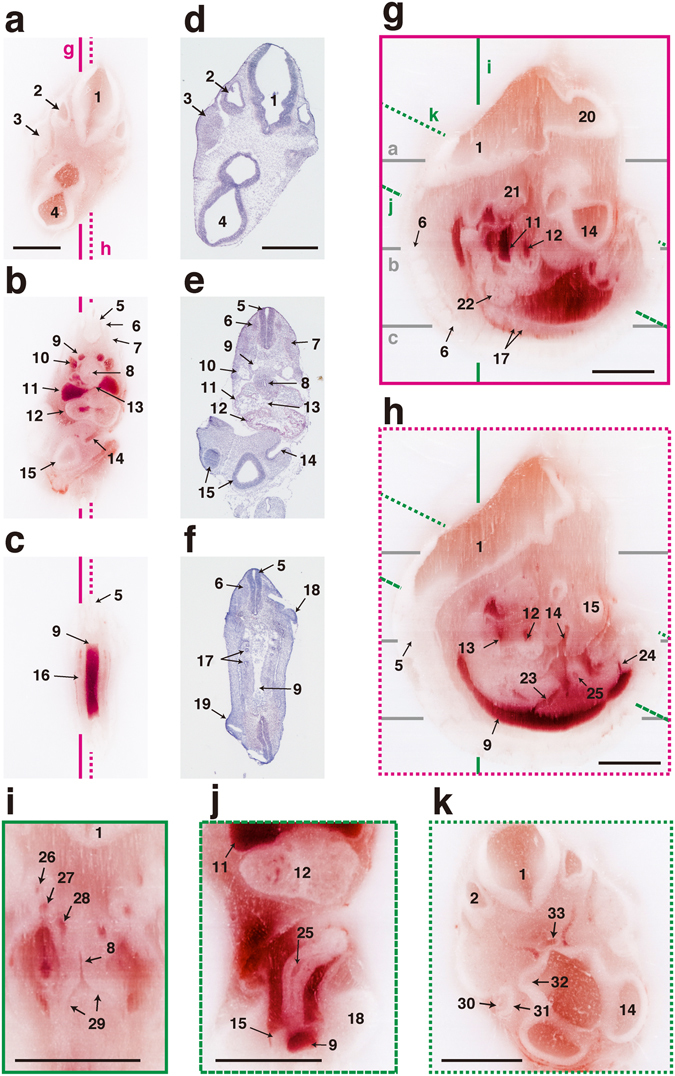
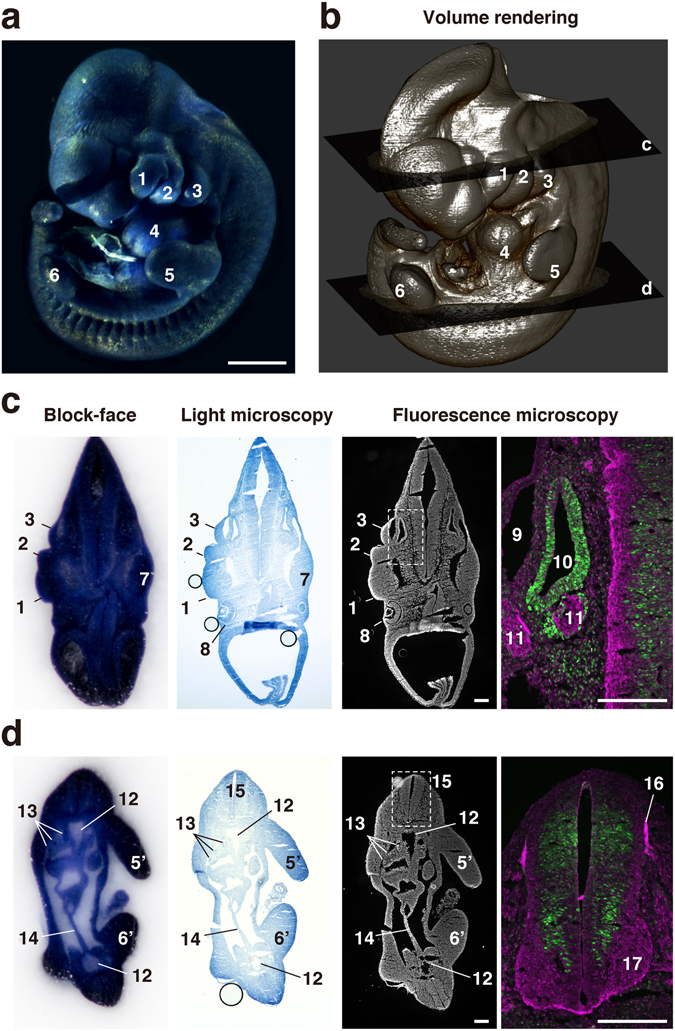
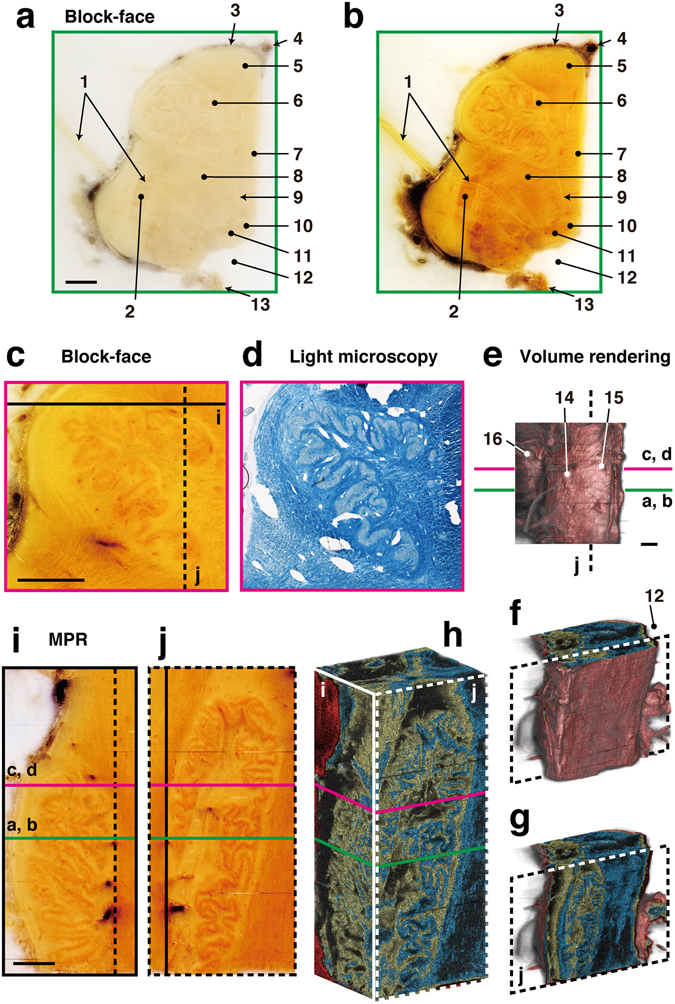
We have developed an imaging method designated as correlative light microscopy and block-face imaging (CoMBI), which contributes to improve the reliability of morphological analyses. This method can collect both the frozen sections and serial block-face images in a single specimen. The frozen section can be used for conventional light microscopic analysis to obtain 2-dimensional (2D) anatomical and molecular information, while serial block-face images can be used as 3-dimensional (3D) volume data for anatomical analysis. Thus, the sections maintain positional information in the specimen, and allows the correlation of 2D microscopic data and 3D volume data in a single specimen. The subjects can vary in size and type, and can cover most specimens encountered in biology. In addition, the required system for our method is characterized by cost-effectiveness. Here, we demonstrated the utility of CoMBI using specimens ranging in size from several millimeters to several centimeters, i.e., mouse embryos, human brainstem samples, and stag beetle larvae, and present successful correlation between the 2D light microscopic images and 3D volume data in a single specimen.
我们开发了一种成像方法,命名为相关光显微镜和块面成像(CoMBI),这有助于提高形态分析的可靠性。该方法可以在单个标本中同时收集冷冻切片和连续块面图像。冷冻切片可用于传统的光镜分析,以获得二维(2D)解剖和分子信息,而连续块面图像可用作解剖分析的三维(3D)体积数据。因此,切片在标本中保持位置信息,并允许在单个标本中对 2D 微观数据和 3D 体积数据进行关联。研究对象的大小和类型各不相同,可以涵盖生物学中遇到的大多数标本。此外,我们方法所需的系统具有成本效益。在这里,我们使用从几毫米到几厘米不等的大小的标本(即小鼠胚胎、人脑干样本和鹿角甲虫幼虫)演示了 CoMBI 的实用性,并展示了单个标本中 2D 光镜图像和 3D 体积数据之间的成功关联。