Song Lei, Martinez Laisel, Zigmond Zachary M, Hernandez Diana R, Lassance-Soares Roberta M, Selman Guillermo, Vazquez-Padron Roberto I
Department of Molecular and Cellular Pharmacology, Leonard M. Miller School of Medicine, University of Miami, Miami, FL, United States of America.
DeWitt Daughtry Family Department of Surgery, Division of Vascular Surgery, Leonard M. Miller School of Medicine, University of Miami, Miami, FL, United States of America.
PeerJ. 2017 Jun 13;5:e3418. doi: 10.7717/peerj.3418. eCollection 2017.
c-Kit is a receptor tyrosine kinase present in multiple cell types, including vascular smooth muscle cells (SMC). However, little is known about how c-Kit influences SMC biology and vascular pathogenesis.
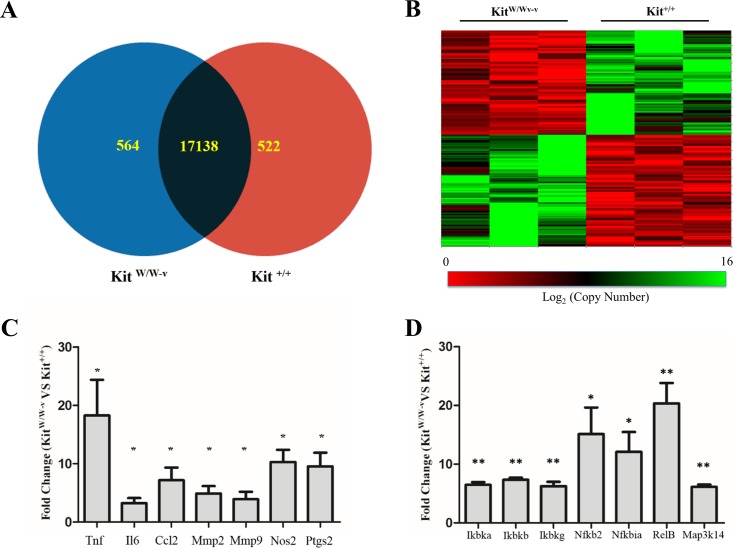
High-throughput microarray assays and pathway analysis were used to identify differentially expressed genes between primary c-Kit deficient (Kit) and control (Kit) SMC. Quantitative real-time RT-PCR and functional assays further confirmed the differences in gene expression and pro-inflammatory pathway regulation between both SMC populations.
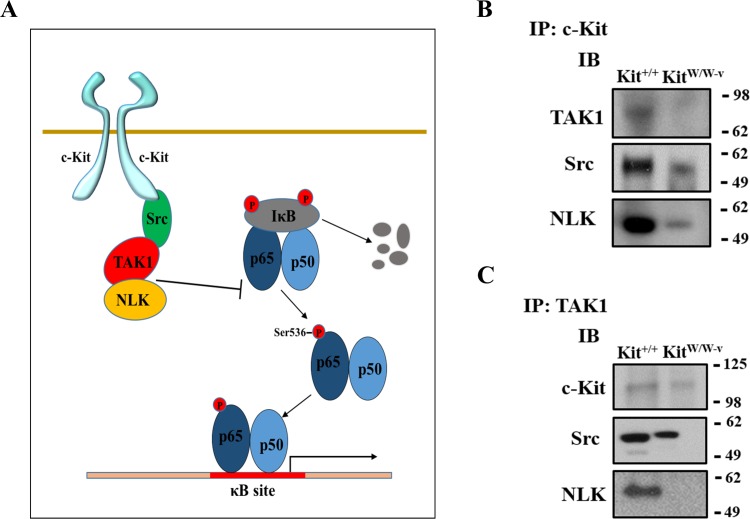
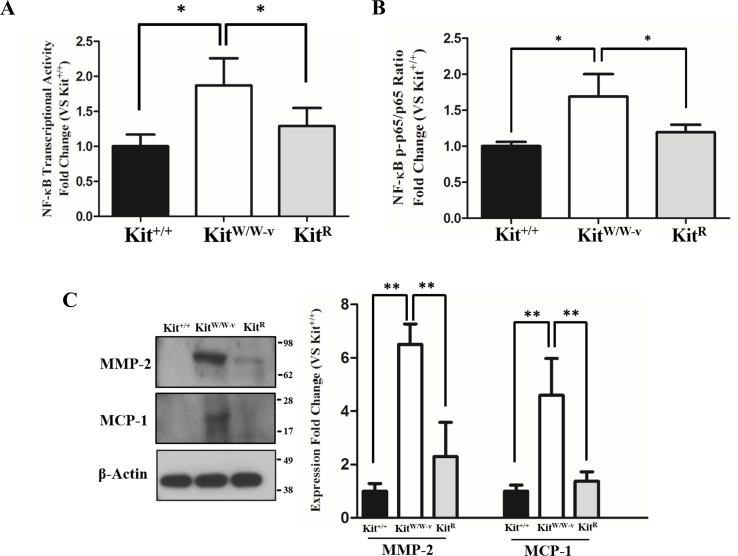
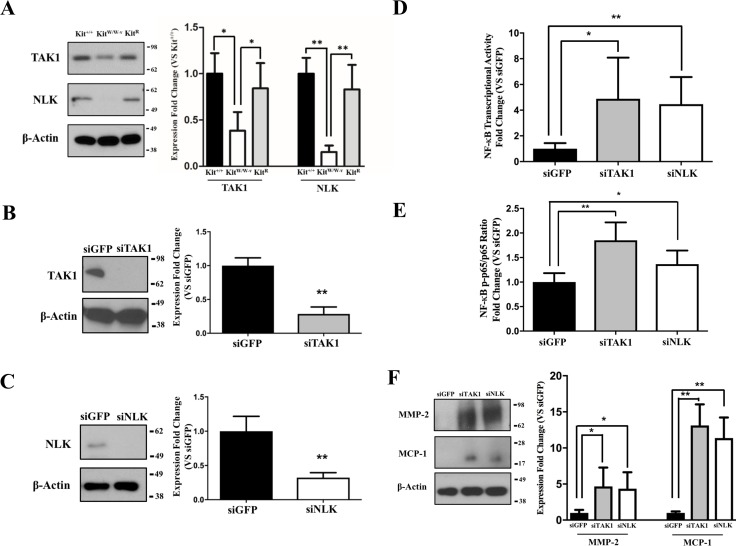
The microarray analysis revealed elevated NF-κB gene expression secondary to the loss of c-Kit that affects both the canonical and alternative NF-κB pathways. Upon stimulation with an oxidized phospholipid as pro-inflammatory agent, c-Kit deficient SMC displayed enhanced NF-κB transcriptional activity, higher phosphorylated/total p65 ratio, and increased protein expression of NF-κB regulated pro-inflammatory mediators with respect to cells from control mice. The pro-inflammatory phenotype of mutant cells was ameliorated after restoring c-Kit activity using lentiviral transduction. Functional assays further demonstrated that c-Kit suppresses NF-κB activity in SMC in a TGFβ-activated kinase 1 (TAK1) and Nemo-like kinase (NLK) dependent manner.
Our study suggests a novel mechanism by which c-Kit suppresses NF-κB regulated pathways in SMC to prevent their pro-inflammatory transformation.
c-Kit是一种存在于多种细胞类型中的受体酪氨酸激酶,包括血管平滑肌细胞(SMC)。然而,关于c-Kit如何影响SMC生物学和血管发病机制,人们知之甚少。
采用高通量微阵列分析和通路分析,以鉴定原发性c-Kit缺陷型(Kit-/-)和平行对照(Kit+/+)SMC之间差异表达的基因。定量实时RT-PCR和功能分析进一步证实了这两种SMC群体在基因表达和促炎通路调控方面的差异。
微阵列分析显示,c-Kit缺失导致NF-κB基因表达升高,这影响了经典和替代NF-κB通路。在用氧化磷脂作为促炎剂刺激后,与对照小鼠的细胞相比,c-Kit缺陷型SMC表现出增强的NF-κB转录活性、更高的磷酸化/总p65比率,以及NF-κB调节的促炎介质蛋白表达增加。使用慢病毒转导恢复c-Kit活性后,突变细胞的促炎表型得到改善。功能分析进一步表明,c-Kit以依赖TGFβ激活激酶1(TAK1)和Nemo样激酶(NLK)的方式抑制SMC中的NF-κB活性。
我们的研究提出了一种新机制,即c-Kit抑制SMC中NF-κB调节的通路,以防止其促炎转化。