Swaathy Sreethar, Kavitha Varadharajan, Pravin Arokiasamy Sahaya, Mandal Asit Baran, Gnanamani Arumugam
Microbiology Division, CSIR - Central Leather Research Institute, Adyar, Chennai 600020, Tamil Nadu, India.
Biotechnol Rep (Amst). 2014 Oct 17;4:161-170. doi: 10.1016/j.btre.2014.10.004. eCollection 2014 Dec.
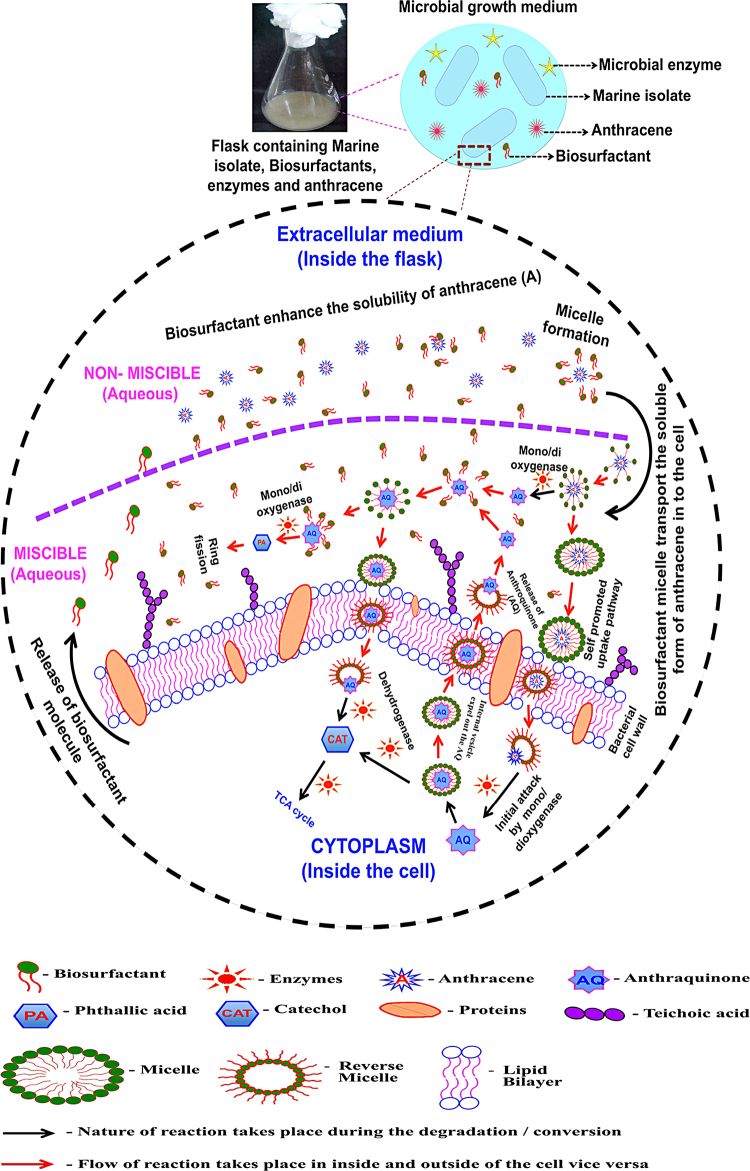
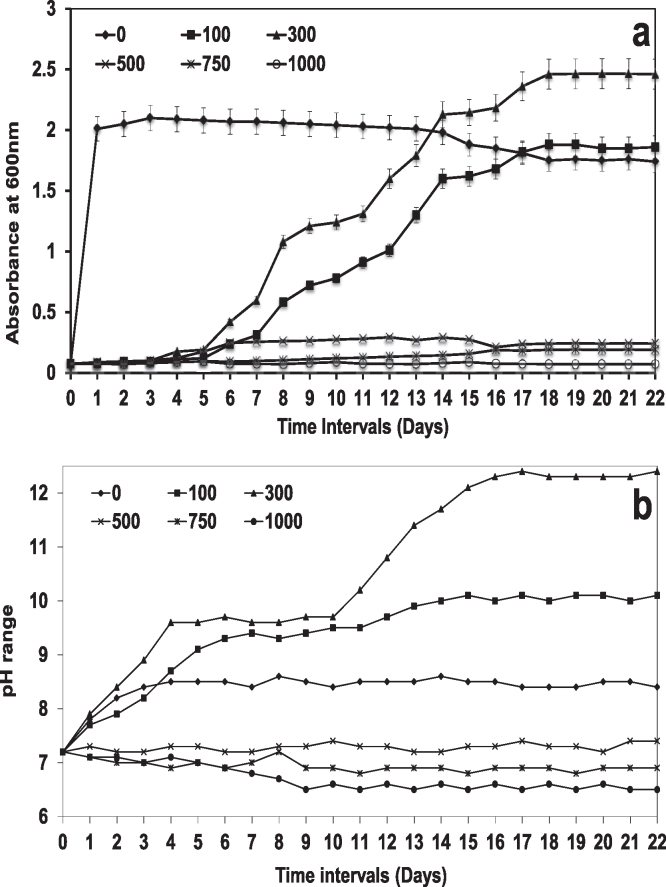
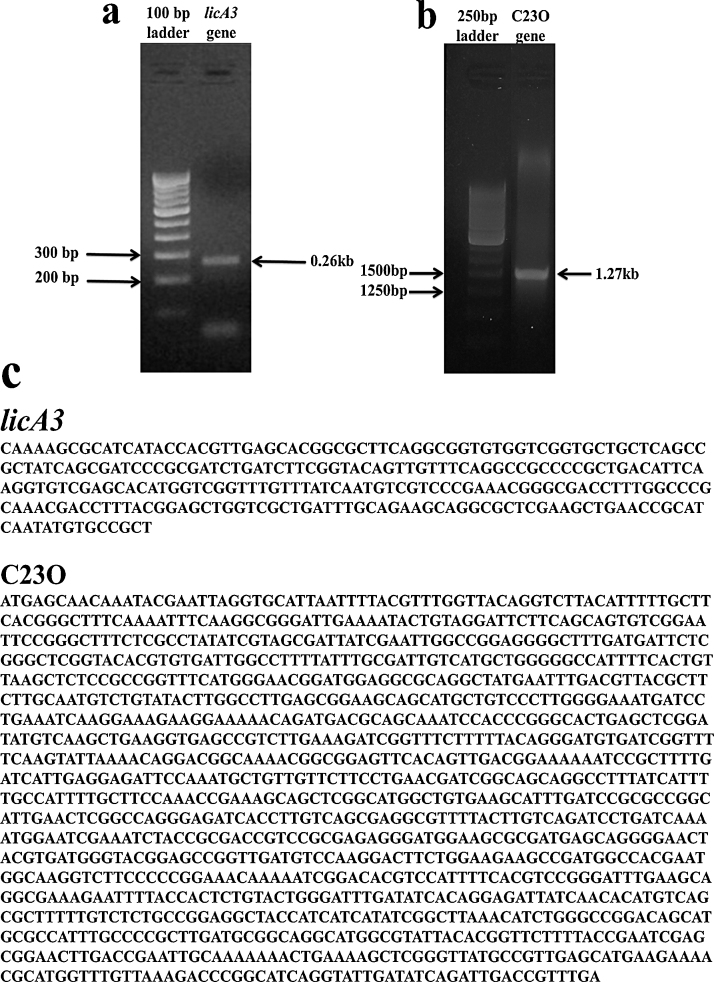
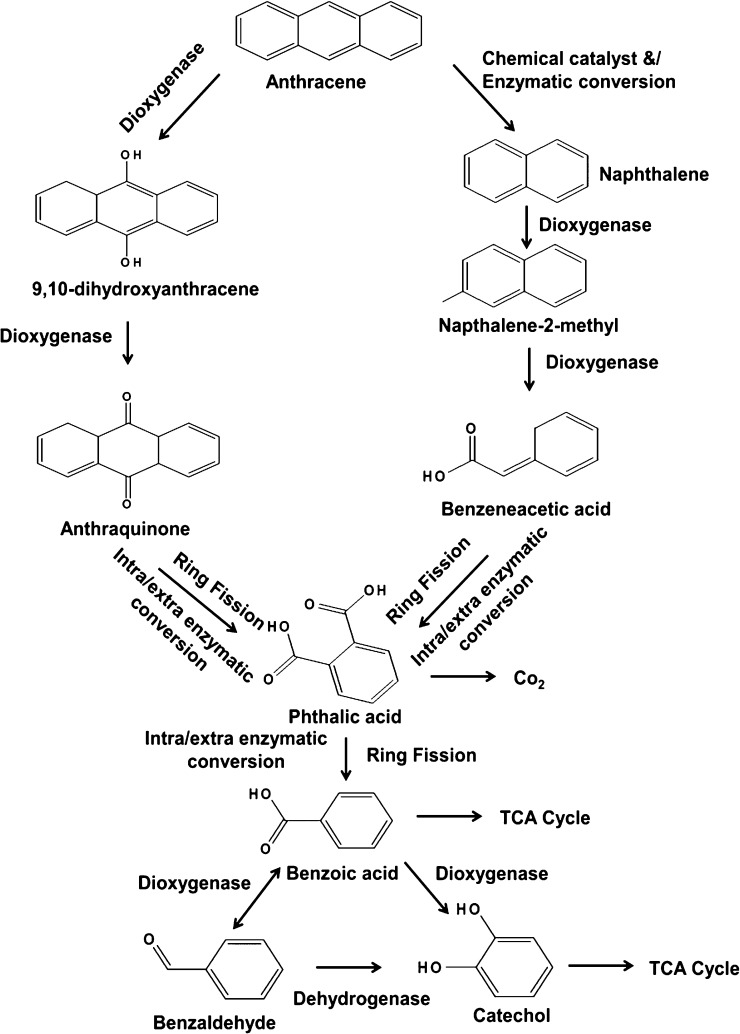
The present study emphasizes the biosurfactant mediated anthracene degradation by a marine alkaliphile (MTCC 5514). The isolate, MTCC 5514 degraded >95% of 300 ppm anthracene in an aqueous medium within 22 days and the degradation percentage reduced significantly when the concentration of anthracene increased to above 500 ppm. Naphthalene, naphthalene 2-methyl, phthalic acid and benzene acetic acid are the products of degradation identified based on thin layer chromatography, high performance liquid chromatography, gas chromatography and mass analyses. It has been observed that the degradation is initiated by the biosurfactant of the isolate for solubilization through micellation and then the alkali pH and intra/extra cellular degradative enzymes accomplish the degradation process. Encoding of genes responsible for biosurfactant production ( as well as catabolic reactions (C23O) made with suitable primers designed. The study concludes production of biosurfactant mediates the degradation of anthracene by .
本研究强调了一种海洋嗜碱菌(MTCC 5514)通过生物表面活性剂介导的蒽降解作用。该分离株MTCC 5514在22天内可降解水介质中95%以上的300 ppm蒽,当蒽浓度增加到500 ppm以上时,降解率显著降低。基于薄层色谱、高效液相色谱、气相色谱和质谱分析,鉴定出萘、2-甲基萘、邻苯二甲酸和苯乙酸为降解产物。据观察,降解过程由该分离株的生物表面活性剂通过胶束化作用增溶启动,然后碱性pH值以及细胞内/外降解酶完成降解过程。使用设计的合适引物对负责生物表面活性剂产生(以及分解代谢反应(C23O))的基因进行编码。该研究得出结论,生物表面活性剂的产生介导了蒽的降解。