Department of Microbiology and Infectious Disease Center, School of Basic Medical Sciences, Peking University Health Science Center, Beijing 100191, P.R. China.
Liver Research Center, Beijing Friendship Hospital, Capital Medical University; Beijing Key Laboratory of Translational Medicine in Liver Cirrhosis and National Clinical Research Center of Digestive Diseases, Beijing 100050, P.R. China.
Int J Mol Med. 2017 Aug;40(2):454-464. doi: 10.3892/ijmm.2017.3028. Epub 2017 Jun 14.
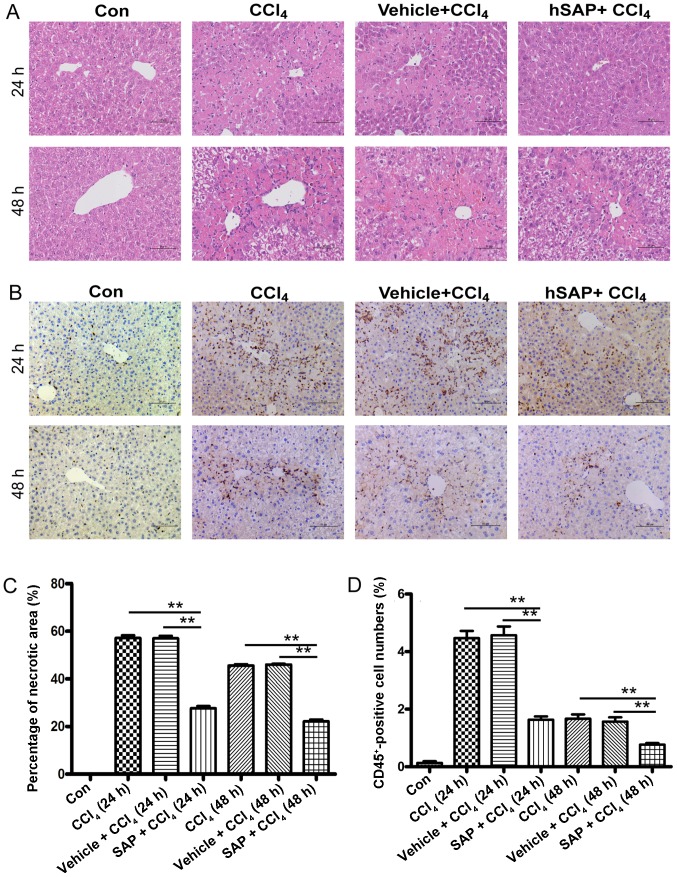
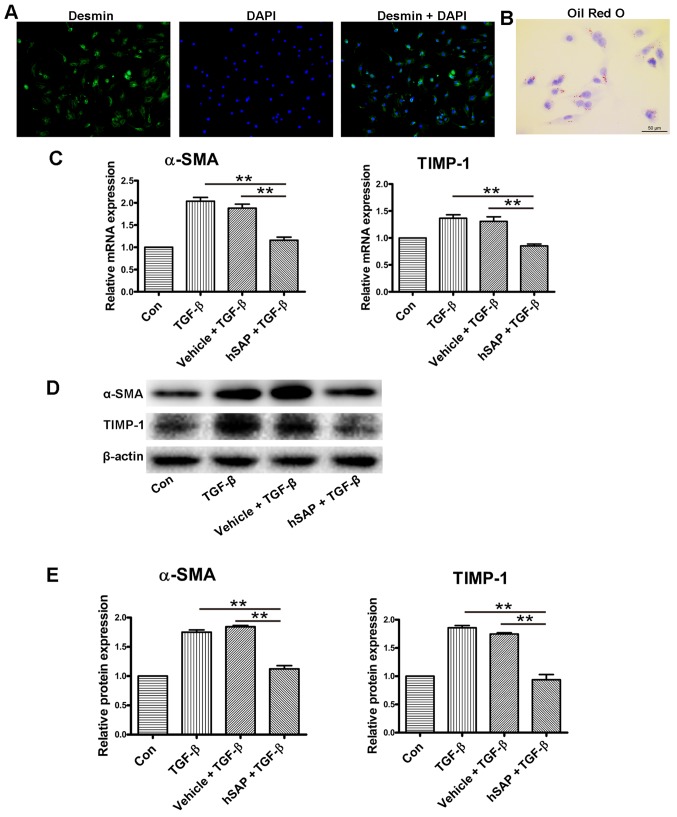
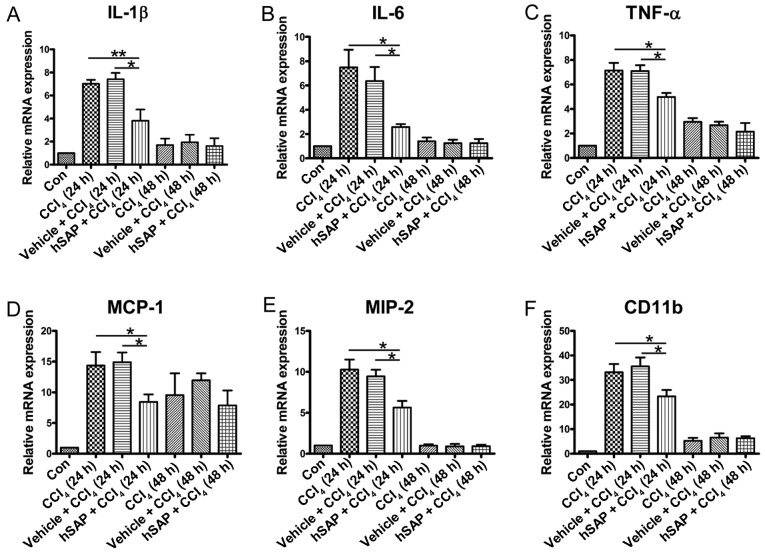
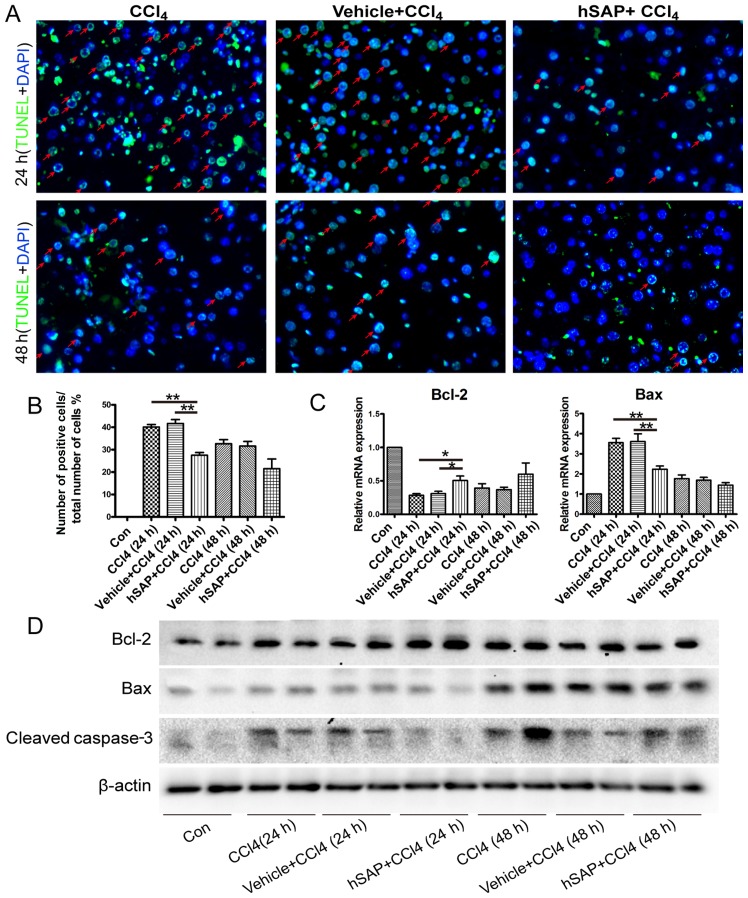
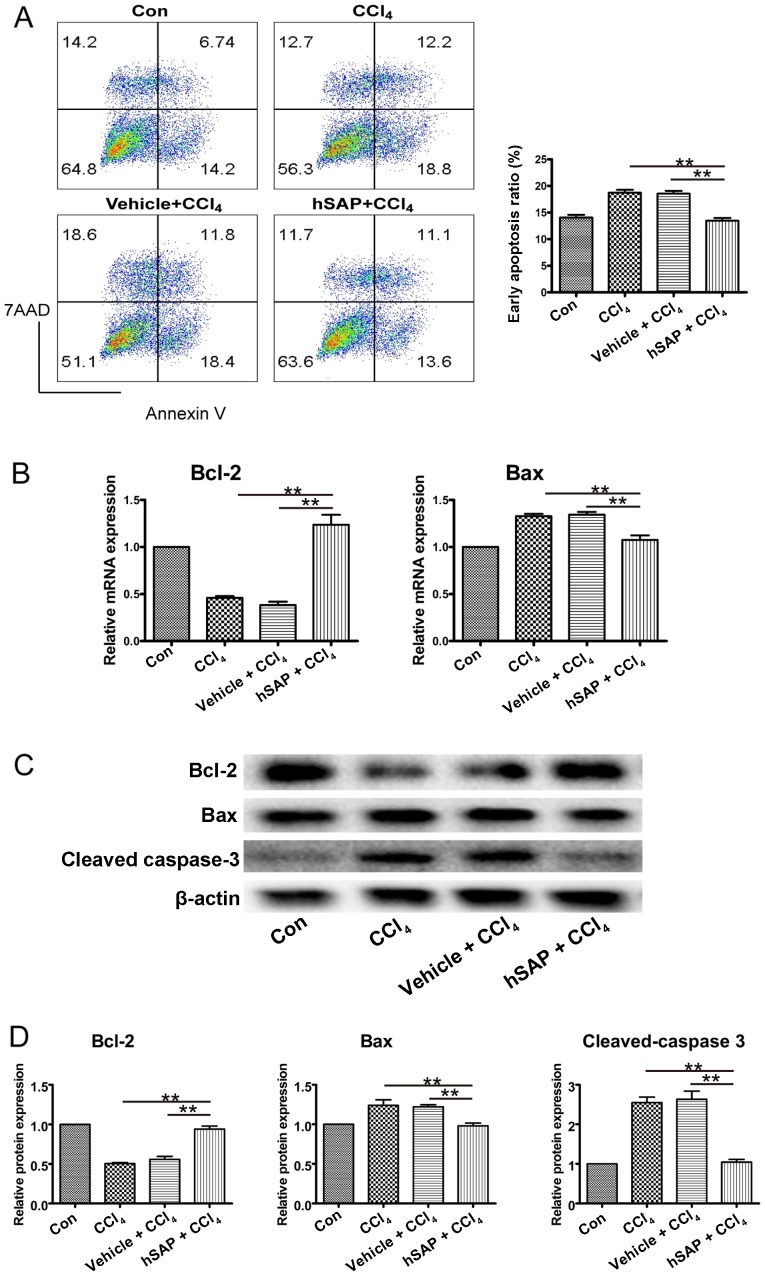
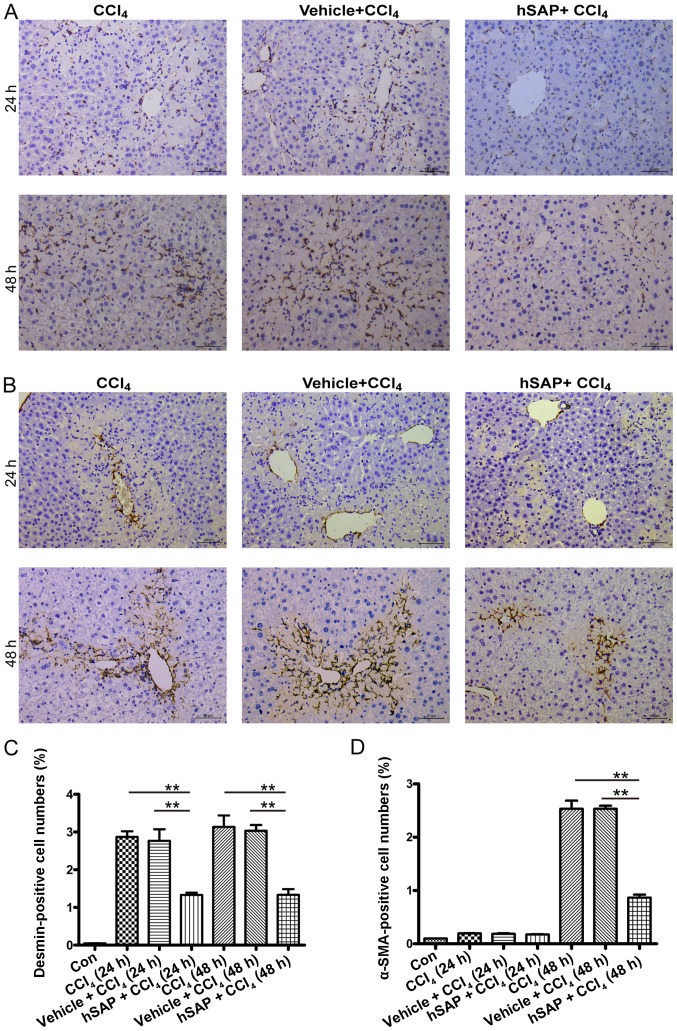
Human serum amyloid P (hSAP), a member of the pentraxin family, inhibits the activation of fibrocytes in culture and inhibits experimental renal, lung, skin and cardiac fibrosis. As hepatic inflammation is one of the causes of liver fibrosis, in the present study, we investigated the hepatoprotective effects of hSAP against carbon tetrachloride (CCl4)-induced liver injury. Our data indicated that hSAP attenuated hepatic histopathological abnormalities and significantly decreased inflammatory cell infiltration and pro-inflammatory factor expression. Moreover, CCl4-induced apoptosis in the mouse liver was inhibited by hSAP, as measured by terminal-deoxynucleotidyl transferase mediated nick-end labeling (TUNEL) assay and cleaved caspase-3 expression. hSAP significantly restored the expression of B cell lymphoma/leukemia (Bcl)-2 and suppressed the expression of Bcl-2-associated X protein (Bax) in vivo. The number of hepatocytes in early apoptosis stained with Annexin V was significantly reduced by 28-30% in the hSAP treatment group compared with the CCl4 group, and the expression of Bcl-2 was increased, whereas the expression of Bax and cleaved caspase-3 were significantly inhibited in the hSAP pre-treatment group compared with the CCl4 group. hSAP administration also inhibited the migration and activation of hepatic stellate cells (HSCs) in CCl4-injured liver and suppressed the activation of isolated primary HSCs induced by transforming growth factor (TGF)-β1 in vitro. Collectively, these findings suggest that hSAP exerts a protective effect againts CCl4-induced hepatic injury by suppressing the inflammatory response and hepatocyte apoptosis, potentially by inhibiting HSC activation.
人血清淀粉样蛋白 P(hSAP)是五聚素家族的一员,它在体外抑制纤维母细胞的激活,并抑制实验性肾、肺、皮肤和心脏纤维化。由于肝炎症是肝纤维化的原因之一,在本研究中,我们研究了 hSAP 对四氯化碳(CCl4)诱导的肝损伤的肝保护作用。我们的数据表明,hSAP 减轻了肝组织病理学异常,并显著减少了炎症细胞浸润和促炎因子的表达。此外,通过末端脱氧核苷酸转移酶介导的缺口末端标记(TUNEL)测定和 cleaved caspase-3 表达,hSAP 抑制了 CCl4 诱导的小鼠肝细胞凋亡。hSAP 显著恢复了 B 细胞淋巴瘤/白血病(Bcl)-2 的表达,并抑制了体内 Bcl-2 相关 X 蛋白(Bax)的表达。与 CCl4 组相比,hSAP 治疗组中早期凋亡的肝细胞用 Annexin V 染色的数量减少了 28-30%,Bcl-2 的表达增加,而 Bax 和 cleaved caspase-3 的表达在 hSAP 预处理组中明显低于 CCl4 组。hSAP 给药还抑制了 CCl4 损伤肝脏中肝星状细胞(HSCs)的迁移和激活,并抑制了 TGF-β1 体外诱导的分离原代 HSCs 的激活。总之,这些发现表明,hSAP 通过抑制炎症反应和肝细胞凋亡,发挥对 CCl4 诱导的肝损伤的保护作用,可能通过抑制 HSC 激活。