Gulchina Yelena, Xu Song-Jun, Snyder Melissa A, Elefant Felice, Gao Wen-Jun
Department of Neurobiology and Anatomy, Drexel University College of Medicine, Philadelphia, Pennsylvania, USA.
Department of Biology, Drexel University, Philadelphia, Pennsylvania, USA.
J Neurochem. 2017 Nov;143(3):320-333. doi: 10.1111/jnc.14101. Epub 2017 Sep 5.
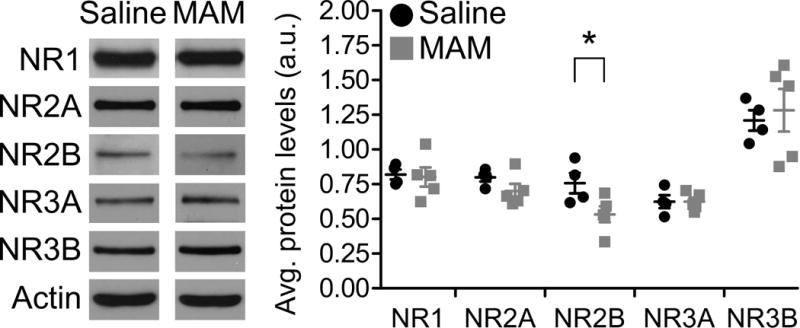
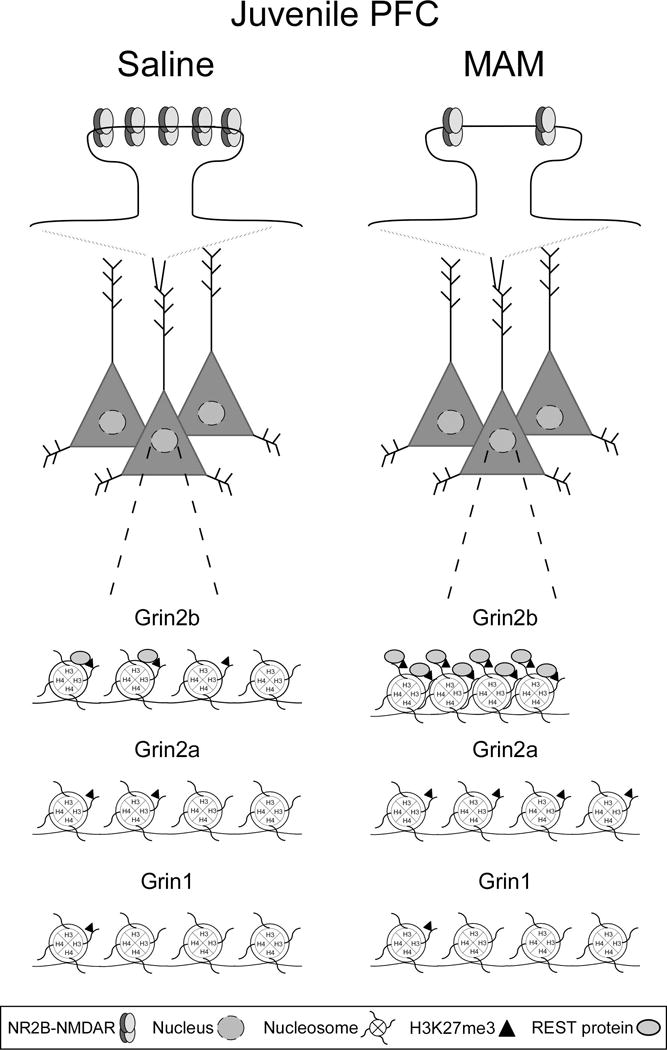
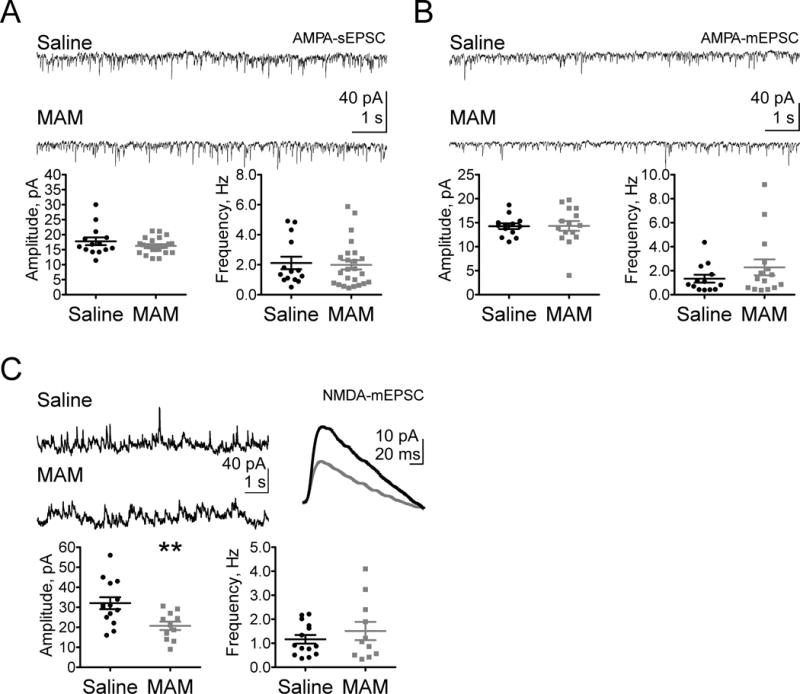
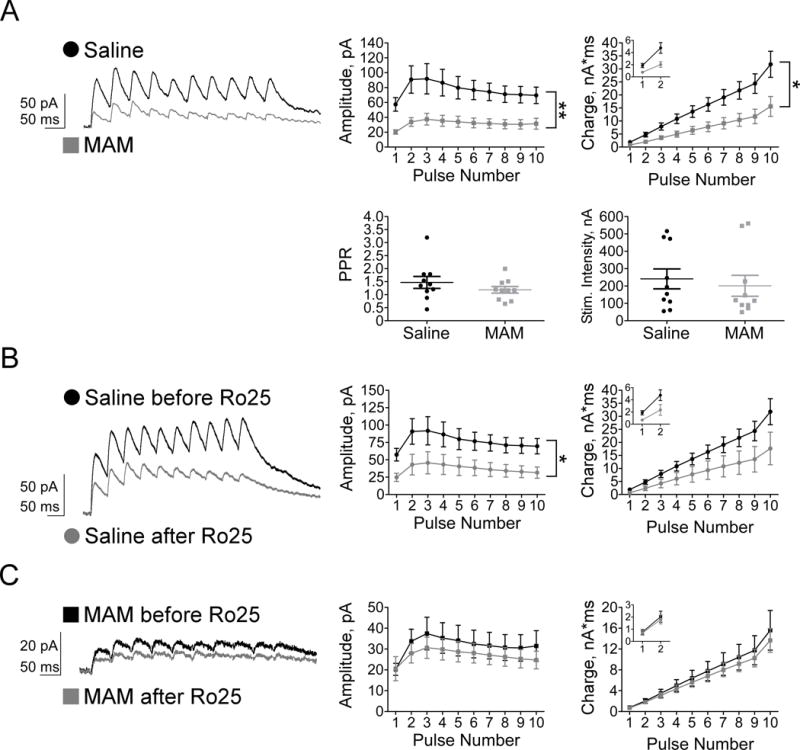
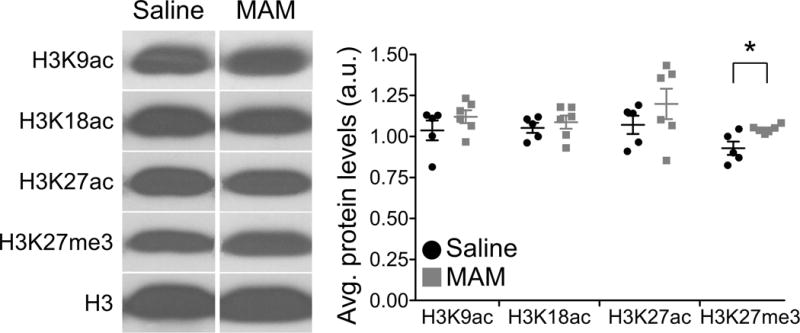
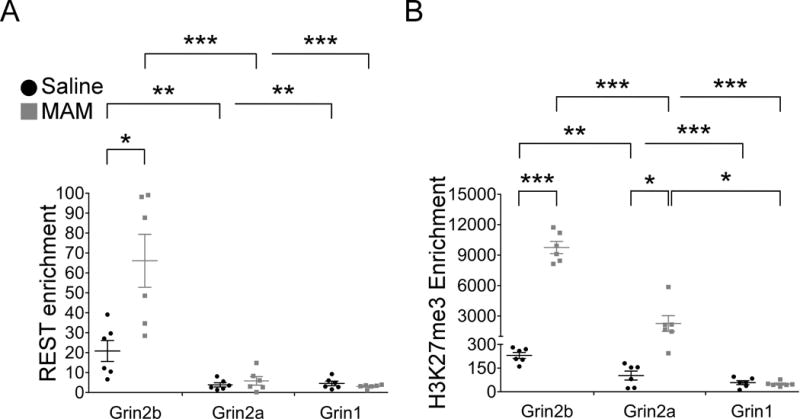
Schizophrenia (SCZ) is characterized not only by psychosis, but also by working memory and executive functioning deficiencies, processes that rely on the prefrontal cortex (PFC). Because these cognitive impairments emerge prior to psychosis onset, we investigated synaptic function during development in the neurodevelopmental methylazoxymethanol (MAM) model for SCZ. Specifically, we hypothesize that N-methyl-D-aspartate receptor (NMDAR) hypofunction is attributable to reductions in the NR2B subunit through aberrant epigenetic regulation of gene expression, resulting in deficient synaptic physiology and PFC-dependent cognitive dysfunction, a hallmark of SCZ. Using western blot and whole-cell patch-clamp electrophysiology, we found that the levels of synaptic NR2B protein are significantly decreased in juvenile MAM animals, and the function of NMDARs is substantially compromised. Both NMDA-mEPSCs and synaptic NMDA-eEPSCs are significantly reduced in prelimbic PFC (plPFC). This protein loss during the juvenile period is correlated with an aberrant increase in enrichment of the epigenetic transcriptional repressor RE1-silencing transcription factor (REST) and the repressive histone marker H3K27me3 at the Grin2b promoter, as assayed by ChIP-quantitative polymerase chain reaction. Glutamate hypofunction has been a prominent hypothesis in the understanding of SCZ pathology; however, little attention has been given to the NMDAR system in the developing PFC in models for SCZ. Our work is the first to confirm that NMDAR hypofunction is a feature of early postnatal development, with epigenetic hyper-repression of the Grin2b promoter being a contributing factor. The selective loss of NR2B protein and subsequent synaptic dysfunction weakens plPFC function during development and may underlie early cognitive impairments in SCZ models and patients. Read the Editorial Highlight for this article on page 264.
精神分裂症(SCZ)不仅以精神病为特征,还存在工作记忆和执行功能缺陷,这些过程依赖于前额叶皮质(PFC)。由于这些认知障碍在精神病发作之前就已出现,我们在SCZ的神经发育性甲基氧化偶氮甲醇(MAM)模型中研究了发育过程中的突触功能。具体而言,我们假设N-甲基-D-天冬氨酸受体(NMDAR)功能减退是由于基因表达的异常表观遗传调控导致NR2B亚基减少,从而导致突触生理学缺陷和PFC依赖性认知功能障碍,这是SCZ的一个标志。通过蛋白质免疫印迹法和全细胞膜片钳电生理学,我们发现幼年MAM动物中突触NR2B蛋白水平显著降低,NMDAR的功能也受到严重损害。在前边缘前额叶皮质(plPFC)中,NMDA介导的微小兴奋性突触后电流(mEPSC)和突触NMDA介导的兴奋性突触后电流(eEPSC)均显著降低。通过染色质免疫沉淀-定量聚合酶链反应检测发现,幼年时期这种蛋白质的丢失与Grin2b启动子处表观遗传转录抑制因子RE1沉默转录因子(REST)富集的异常增加以及抑制性组蛋白标记物H3K27me3有关。谷氨酸功能减退一直是理解SCZ病理学的一个重要假设;然而,在SCZ模型中发育中的PFC中的NMDAR系统很少受到关注。我们的研究首次证实NMDAR功能减退是出生后早期发育的一个特征,Grin2b启动子的表观遗传过度抑制是一个促成因素。NR2B蛋白的选择性丢失及随后的突触功能障碍在发育过程中削弱了plPFC的功能,可能是SCZ模型和患者早期认知障碍的基础。阅读第264页关于本文的编辑亮点。