García-Caballero Melissa, Paupert Jenny, Blacher Silvia, Van de Velde Maureen, Quesada Ana Rodríguez, Medina Miguel Angel, Noël Agnès
Laboratory of Tumor and Developmental Biology, Groupe Interdisciplinaire de Génoprotéomique Appliqué-Cancer (GIGA-Cancer), Tower of Pathology, University of Liège, B23, +4, Avenue de l'hopital, 1, Sart Tilman, B-4000, Liège, Belgium.
Departamento de Biología Molecular y Bioquímica, Facultad de Ciencias, and IBIMA (Biomedical Research Institute of Málaga), Universidad de Málaga, Andalucía Tech, Málaga, Spain.
J Hematol Oncol. 2017 Jun 19;10(1):122. doi: 10.1186/s13045-017-0484-1.
Lymphatic metastasis is one of the leading causes of death in patients with different types of cancer and is the main prognostic factor for the disease survival. The formation of new lymphatic vessels (lymphangiogenesis) in primary tumors facilitates tumor cell dissemination to regional lymph nodes and correlates with distant metastases. Lymphangiogenesis has thus emerged as a suitable therapeutic target to block metastases, but no anti-lymphangiogenic compounds have been approved for clinical use to date. Therefore, new or improved therapies blocking lymphatic metastases are urgently required.
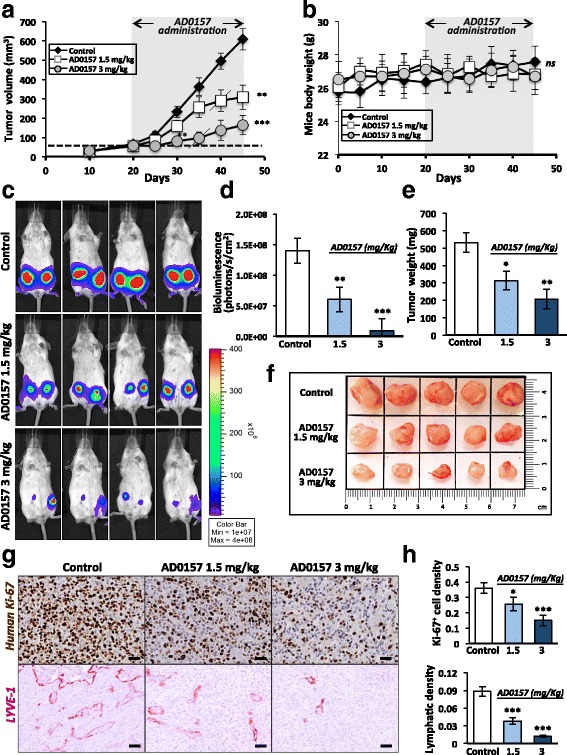
We established murine breast tumors to assess the effect of AD0157 on tumor growth, lymphangiogenesis, and lymphatic dissemination. Then, a battery of in vivo (mouse corneal neovascularization and ear sponges), ex vivo (mouse lymphatic rings and rat mesentery explants), and in vitro (proliferation, tubulogenesis, wound-healing, Boyden chambers, and spheroids) assays was used to give insight into the lymphangiogenic steps affected by AD0157. Finally, we investigated the molecular pathways controlled by this drug.
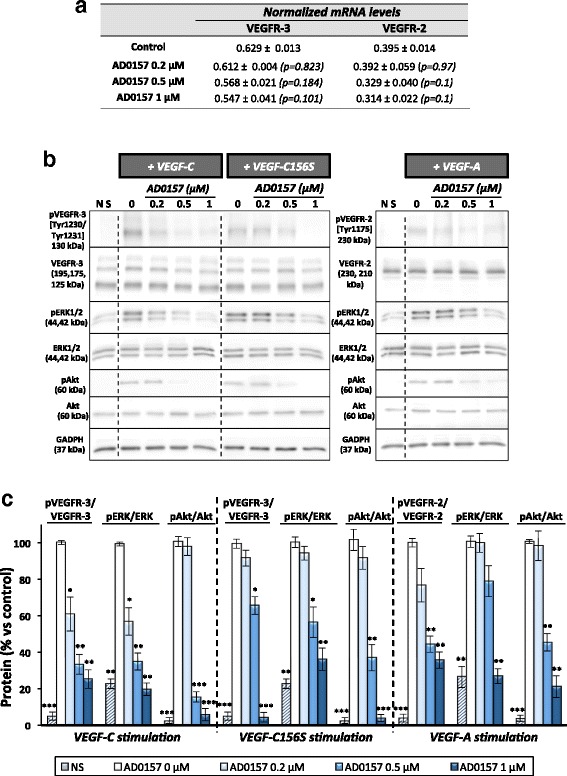
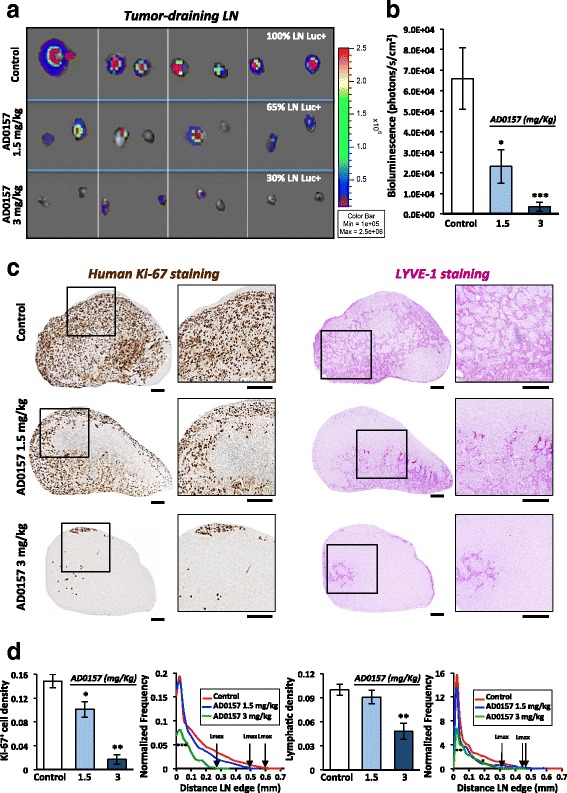
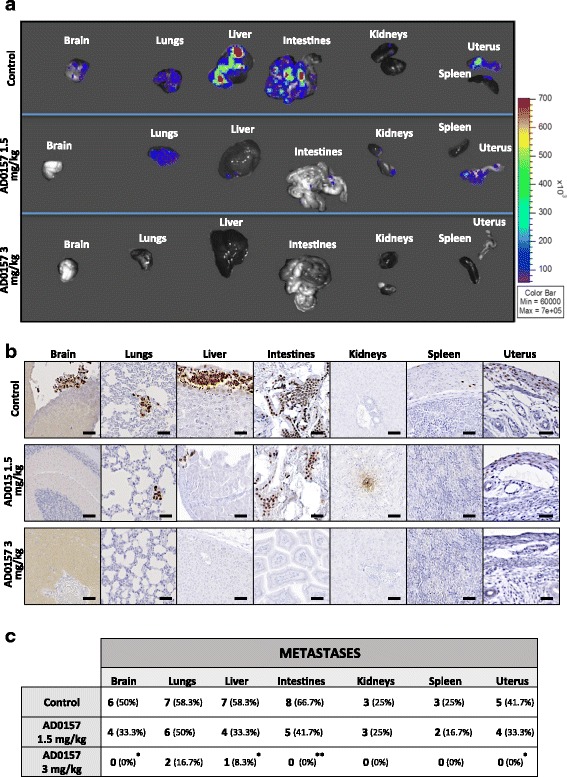
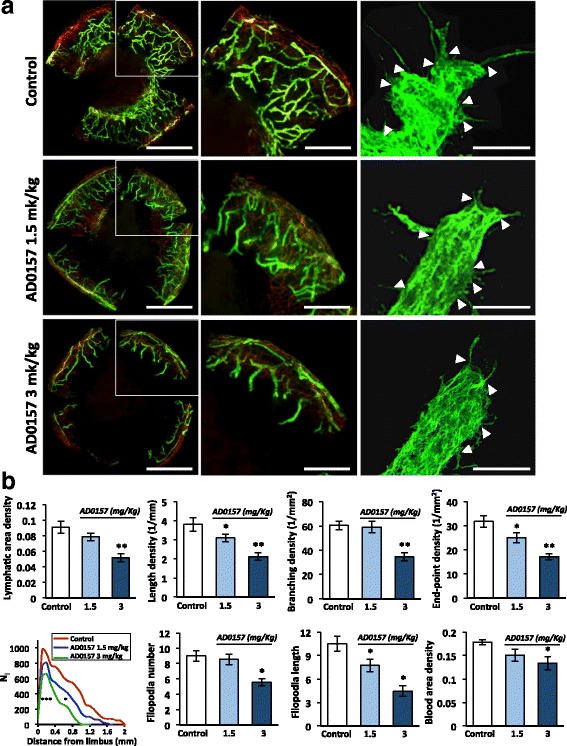
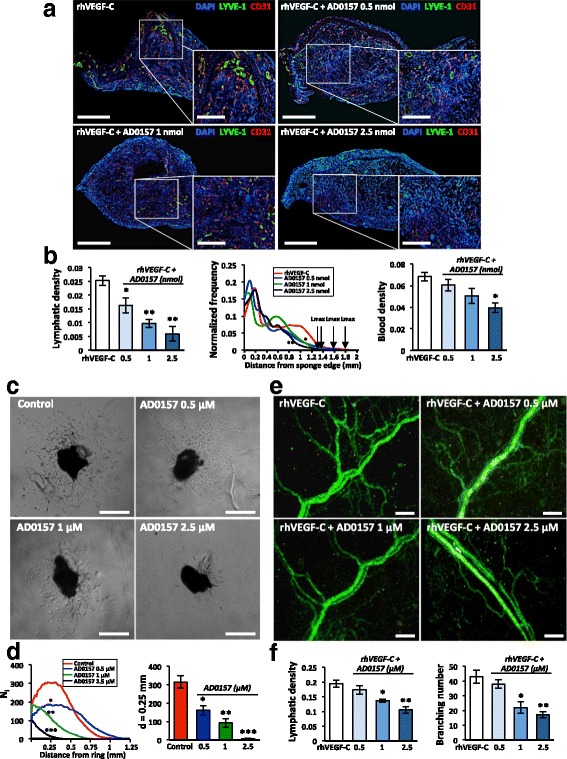
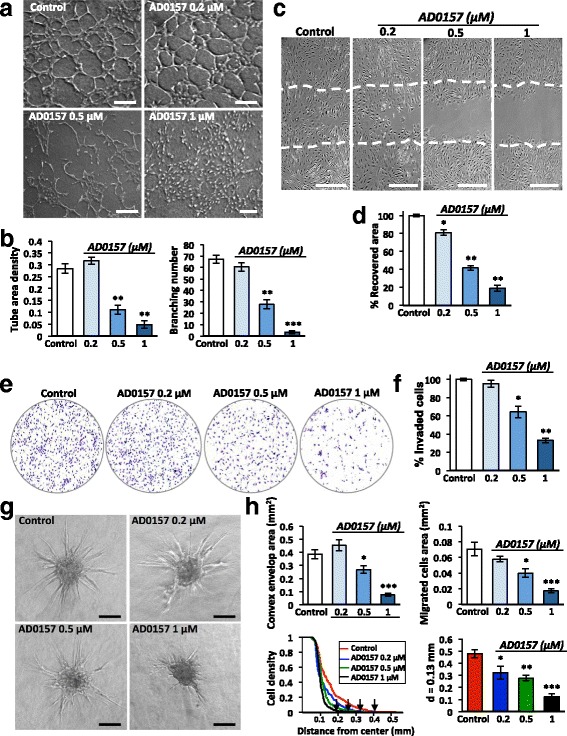
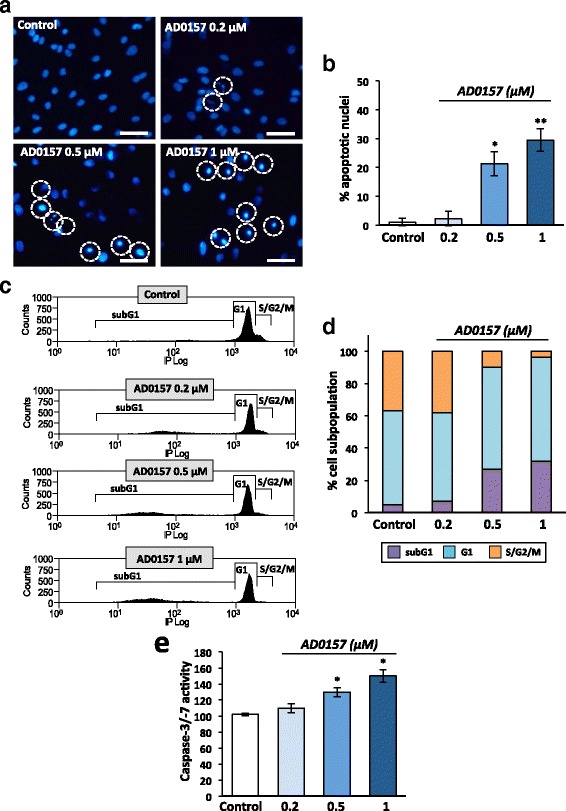
AD0157 was found to inhibit the growth of human breast cancer xenografts in mice, to strongly reduce tumor-associated lymphangiogenesis and to block metastatic dissemination to both lymph nodes and distant organs. The high anti-lymphangiogenic potency of AD0157 was further supported by its inhibitory activity at low micromolar range in two in vivo pathological models and in two ex vivo assays. In addition, AD0157 inhibited lymphatic endothelial cell proliferation, migration and invasion, cellular sprouting, and tube formation. Mechanistically, this compound induced apoptosis in lymphatic endothelial cells and decreased VEGFR-3/-2, ERK1/2, and Akt phosphorylations.
These findings demonstrate the suitability of AD0157 to suppress tumor-associated lymphangiogenesis. Beyond discovering a new potent anti-lymphangiogenic drug that is worth considering in future clinical settings, our study supports the interest of designing anti-lymphangiogenic therapies to avoid distant metastatic processes.
淋巴转移是不同类型癌症患者死亡的主要原因之一,也是疾病生存的主要预后因素。原发性肿瘤中新生淋巴管(淋巴管生成)的形成促进肿瘤细胞扩散至区域淋巴结,并与远处转移相关。因此,淋巴管生成已成为阻断转移的合适治疗靶点,但迄今为止尚无抗淋巴管生成化合物被批准用于临床。因此,迫切需要新的或改进的疗法来阻断淋巴转移。
我们建立了小鼠乳腺肿瘤模型,以评估AD0157对肿瘤生长、淋巴管生成和淋巴扩散的影响。然后,采用一系列体内(小鼠角膜新生血管化和耳部海绵)、体外(小鼠淋巴环和大鼠肠系膜外植体)和体外(增殖、管形成、伤口愈合、博伊登小室和球体)实验,以深入了解AD0157影响的淋巴管生成步骤。最后,我们研究了该药物控制的分子途径。
发现AD0157可抑制人乳腺癌异种移植瘤在小鼠体内的生长,强烈减少肿瘤相关淋巴管生成,并阻断向淋巴结和远处器官的转移扩散。AD0157在低微摩尔范围内对两种体内病理模型和两种体外实验的抑制活性进一步支持了其高抗淋巴管生成效力。此外,AD0157抑制淋巴管内皮细胞增殖、迁移和侵袭、细胞芽生和管形成。从机制上讲,该化合物诱导淋巴管内皮细胞凋亡,并降低VEGFR-3/-2、ERK1/2和Akt磷酸化。
这些发现证明了AD0157抑制肿瘤相关淋巴管生成的适用性。除了发现一种新的强效抗淋巴管生成药物,值得在未来临床环境中考虑外,我们的研究支持设计抗淋巴管生成疗法以避免远处转移过程的意义。