Wigler M, Pellicer A, Silverstein S, Axel R, Urlaub G, Chasin L
Proc Natl Acad Sci U S A. 1979 Mar;76(3):1373-6. doi: 10.1073/pnas.76.3.1373.
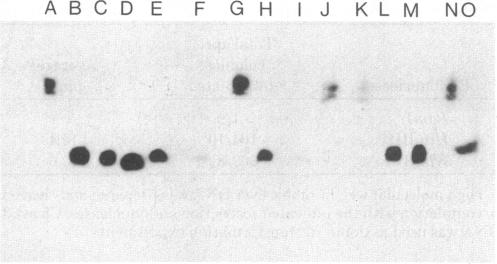
In this report, we demonstrate the feasibility of transforming mouse cells deficient in adenine phosphoribosyltransferase (aprt; AMP:pyrophosphate phosphoribosyltransferase, EC 2.4.2.7) to the aprt+ phenotype by means of DNA-mediated gene transfer. Transformation was effected by using unfractionated high molecular weight genomic DNA from Chinese hamster, human, and mouse cells and restriction endonuclease-digested DNA from rabbit liver. The transformation frequency observed was between 1 and 10 colonies per 10(6) cells per 20 microgram of donor DNA. Transformants displayed enzymatic activity that was donor derived as demonstrated by isoelectric focusing of cytoplasmic extracts. These transformants fall into two classes: those that are phenotypically stable when grown in the absence of selective pressure and those that are phenotypically unstable under the same conditions.
在本报告中,我们证明了通过DNA介导的基因转移,将缺乏腺嘌呤磷酸核糖转移酶(aprt;AMP:焦磷酸磷酸核糖转移酶,EC 2.4.2.7)的小鼠细胞转化为aprt+表型的可行性。通过使用来自中国仓鼠、人类和小鼠细胞的未分级高分子量基因组DNA以及来自兔肝的限制性内切酶消化的DNA来实现转化。观察到的转化频率为每20微克供体DNA每10⁶个细胞中有1到10个菌落。如通过细胞质提取物的等电聚焦所证明的,转化体表现出源自供体的酶活性。这些转化体分为两类:一类在无选择压力的情况下生长时表型稳定,另一类在相同条件下表型不稳定。