Yang Ping, Skiba Nikolai P, Tewkesbury Grace M, Treboschi Victoria M, Baciu Peter, Jaffe Glenn J
Department of Ophthalmology, Duke University Medical Center, Durham, North Carolina, United States.
Department of Biology, Allergan, Inc., Irvine, California, United States.
Invest Ophthalmol Vis Sci. 2017 Jun 1;58(7):3073-3085. doi: 10.1167/iovs.16-20083.
Complement activation is implicated in the pathogenesis of age-related macular degeneration (AMD). Apolipoprotein E (ApoE) and complement activation products such as membrane attack complex (MAC) are present in eyes of individuals with AMD. Herein, we investigated the effect of complement activation on induction of ApoE accumulation in human retinal pigment epithelial (RPE) cells.
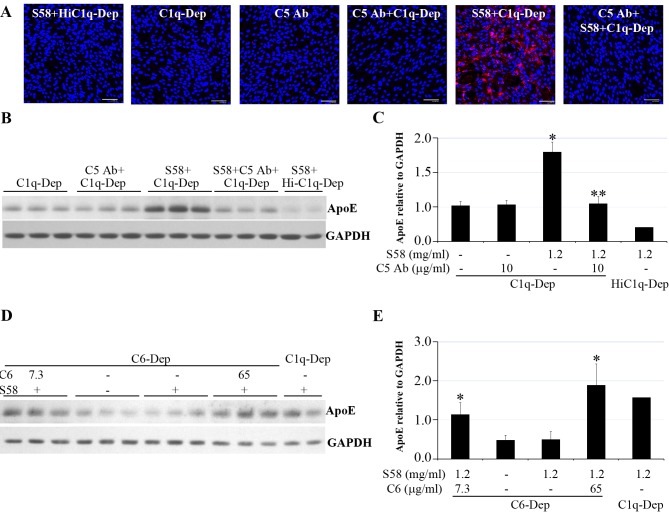
Cultured human RPE cells were primed with a complement-fixing antibody followed by treatment with C1q-depleted (C1q-Dep) human serum to elicit alternative pathway complement activation. Controls included anti-C5 antibody-treated serum and heat-inactivated C1q-Dep. Total protein was determined on RPE cell extracts, conditioned media, and extracellular matrix (ECM) by Western blot. ApoE and MAC colocalization was assessed on cultured RPE cells and human eyes by immunofluorescent stain. ApoE mRNA expression was evaluated by quantitative PCR (qPCR).
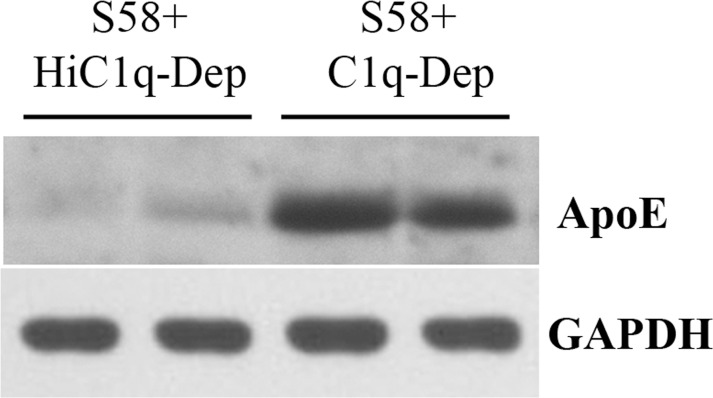
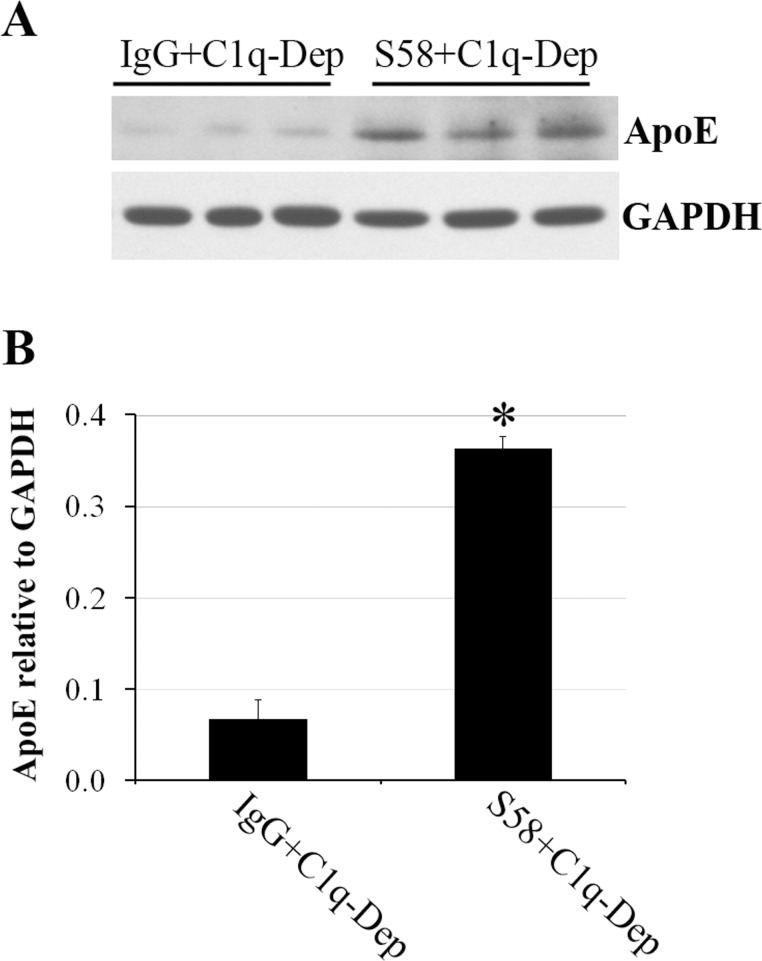
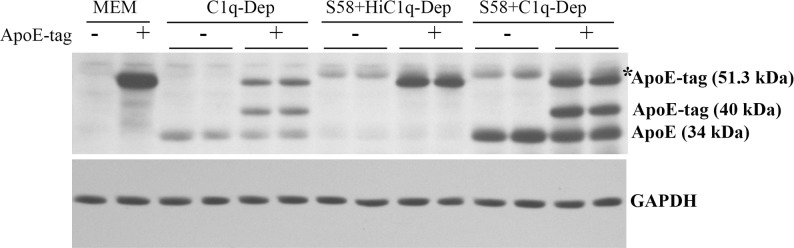
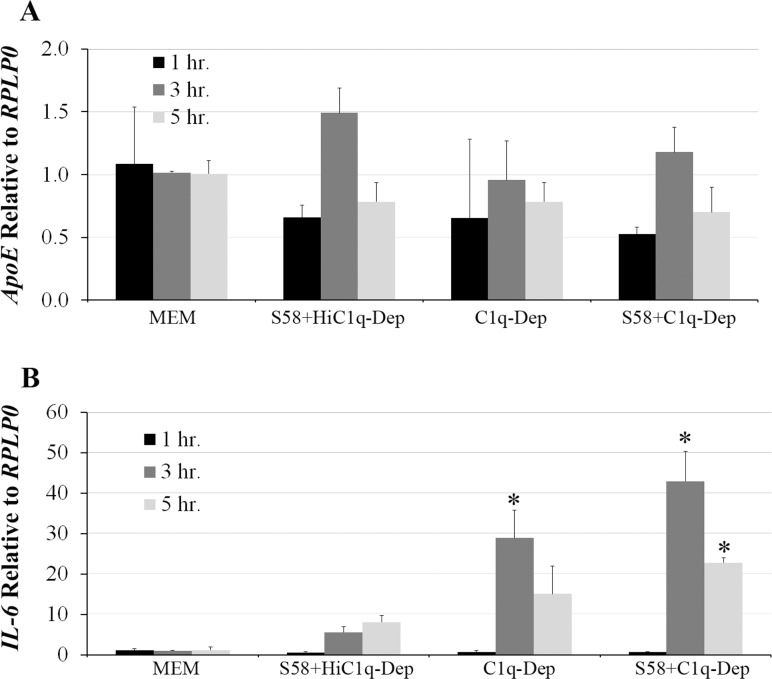
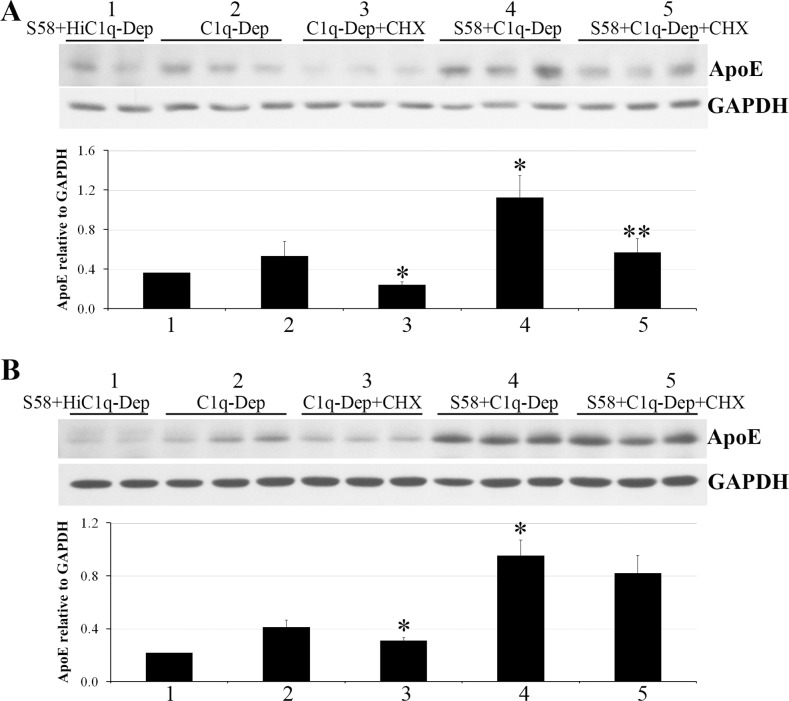
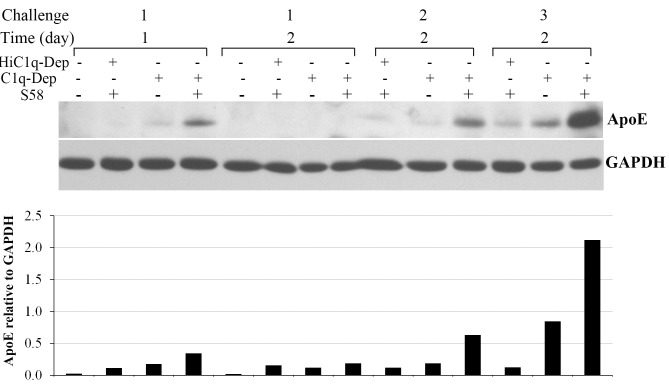
Complement challenge upregulated cell-associated ApoE, but not apolipoprotein A1. ApoE accumulation was blocked by anti-C5 antibody and enhanced by repetitive complement challenge. ApoE mRNA levels were not affected by complement challenge. ApoE was frequently colocalized with MAC in complement-treated cells and drusen from human eyes. ApoE was released into complement-treated conditioned media after a single complement challenge and accumulated on ECM after repetitive complement challenge.
Complement challenge induces time-dependent ApoE accumulation in RPE cells. An understanding of the mechanisms by which complement affects RPE ApoE accumulation may help to better explain drusen composition, and provide insights into potential therapeutic targets.
补体激活与年龄相关性黄斑变性(AMD)的发病机制有关。载脂蛋白E(ApoE)和补体激活产物如膜攻击复合物(MAC)存在于AMD患者的眼中。在此,我们研究了补体激活对人视网膜色素上皮(RPE)细胞中ApoE积累诱导的影响。
用补体固定抗体预处理培养的人RPE细胞,然后用C1q缺失(C1q-Dep)的人血清处理以引发替代途径补体激活。对照组包括抗C5抗体处理的血清和热灭活的C1q-Dep。通过蛋白质印迹法测定RPE细胞提取物、条件培养基和细胞外基质(ECM)中的总蛋白。通过免疫荧光染色评估培养的RPE细胞和人眼中ApoE与MAC的共定位。通过定量PCR(qPCR)评估ApoE mRNA表达。
补体攻击上调细胞相关的ApoE,但不上调载脂蛋白A1。抗C5抗体可阻断ApoE积累,重复补体攻击可增强ApoE积累。补体攻击不影响ApoE mRNA水平。在补体处理的细胞和人眼的玻璃膜疣中,ApoE经常与MAC共定位。单次补体攻击后,ApoE释放到补体处理的条件培养基中,重复补体攻击后在ECM上积累。
补体攻击诱导RPE细胞中ApoE随时间积累。了解补体影响RPE细胞中ApoE积累的机制可能有助于更好地解释玻璃膜疣的组成,并为潜在的治疗靶点提供见解。