MOH Key Laboratory of Systems Biology of Pathogens, Institute of Pathogen Biology, Chinese Academy of Medical Sciences & Peking Union Medical College, Beijing, 100730, China.
Ocular Gene Therapy Core, National Eye Institute, NIH, Bethesda, Maryland, 20892, USA.
Sci Rep. 2017 Jun 20;7(1):3860. doi: 10.1038/s41598-017-04170-1.
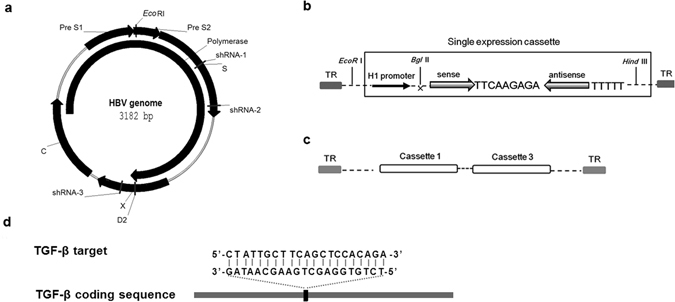
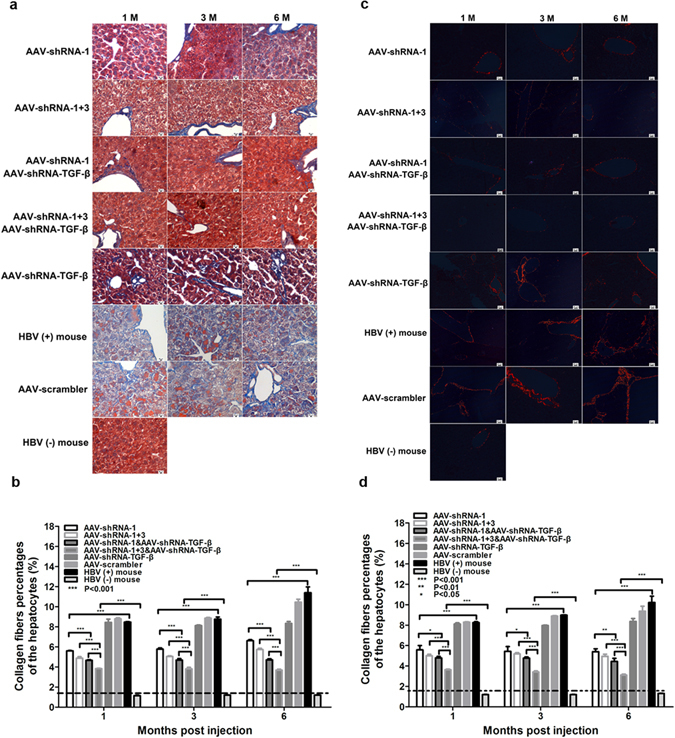
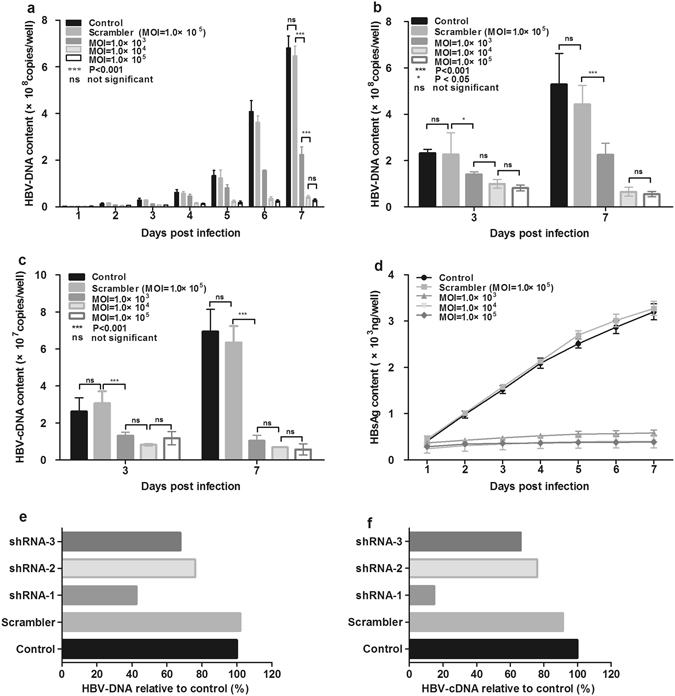
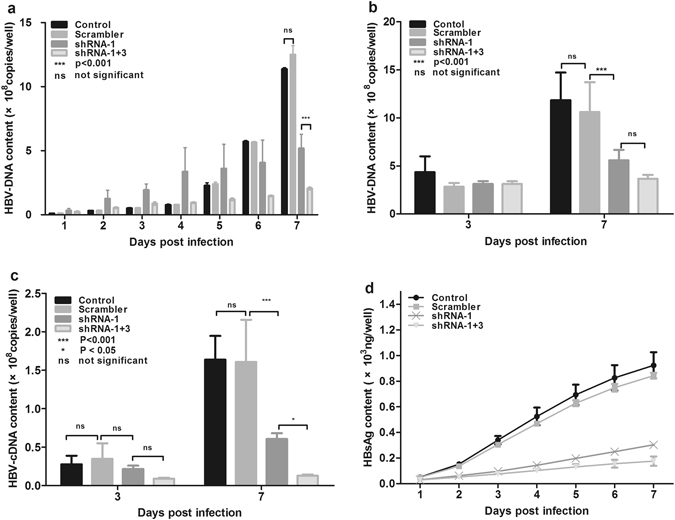
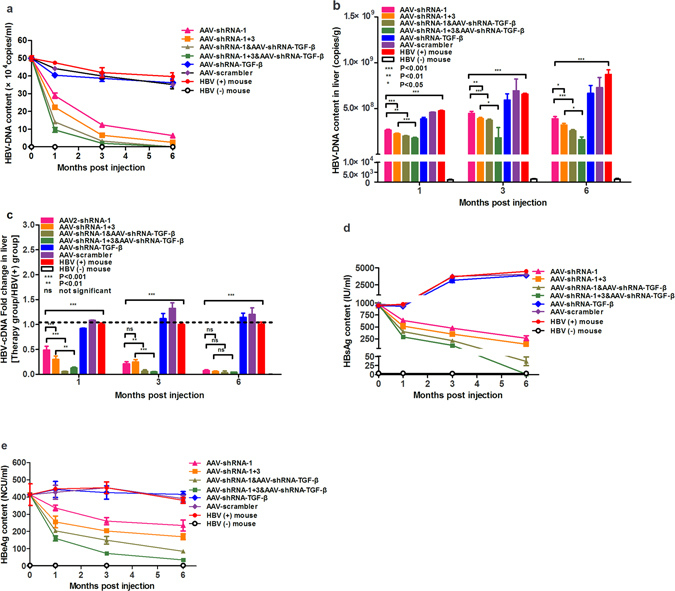
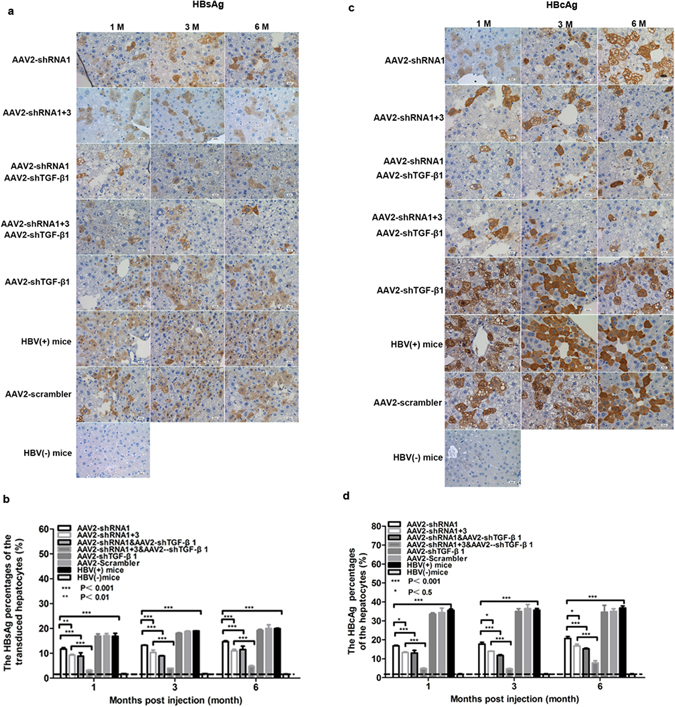
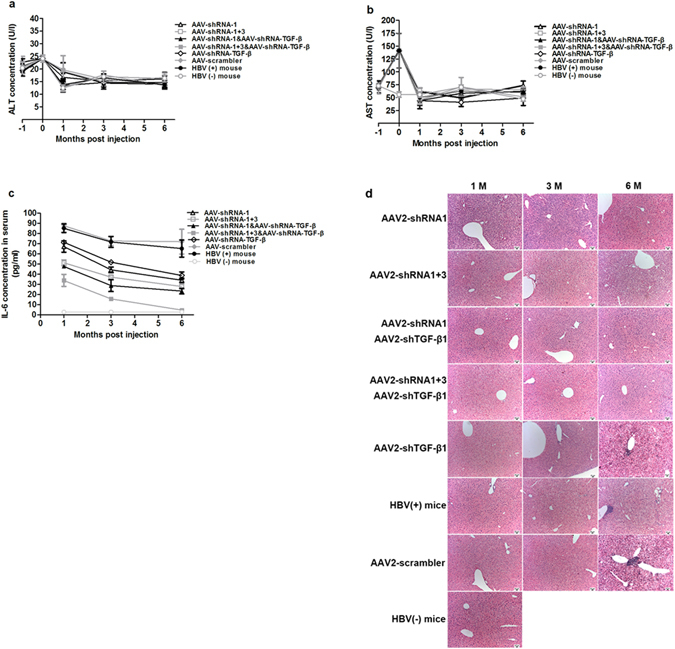
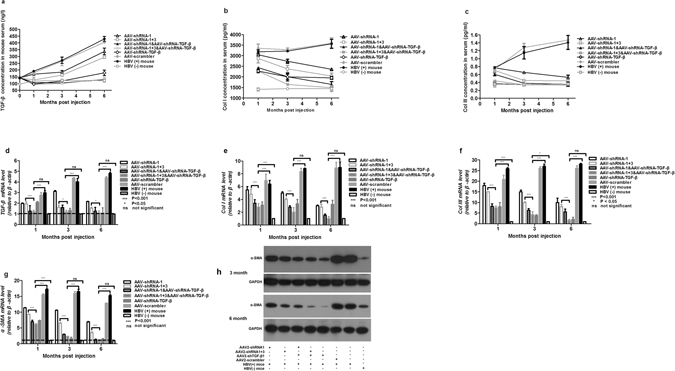
The hepatitis B virus (HBV) causes acute and chronic liver infection, which may lead to liver cirrhosis and hepatocellular carcinoma. Current treatments including interferons and nucleotide analogs, have limited therapeutic effects, underscoring the need to identify effective therapeutic options to inhibit HBV replication and prevent complications. Previous animal models mimicking chronic HBV infection do not faithfully reflect disease progression in humans. Here, we used our established HBV-persistent mouse line with liver fibrosis to evaluate the efficacy of novel therapies. The combination of two short hairpin RNAs (dual-shRNA) against different coding regions of HBV delivered by a self-complementary AAV vector showed better antiviral effects than single shRNA both in vitro and in HBV-persistent mice. The dual-shRNA also exhibited stronger antifibrotic activity in vivo. Vector carrying shRNA against TGF-β, though did not inhibit HBV replication alone, enhanced the antiviral and antifibrotic activities of single and dual HBV shRNAs. Co-administration of TGF-β shRNA and HBV dual-shRNA decreased HBV DNA, HBV RNA, HBsAg, HBeAg, and liver fibrosis markers in serum and tissues, and improved liver morphology more effectively than single treatments. Our results suggest that the combination of shRNAs against HBV and TGF-β could be developed into a viable treatment for human HBV infection.
乙型肝炎病毒 (HBV) 可引起急性和慢性肝脏感染,进而导致肝硬化和肝细胞癌。目前的治疗方法包括干扰素和核苷酸类似物,但疗效有限,这凸显了需要寻找有效的治疗方法来抑制 HBV 复制并预防并发症。以前用于模拟慢性 HBV 感染的动物模型并不能准确反映人类疾病的进展。在这里,我们使用已建立的具有肝纤维化的 HBV 持续感染小鼠模型来评估新疗法的疗效。两种针对 HBV 不同编码区的短发夹 RNA(双重 shRNA)通过自互补的 AAV 载体递送来显示出比单独的 shRNA 更好的体外和 HBV 持续感染小鼠中的抗病毒作用。双重 shRNA 在体内也表现出更强的抗纤维化活性。尽管携带针对 TGF-β 的 shRNA 的载体单独不能抑制 HBV 复制,但增强了单和双重 HBV shRNA 的抗病毒和抗纤维化活性。TGF-β shRNA 和 HBV 双重 shRNA 的联合给药可降低血清和组织中 HBV DNA、HBV RNA、HBsAg、HBeAg 和肝纤维化标志物的水平,并比单独治疗更有效地改善肝脏形态。我们的结果表明,针对 HBV 和 TGF-β 的 shRNA 的联合应用可能成为治疗人类 HBV 感染的可行方法。