Werther Rachel, Hallinan Jazmine P, Lambert Abigail R, Havens Kyle, Pogson Mark, Jarjour Jordan, Galizi Roberto, Windbichler Nikolai, Crisanti Andrea, Nolan Tony, Stoddard Barry L
Basic Sciences Division, Fred Hutchinson Cancer Research Center, 1100 Fairview Ave. N., Seattle, WA 98109, USA.
Bluebird Bio Inc., Suite 207 1616 Eastlake Ave. E., Seattle, WA 98102, USA.
Nucleic Acids Res. 2017 Aug 21;45(14):8621-8634. doi: 10.1093/nar/gkx544.
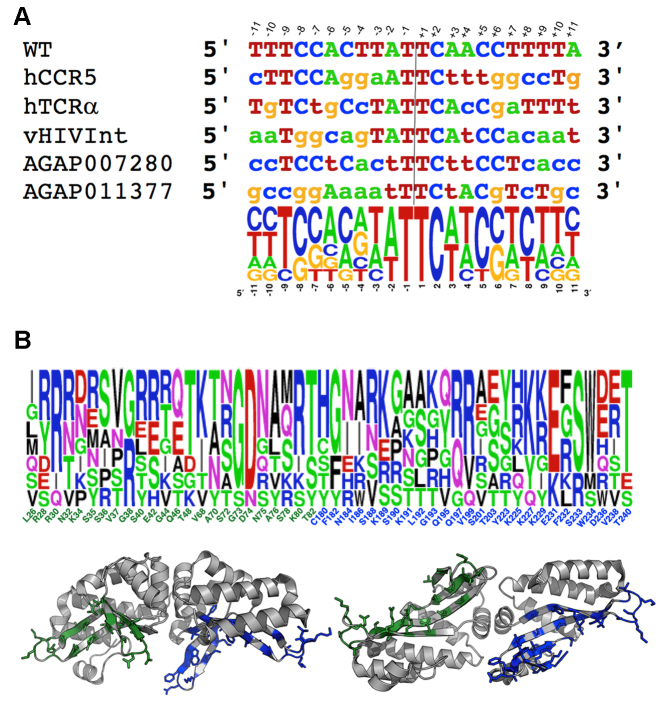
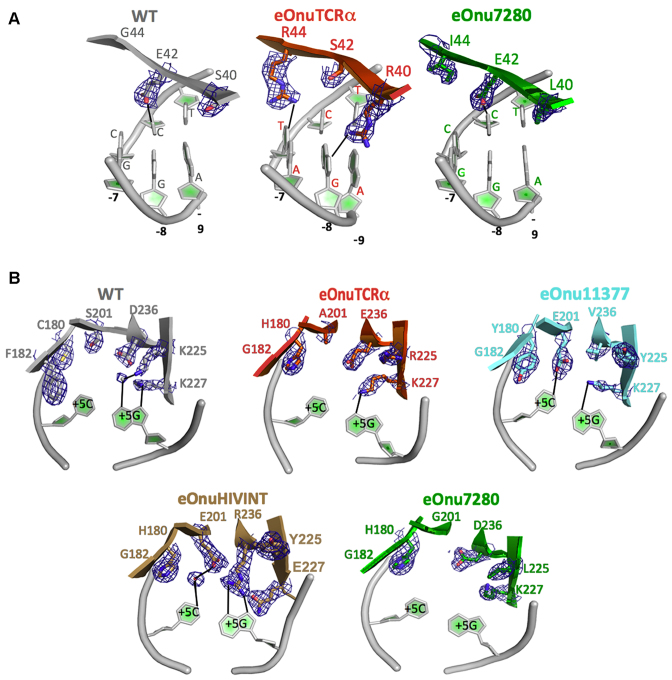
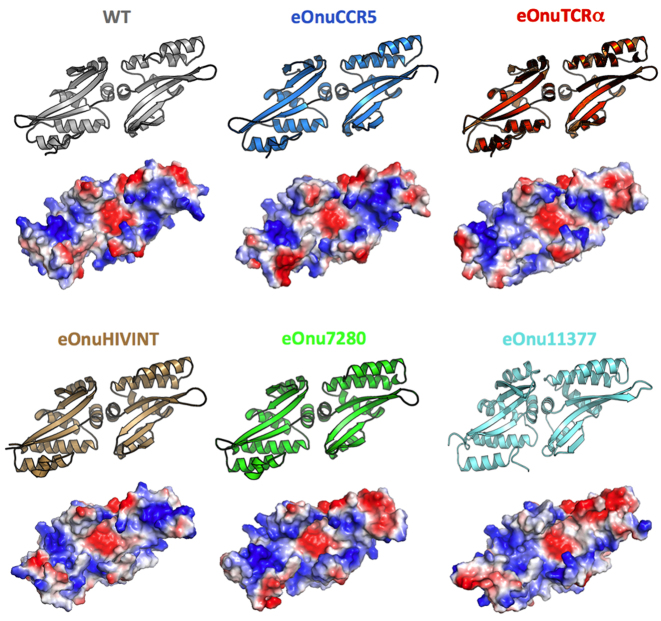
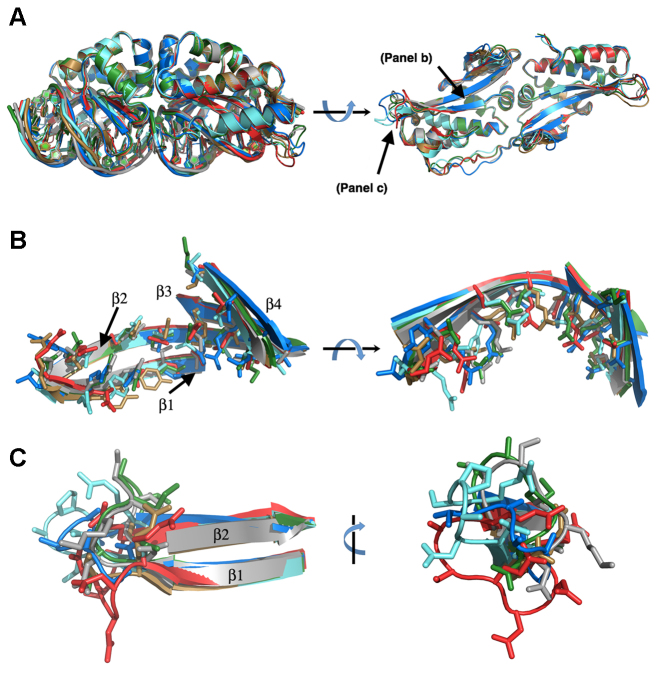
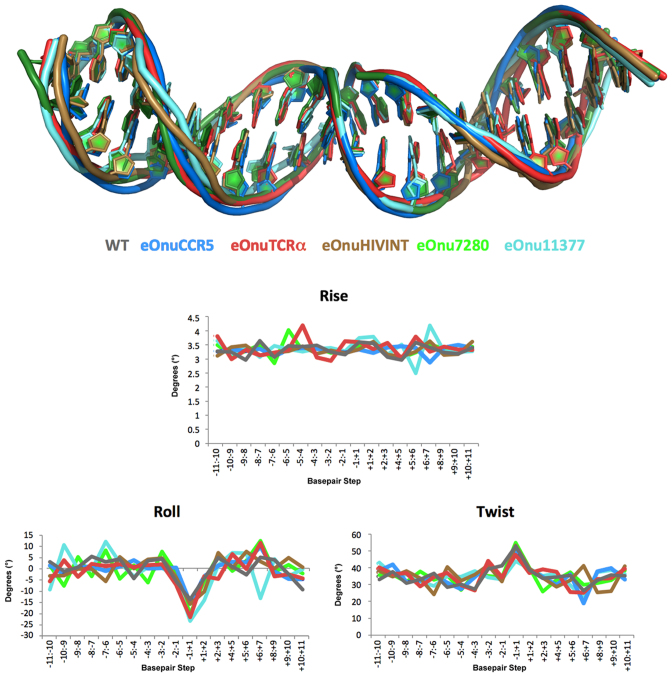
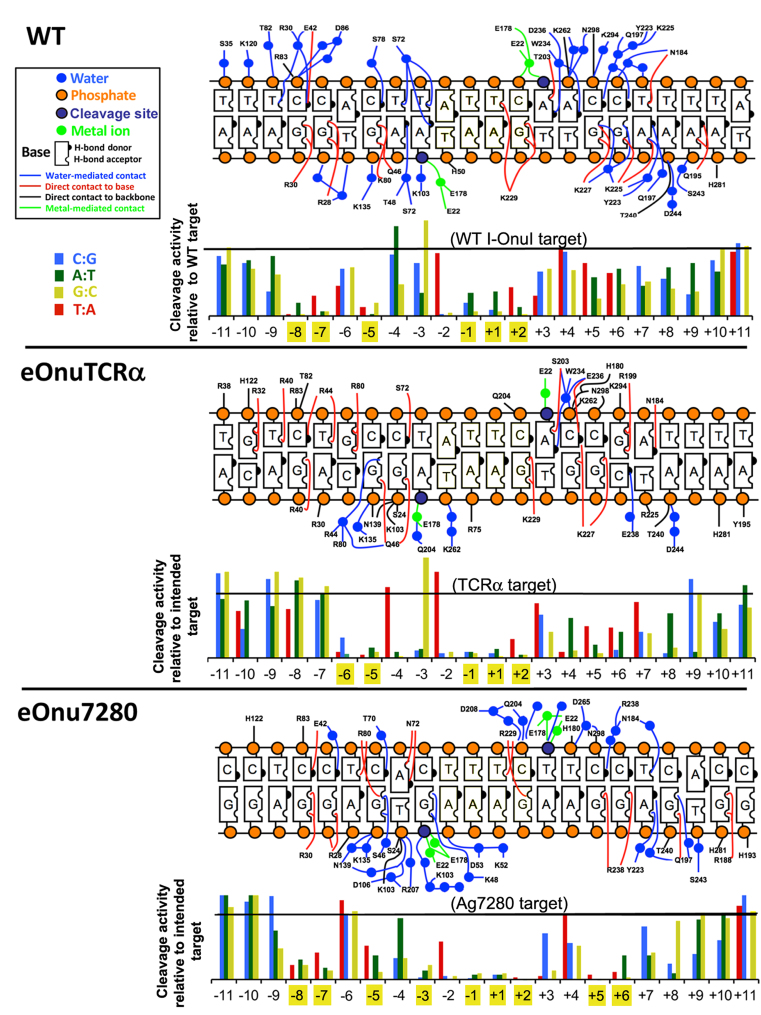
The retargeting of protein-DNA specificity, outside of extremely modular DNA binding proteins such as TAL effectors, has generally proved to be quite challenging. Here, we describe structural analyses of five different extensively retargeted variants of a single homing endonuclease, that have been shown to function efficiently in ex vivo and in vivo applications. The redesigned proteins harbor mutations at up to 53 residues (18%) of their amino acid sequence, primarily distributed across the DNA binding surface, making them among the most significantly reengineered ligand-binding proteins to date. Specificity is derived from the combined contributions of DNA-contacting residues and of neighboring residues that influence local structural organization. Changes in specificity are facilitated by the ability of all those residues to readily exchange both form and function. The fidelity of recognition is not precisely correlated with the fraction or total number of residues in the protein-DNA interface that are actually involved in DNA contacts, including directional hydrogen bonds. The plasticity of the DNA-recognition surface of this protein, which allows substantial retargeting of recognition specificity without requiring significant alteration of the surrounding protein architecture, reflects the ability of the corresponding genetic elements to maintain mobility and persistence in the face of genetic drift within potential host target sites.
除了像TAL效应子这样极具模块化的DNA结合蛋白外,重新靶向蛋白质 - DNA特异性通常被证明是极具挑战性的。在此,我们描述了对一种单一归巢内切酶的五个不同的广泛重新靶向变体的结构分析,这些变体已被证明在体外和体内应用中均能有效发挥作用。重新设计的蛋白质在其氨基酸序列的多达53个残基(18%)处存在突变,主要分布在DNA结合表面,这使它们成为迄今为止经过最显著重新设计的配体结合蛋白之一。特异性源自与DNA接触的残基以及影响局部结构组织的相邻残基的共同作用。所有这些残基易于交换形式和功能的能力促进了特异性的改变。识别的保真度与蛋白质 - DNA界面中实际参与DNA接触(包括定向氢键)的残基比例或总数并无精确关联。该蛋白质的DNA识别表面的可塑性,允许在无需对周围蛋白质结构进行重大改变的情况下对识别特异性进行大量重新靶向,这反映了相应遗传元件在面对潜在宿主靶位点内的遗传漂变时保持移动性和持久性的能力。