Mead Adam J, Neo Wen Hao, Barkas Nikolaos, Matsuoka Sahoko, Giustacchini Alice, Facchini Raffaella, Thongjuea Supat, Jamieson Lauren, Booth Christopher A G, Fordham Nicholas, Di Genua Cristina, Atkinson Deborah, Chowdhury Onima, Repapi Emmanouela, Gray Nicki, Kharazi Shabnam, Clark Sally-Ann, Bouriez Tiphaine, Woll Petter, Suda Toshio, Nerlov Claus, Jacobsen Sten Eirik W
Haematopoietic Stem Cell Biology Laboratory, Weatherall Institute of Molecular Medicine, University of Oxford, Oxford, UK
Medical Research Council Molecular Haematology Unit, Weatherall Institute of Molecular Medicine, University of Oxford, Oxford, UK.
J Exp Med. 2017 Jul 3;214(7):2005-2021. doi: 10.1084/jem.20161418. Epub 2017 Jun 21.
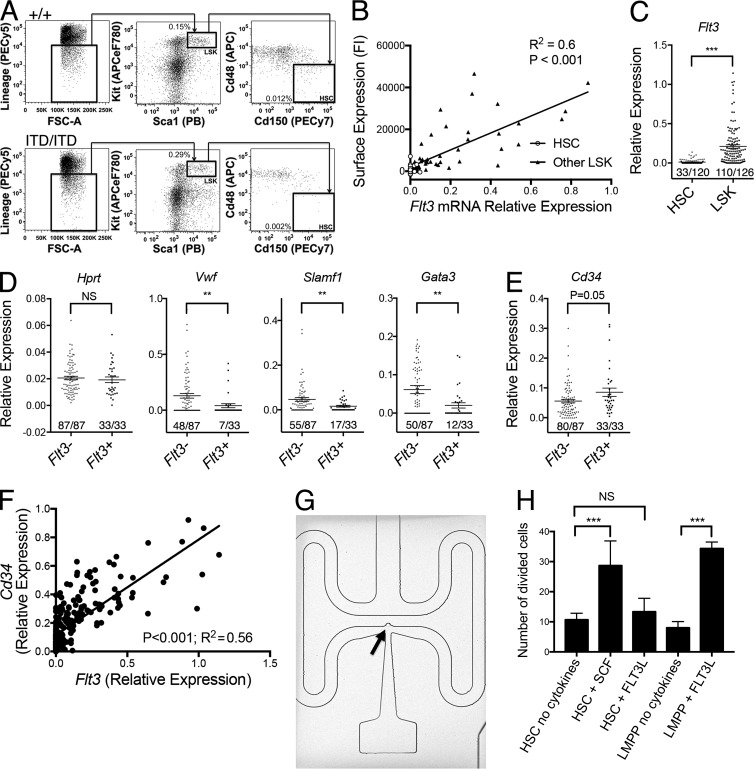
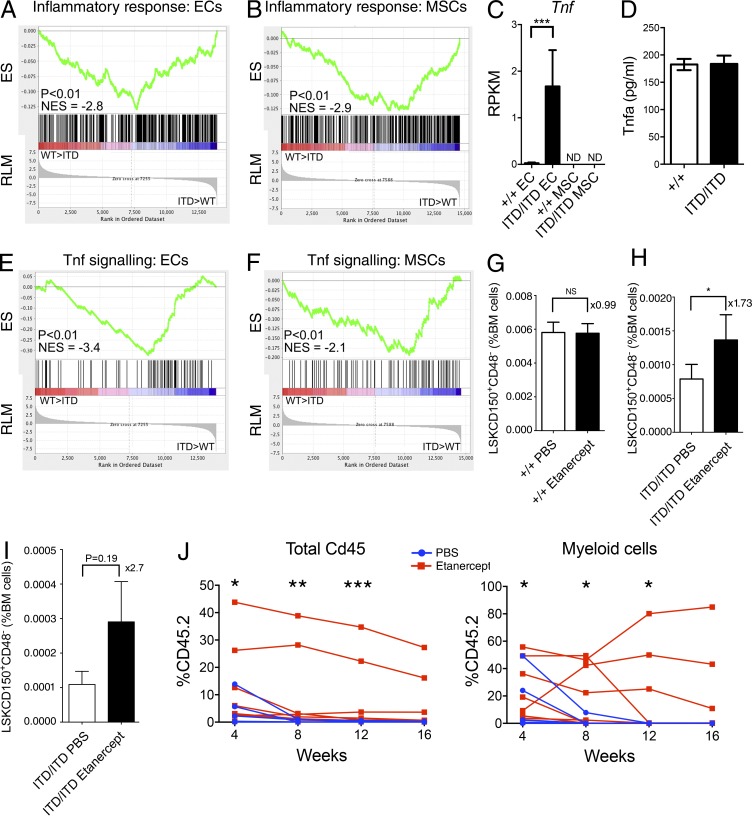
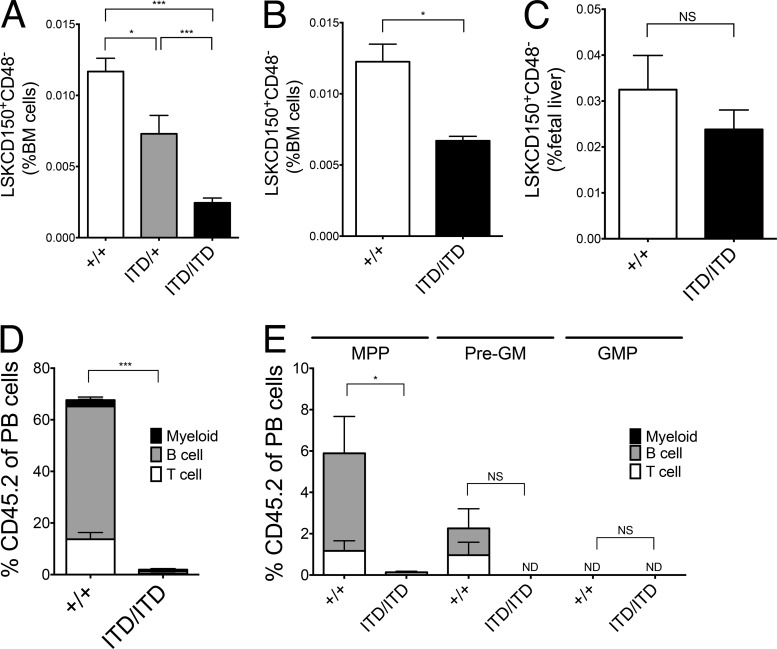
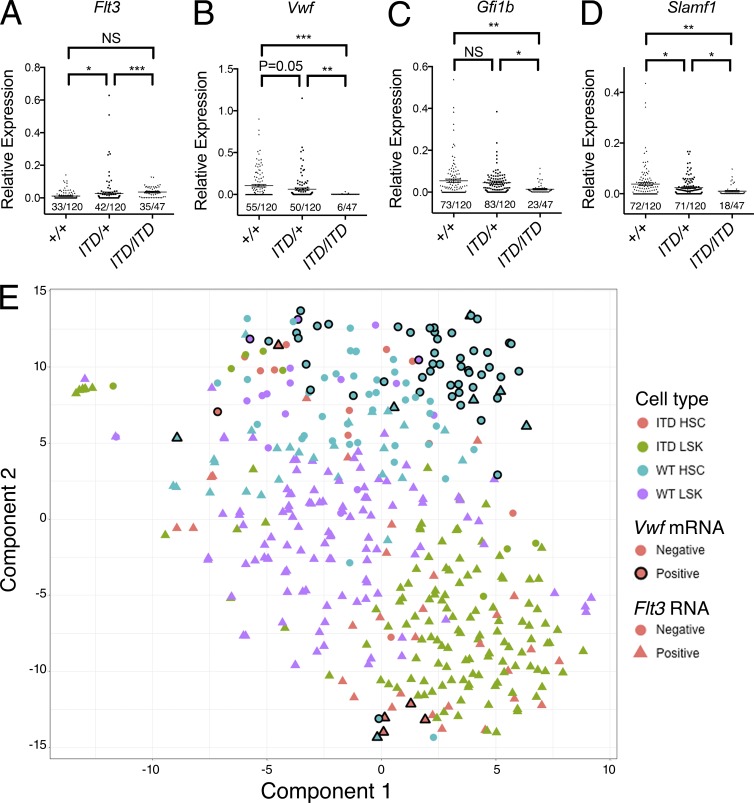
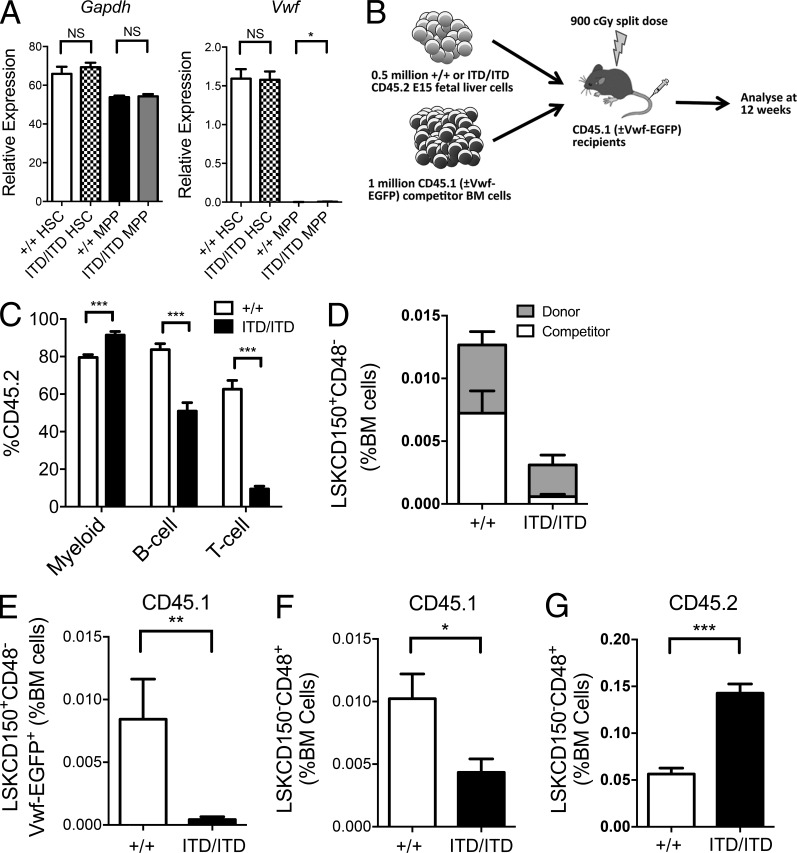
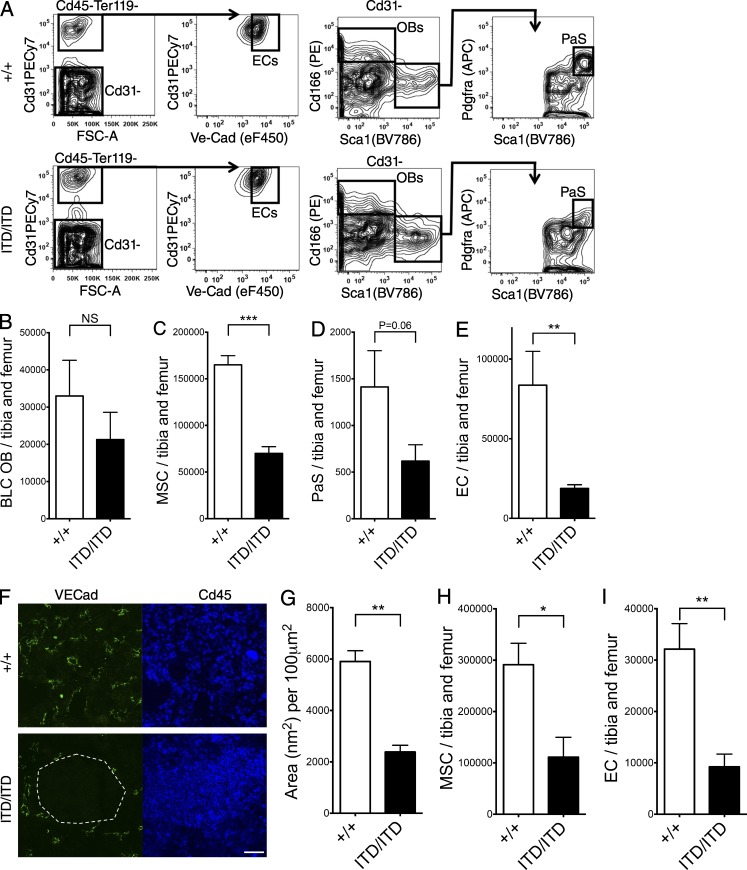
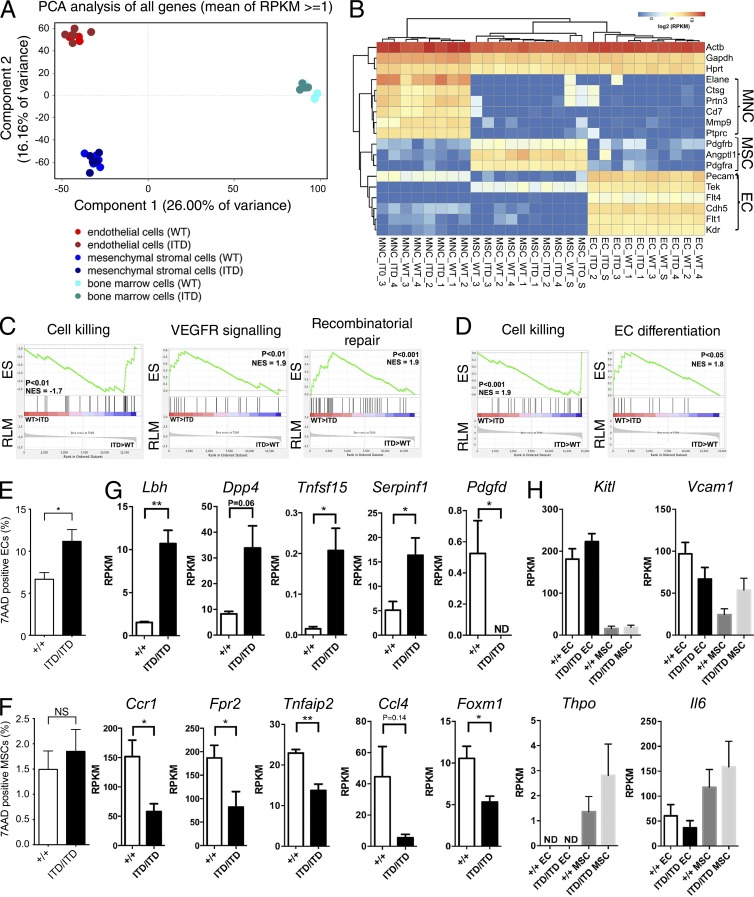
Although previous studies suggested that the expression of FMS-like tyrosine kinase 3 (Flt3) initiates downstream of mouse hematopoietic stem cells (HSCs), internal tandem duplications ( ITDs) have recently been suggested to intrinsically suppress HSCs. Herein, single-cell interrogation found mRNA expression to be absent in the large majority of phenotypic HSCs, with a strong negative correlation between and HSC-associated gene expression. Flt3-ITD knock-in mice showed reduced numbers of phenotypic HSCs, with an even more severe loss of long-term repopulating HSCs, likely reflecting the presence of non-HSCs within the phenotypic HSC compartment. Competitive transplantation experiments established that Flt3-ITD compromises HSCs through an extrinsically mediated mechanism of disrupting HSC-supporting bone marrow stromal cells, with reduced numbers of endothelial and mesenchymal stromal cells showing increased inflammation-associated gene expression. Tumor necrosis factor (TNF), a cell-extrinsic potent negative regulator of HSCs, was overexpressed in bone marrow niche cells from FLT3-ITD mice, and anti-TNF treatment partially rescued the HSC phenotype. These findings, which establish that Flt3-ITD-driven myeloproliferation results in cell-extrinsic suppression of the normal HSC reservoir, are of relevance for several aspects of acute myeloid leukemia biology.
尽管先前的研究表明,FMS样酪氨酸激酶3(Flt3)的表达在小鼠造血干细胞(HSC)下游启动,但最近有研究表明,内部串联重复(ITD)本质上会抑制造血干细胞。在此,单细胞分析发现,绝大多数表型造血干细胞中不存在mRNA表达,且与造血干细胞相关基因表达呈强烈负相关。Flt3-ITD基因敲入小鼠的表型造血干细胞数量减少,长期重建造血干细胞的损失更为严重,这可能反映了表型造血干细胞区室中存在非造血干细胞。竞争性移植实验证实,Flt3-ITD通过破坏支持造血干细胞的骨髓基质细胞的外在介导机制损害造血干细胞,内皮细胞和间充质基质细胞数量减少,炎症相关基因表达增加。肿瘤坏死因子(TNF)是一种造血干细胞的细胞外强效负调节因子,在FLT3-ITD小鼠的骨髓龛细胞中过度表达,抗TNF治疗可部分挽救造血干细胞表型。这些发现表明,Flt3-ITD驱动的骨髓增殖导致正常造血干细胞库的细胞外抑制,这与急性髓系白血病生物学的几个方面相关。