Hu Zixi, Chen Jiaojiao, Zhou Sufang, Yang Nuo, Duan Siliang, Zhang Zhenghua, Su Jing, He Jian, Zhang Zhiyong, Lu Xiaoling, Zhao Yongxiang
National Center for International Research of Biological Targeting Diagnosis and Therapy, Guangxi Key Laboratory of Biological Targeting Diagnosis and Therapy Research, Collaborative Innovation Center for Targeting Tumor Diagnosis and Therapy, Guangxi Medical University, Nanning, Guangxi 530021, China.
Department of Surgery, Robert-Wood-Johnson Medical School University Hospital, Rutgers University, The State University of New Jersey, New Brunswick, New Jersey 08901, USA.
Theranostics. 2017 May 2;7(7):1942-1952. doi: 10.7150/thno.16236. eCollection 2017.
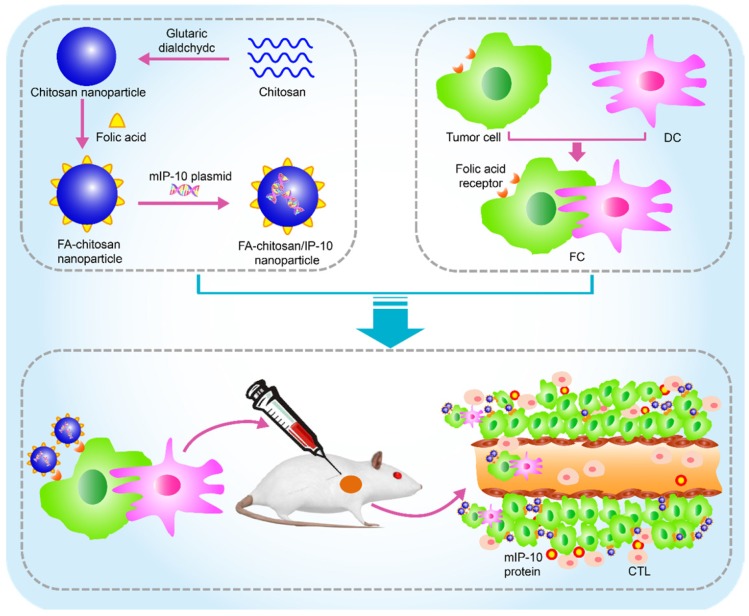
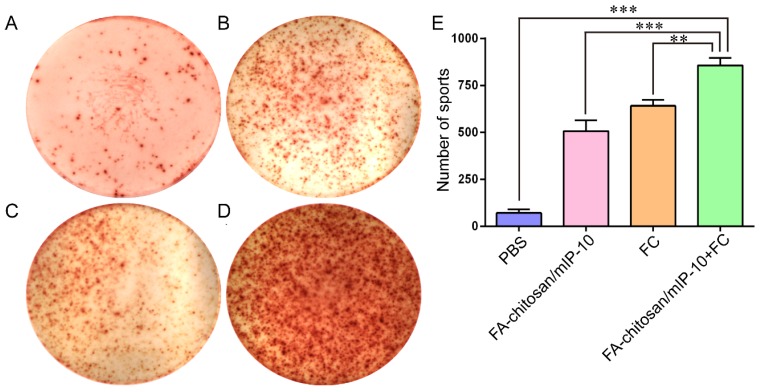
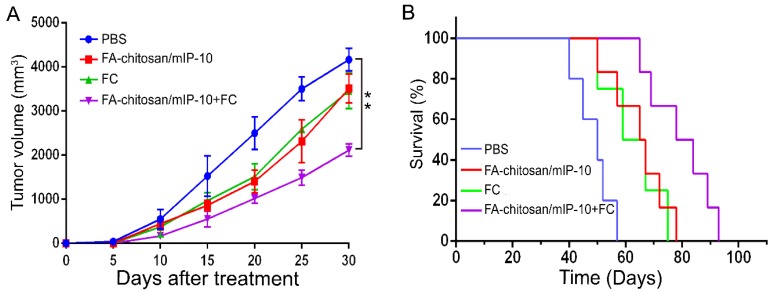
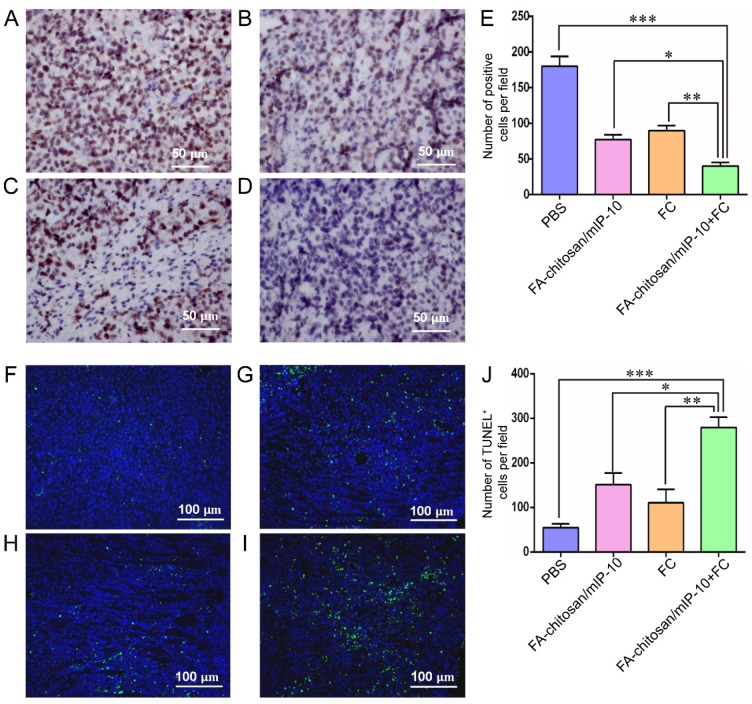
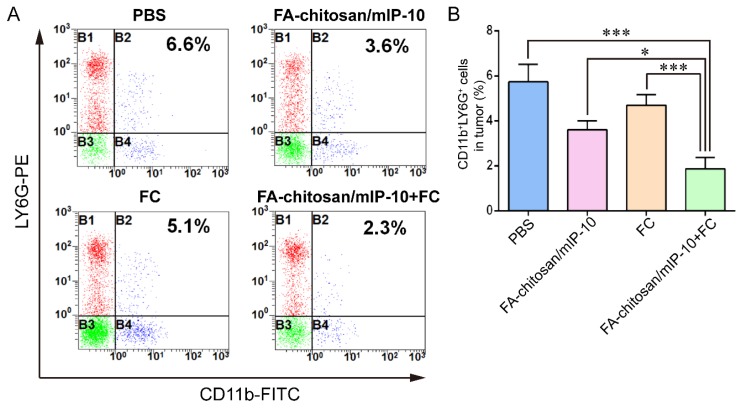
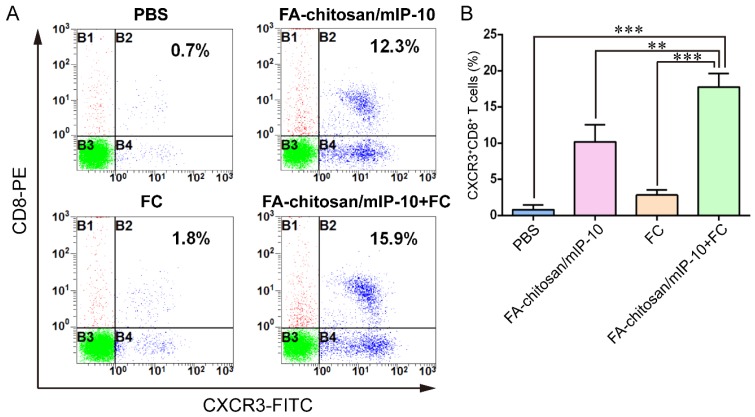
Dendritic cells (DC) and tumor cell fusion vaccine (DC/tumor cell fusion vaccine) is considered an effective approach in cancer biotherapy. However, its therapeutic effects in early clinical trials have been suboptimal partially due to the immunosuppressive tumor environment. In this study, we used nanoparticles of folate (FA)-modified chitosan, a non-viral vector capable of targeting tumor cells with high expression of FA receptors. FA-chitosan nanoparticles were used as biological carriers for the expression plasmid of the mouse interferon-induced protein-10 (mIP-10) gene, a potent chemoattractant for cytotoxic T cells. The combination of FA-chitosan/mIP-10 and DC/tumor cell fusion vaccine against hepatocellular carcinoma (HCC) effectively inhibited the growth of implanted HCC tumors and prolonged the survival of mice. The combination therapy significantly reduced myeloid-derived suppressor cells (MDSC) in mouse spleen, local tumor, and bone marrow while increasing tumor-specific IFN-γ responses. Furthermore, the combination therapy significantly inhibited tumor cell proliferation while promoting their apoptosis. Taken together, our data illustrate that the mIP-10 enhances the anti-tumor effect of DC/tumor cell fusion vaccine by alleviating the immunosuppressive tumor environment.
树突状细胞(DC)与肿瘤细胞融合疫苗(DC/肿瘤细胞融合疫苗)被认为是癌症生物治疗中的一种有效方法。然而,其在早期临床试验中的治疗效果并不理想,部分原因是免疫抑制性肿瘤环境。在本研究中,我们使用了叶酸(FA)修饰的壳聚糖纳米颗粒,这是一种能够靶向高表达FA受体肿瘤细胞的非病毒载体。FA-壳聚糖纳米颗粒用作小鼠干扰素诱导蛋白-10(mIP-10)基因表达质粒的生物载体,mIP-10是一种对细胞毒性T细胞有强大趋化作用的物质。FA-壳聚糖/mIP-10与DC/肿瘤细胞融合疫苗联合用于对抗肝细胞癌(HCC),有效抑制了植入的HCC肿瘤生长并延长了小鼠存活时间。联合治疗显著减少了小鼠脾脏、局部肿瘤和骨髓中髓源性抑制细胞(MDSC),同时增加了肿瘤特异性IFN-γ反应。此外,联合治疗显著抑制肿瘤细胞增殖,同时促进其凋亡。综上所述,我们的数据表明mIP-10通过缓解免疫抑制性肿瘤环境增强了DC/肿瘤细胞融合疫苗的抗肿瘤作用。