Salminen Aaro V, Garrett Lillian, Schormair Barbara, Rozman Jan, Giesert Florian, Niedermeier Kristina M, Becker Lore, Rathkolb Birgit, Rácz Ildikó, Klingenspor Martin, Klopstock Thomas, Wolf Eckhard, Zimmer Andreas, Gailus-Durner Valérie, Torres Miguel, Fuchs Helmut, Hrabě de Angelis Martin, Wurst Wolfgang, Hölter Sabine M, Winkelmann Juliane
Institute of Neurogenomics, Helmholtz Zentrum München, 85764 Neuherberg, Germany.
Institute of Developmental Genetics, Helmholtz Zentrum München, 85764 Neuherberg, Germany.
Dis Model Mech. 2017 Aug 1;10(8):981-991. doi: 10.1242/dmm.030080. Epub 2017 Jun 23.
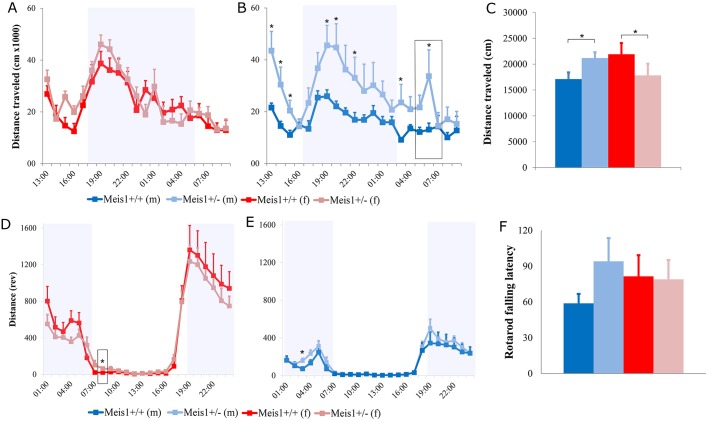
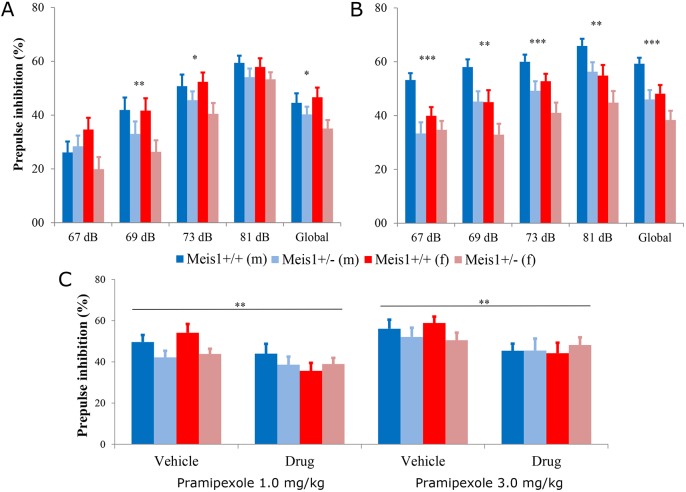
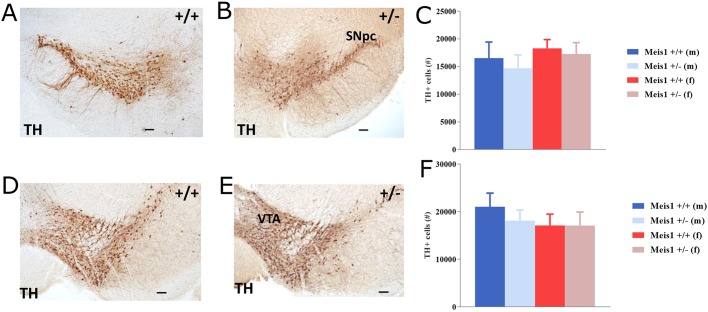
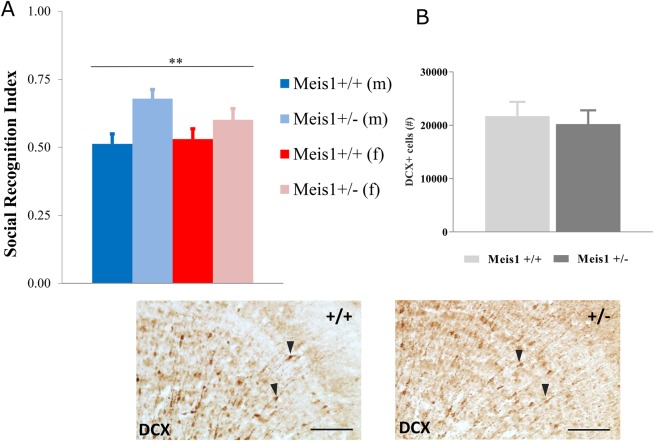
encodes a developmental transcription factor and has been linked to restless legs syndrome (RLS) in genome-wide association studies. RLS is a movement disorder leading to severe sleep reduction and has a substantial impact on the quality of life of patients. In genome-wide association studies, has consistently been the gene with the highest effect size and functional studies suggest a disease-relevant downregulation. Therefore, haploinsufficiency of could be the system with the most potential for modeling RLS in animals. We used heterozygous -knockout mice to study the effects of haploinsufficiency on mouse behavioral and neurological phenotypes, and to relate the findings to human RLS. We exposed the -deficient mice to assays of motor, sensorimotor and cognitive ability, and assessed the effect of a dopaminergic receptor 2/3 agonist commonly used in the treatment of RLS. The mutant mice showed a pattern of circadian hyperactivity, which is compatible with human RLS. Moreover, we discovered a replicable prepulse inhibition (PPI) deficit in the -deficient animals. In addition, these mice were hyposensitive to the PPI-reducing effect of the dopaminergic receptor agonist, highlighting a role of Meis1 in the dopaminergic system. Other reported phenotypes include enhanced social recognition at an older age that was not related to alterations in adult olfactory bulb neurogenesis previously shown to be implicated in this behavior. In conclusion, the -deficient mice fulfill some of the hallmarks of an RLS animal model, and revealed the role of Meis1 in sensorimotor gating and in the dopaminergic systems modulating it.
编码一种发育转录因子,在全基因组关联研究中与不宁腿综合征(RLS)相关。RLS是一种运动障碍,导致严重的睡眠减少,对患者的生活质量有重大影响。在全基因组关联研究中,一直是效应大小最高的基因,功能研究表明存在与疾病相关的下调。因此,单倍剂量不足可能是在动物中模拟RLS最具潜力的系统。我们使用杂合子敲除小鼠来研究单倍剂量不足对小鼠行为和神经表型的影响,并将研究结果与人类RLS相关联。我们使缺陷小鼠接受运动、感觉运动和认知能力的检测,并评估一种常用于治疗RLS的多巴胺能受体2/3激动剂的效果。突变小鼠表现出昼夜活动亢进的模式,这与人类RLS相符。此外,我们在缺陷动物中发现了可重复的前脉冲抑制(PPI)缺陷。此外,这些小鼠对多巴胺能受体激动剂降低PPI的作用不敏感,突出了Meis1在多巴胺能系统中的作用。其他报道的表型包括老年时增强的社会识别能力,这与先前显示与此行为有关的成年嗅球神经发生的改变无关。总之,缺陷小鼠符合RLS动物模型的一些特征,并揭示了Meis1在感觉运动门控以及调节它的多巴胺能系统中的作用。