Khan Sitara G, Melikian Narbeh, Shabeeh Husain, Cabaco Ana R, Martin Katherine, Khan Faisal, O'Gallagher Kevin, Chowienczyk Philip J, Shah Ajay M
Department of Cardiology, Faculty of Life Sciences & Medicine, British Heart Foundation Centre, King's College London, London, United Kingdom; and.
Department of Clinical Pharmacology, Faculty of Life Sciences & Medicine, British Heart Foundation Centre, King's College London, London, United Kingdom.
Am J Physiol Heart Circ Physiol. 2017 Sep 1;313(3):H578-H583. doi: 10.1152/ajpheart.00745.2016. Epub 2017 Jun 23.
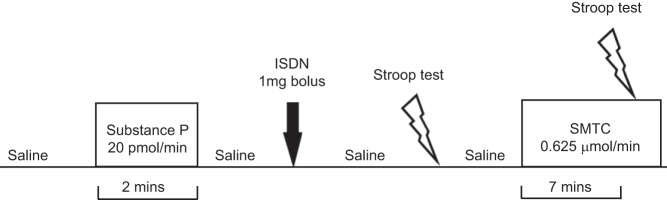
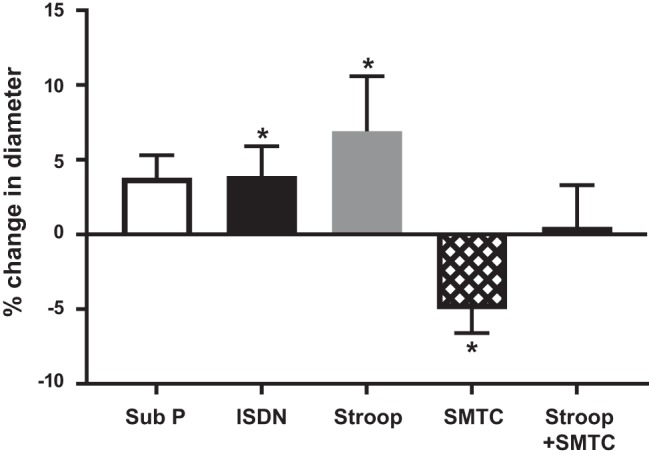
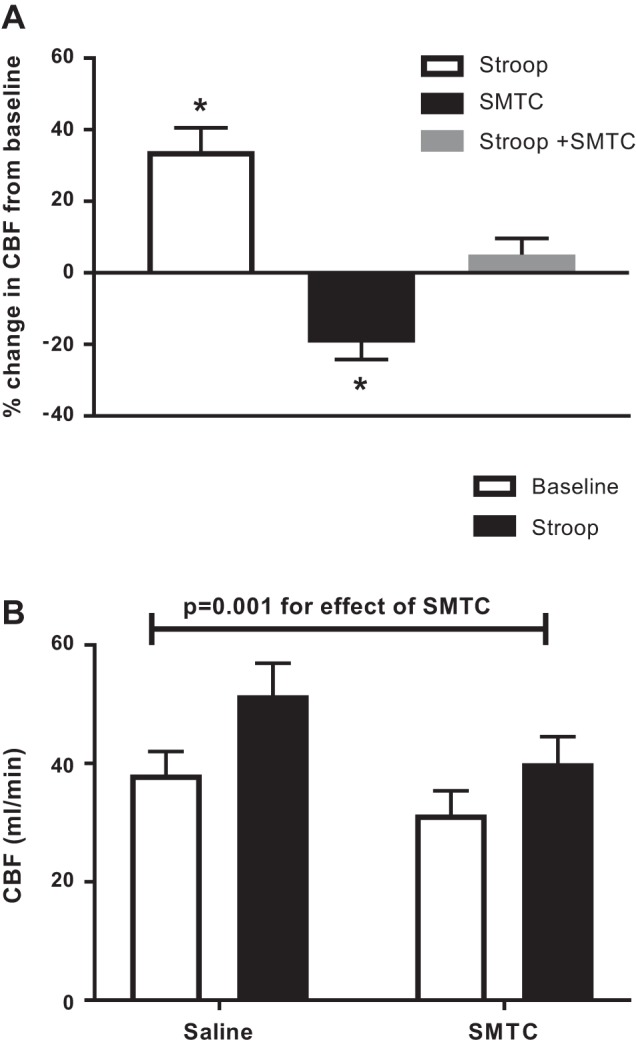
Mental stress-induced ischemia approximately doubles the risk of cardiac events in patients with coronary artery disease, yet the mechanisms underlying changes in coronary blood flow in response to mental stress are poorly characterized. Neuronal nitric oxide synthase (nNOS) regulates basal coronary blood flow in healthy humans and mediates mental stress-induced vasodilation in the forearm. However, its possible role in mental stress-induced increases in coronary blood flow is unknown. We studied 11 patients (6 men and 5 women, mean age: 58 ± 14 yr) undergoing elective diagnostic cardiac catheterization and assessed the vasodilator response to mental stress elicited by the Stroop color-word test. Intracoronary substance P (20 pmol/min) and isosorbide dinitrate (1 mg) were used to assess endothelium-dependent and -independent vasodilation, respectively. Coronary blood flow was estimated using intracoronary Doppler recordings and quantitative coronary angiography to measure coronary artery diameter. Mental stress increased coronary flow by 34 ± 7.0% over the preceding baseline during saline infusion ( < 0.01), and this was reduced to 26 ± 7.0% in the presence of the selective nNOS inhibitor -methyl-l-thiocitrulline (0.625 µmol/min, < 0.001). Mental stress increased coronary artery diameter by 6.9 ± 3.7% ( = 0.02) and 0.5 ± 2.8% ( = 0.51) in the presence of -methyl-l-thiocitrulline. The response to substance P did not predict the response to mental stress ( = -0.22, = 0.83). nNOS mediates the human coronary vasodilator response to mental stress, predominantly through actions at the level of coronary resistance vessels. Acute mental stress induces vasodilation of the coronary microvasculature. Here, we show that this response involves neuronal nitric oxide synthase in the human coronary circulation.Listen to this article's corresponding podcast at http://ajpheart.podbean.com/e/nnos-and-coronary-flow-during-mental-stress/.
精神应激诱导的心肌缺血使冠心病患者发生心脏事件的风险增加近一倍,然而,精神应激时冠状动脉血流变化的潜在机制仍不清楚。神经元型一氧化氮合酶(nNOS)调节健康人的基础冠状动脉血流,并介导精神应激诱导的前臂血管舒张。然而,其在精神应激诱导的冠状动脉血流增加中的可能作用尚不清楚。我们研究了11例接受择期诊断性心导管检查的患者(6例男性和5例女性,平均年龄:58±14岁),并评估了通过Stroop色词测试引发的精神应激的血管舒张反应。分别使用冠状动脉内P物质(20 pmol/min)和硝酸异山梨酯(1 mg)评估内皮依赖性和非内皮依赖性血管舒张。使用冠状动脉内多普勒记录和定量冠状动脉造影测量冠状动脉直径来估计冠状动脉血流。精神应激使生理盐水输注期间冠状动脉血流较之前基线增加34±7.0%(P<0.01),在存在选择性nNOS抑制剂-甲基-L-硫代瓜氨酸(0.625 μmol/min,P<0.001)时,这一增加减少至26±7.0%。在存在-甲基-L-硫代瓜氨酸时,精神应激使冠状动脉直径增加6.9±3.7%(P=0.02)和0.5±2.8%(P=0.51)。对P物质的反应不能预测对精神应激的反应(r=-0.22,P=0.83)。nNOS介导人体冠状动脉对精神应激的血管舒张反应,主要通过在冠状动脉阻力血管水平的作用。急性精神应激诱导冠状动脉微血管舒张。在这里,我们表明这种反应涉及人体冠状动脉循环中的神经元型一氧化氮合酶。在http://ajpheart.podbean.com/e/nnos-and-coronary-flow-during-mental-stress/收听本文对应的播客。