Department of Bioengineering, School of Engineering, The University of Tokyo, 7-3-1 Hongo, Bunkyo-ku, Tokyo, 133-8656, Japan.
Department of Microbiology, School of Medicine, Yokohama City University, 3-9 Fukuura, Kanazawa-ku, Yokohama, 236-0004, Japan.
Sci Rep. 2017 Jun 26;7(1):4244. doi: 10.1038/s41598-017-03779-6.
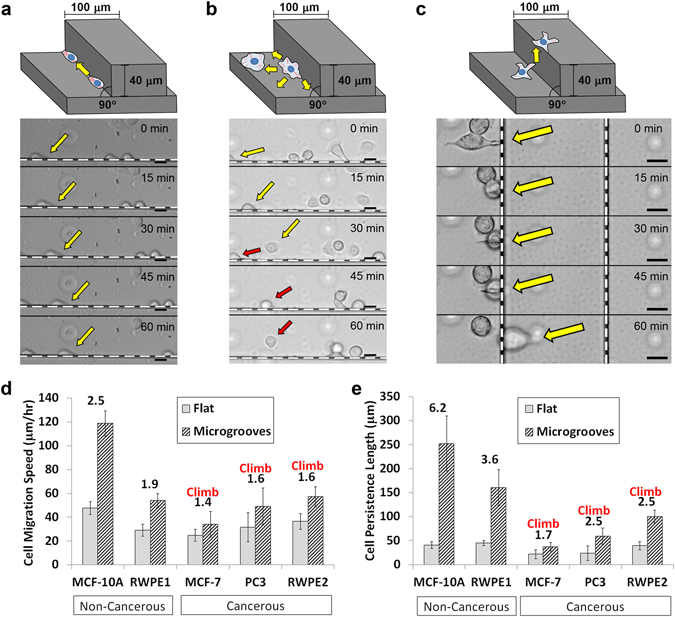
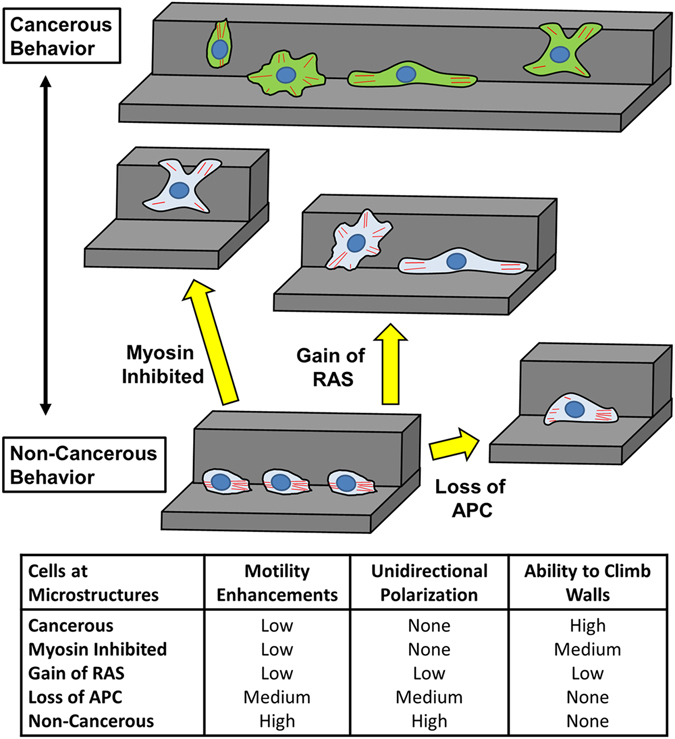
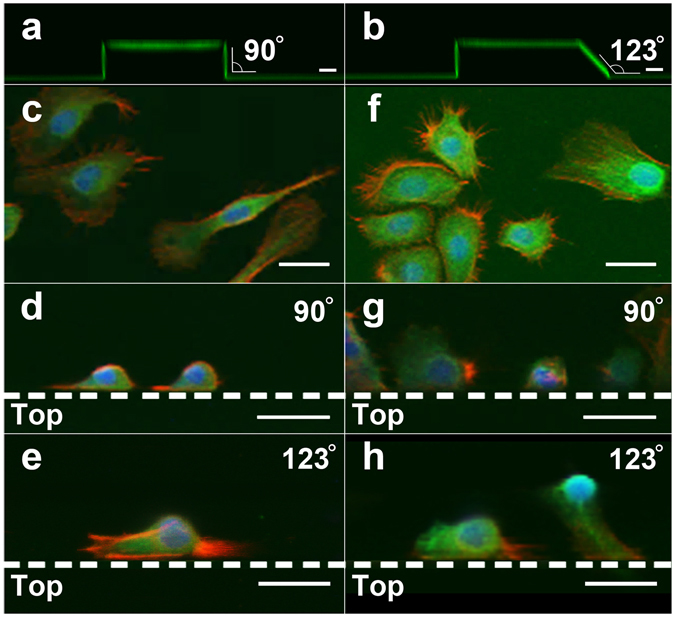
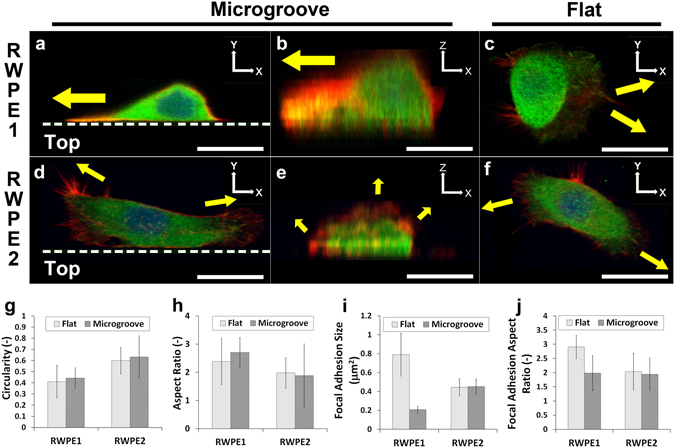
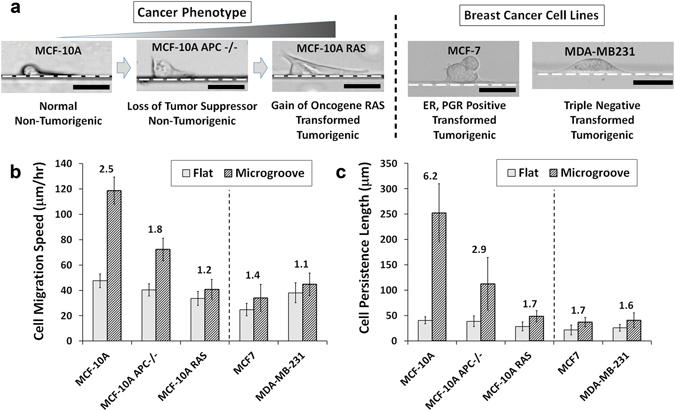
During metastasis, cancer cells are exposed to various three-dimensional microstructures within the body, but the relationship between cancer migration and three-dimensional geometry remain largely unclear. Here, such geometric effects on cancerous cells were investigated by characterizing the motility of various cancer cell types on microgroove-based topographies made of polydimethylsiloxane (PDMS), with particular emphasis on distinguishing cancerous and non-cancerous epithelial cells, as well as understanding the underlying mechanism behind such differences. The 90-degree walls enhanced motility for all cell lines, but the degrees of enhancements were less pronounced for the cancerous cells. Interestingly, while the non-cancerous epithelial cell types conformed to the three-dimensional geometrical cues and migrated along the walls, the cancerous cell types exhibited a unique behavior of climbing upright walls, and this was associated with the inability to form stable, polarized actin cytoskeleton along the walls of the microgrooves. Furthermore, when non-cancerous epithelial cell lines were altered to different levels of polarization capabilities and cancer malignancy or treated with inhibitory drugs, their three-dimensional geometry-dependent motility approached those of cancerous cell lines. Overall, the results suggest that cancerous cells may gradually lose geometrical recognition with increasing cancer malignancy, allowing them to roam freely ignoring three-dimensional geometrical cues during metastasis.
在转移过程中,癌细胞会暴露于体内各种三维微观结构中,但癌症迁移与三维几何形状之间的关系在很大程度上仍不清楚。在这里,通过研究各种癌细胞类型在由聚二甲基硅氧烷 (PDMS) 制成的微沟槽形貌上的运动特性,研究了这种几何形状对癌细胞的影响,特别强调了区分癌变和非癌变上皮细胞,以及了解这种差异背后的潜在机制。90 度壁增强了所有细胞系的迁移能力,但对癌细胞的增强程度不那么明显。有趣的是,虽然非癌变上皮细胞类型顺应了三维几何线索并沿着壁迁移,但癌变细胞类型表现出独特的直立攀爬壁的行为,这与它们无法沿着微沟槽壁形成稳定的、极化的肌动蛋白细胞骨架有关。此外,当非癌变上皮细胞系的极化能力和癌变恶性程度发生不同程度的改变,或用抑制药物治疗时,它们的三维几何依赖性迁移能力接近癌变细胞系。总体而言,研究结果表明,随着癌变恶性程度的增加,癌细胞可能会逐渐丧失对几何形状的识别能力,从而使其在转移过程中能够自由漫游,忽略三维几何形状的线索。