Utzeri Erika, Usai Paolo
Erika Utzeri, Paolo Usai, Department of Medical Sciences, University of Cagliari, 09124 Cagliari, Italy.
World J Gastroenterol. 2017 Jun 14;23(22):3954-3963. doi: 10.3748/wjg.v23.i22.3954.
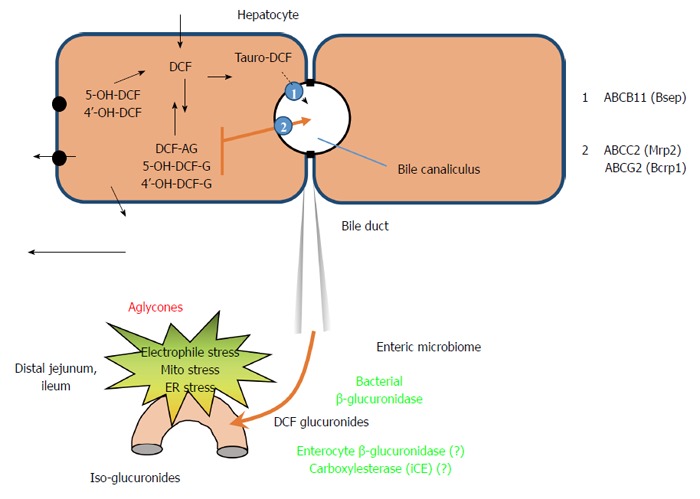
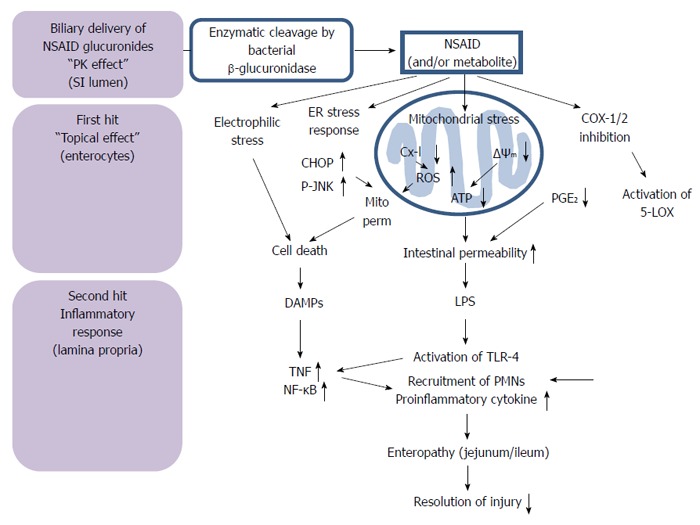
The use of non-steroidal anti-inflammatory drugs (NSAIDs) is widespread worldwide thanks to their analgesic, anti-inflammatory and antipyretic effects. However, even more attention is placed upon the recurrence of digestive system complications in the course of their use. Recent data suggests that the complications of the lower gastro-intestinal tract may be as frequent and severe as those of the upper tract. NSAIDs enteropathy is due to enterohepatic recycling of the drugs resulting in a prolonged and repeated exposure of the intestinal mucosa to the compound and its metabolites. Thus leading to so-called topical effects, which, in turn, lead to an impairment of the intestinal barrier. This process determines bacterial translocation and toxic substances of intestinal origin in the portal circulation, leading to an endotoxaemia. This condition could determine a liver inflammatory response and might promote the development of non-alcoholic steatohepatitis, mostly in patients with risk factors such as obesity, metabolic syndrome and a high fat diet, which may induce a small intestinal bacterial overgrowth and dysbiosis. This alteration of gut microbiota may contribute to nonalcoholic fatty liver disease and its related disorders in two ways: firstly causing a malfunction of the tight junctions that play a critical role in the increase of intestinal permeability, and then secondly leading to the development of insulin resistance, body weight gain, lipogenesis, fibrogenesis and hepatic oxidative stress.
非甾体抗炎药(NSAIDs)因其镇痛、抗炎和解热作用而在全球广泛使用。然而,在其使用过程中,消化系统并发症的复发受到了更多关注。最近的数据表明,下消化道并发症可能与上消化道并发症一样频繁和严重。NSAIDs肠病是由于药物的肠肝循环,导致肠黏膜长期反复接触该化合物及其代谢产物。从而导致所谓的局部效应,进而导致肠屏障受损。这个过程决定了肠道细菌移位以及门静脉循环中肠道源性有毒物质的产生,导致内毒素血症。这种情况可能引发肝脏炎症反应,并可能促进非酒精性脂肪性肝炎的发展,主要发生在肥胖、代谢综合征和高脂肪饮食等有风险因素的患者中,这些因素可能导致小肠细菌过度生长和生态失调。肠道微生物群的这种改变可能通过两种方式导致非酒精性脂肪性肝病及其相关疾病:首先导致紧密连接功能失调,紧密连接在肠道通透性增加中起关键作用;其次导致胰岛素抵抗、体重增加、脂肪生成、纤维生成和肝脏氧化应激的发展。