Hosur Vishnu, Low Benjamin E, Shultz Leonard D, Wiles Michael V
The Jackson Laboratory, Bar Harbor, ME 04609, USA
The Jackson Laboratory, Bar Harbor, ME 04609, USA.
Biol Open. 2017 Aug 15;6(8):1174-1179. doi: 10.1242/bio.026260.
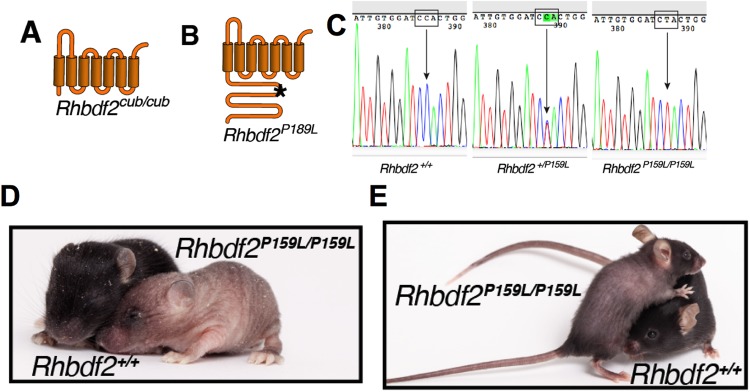
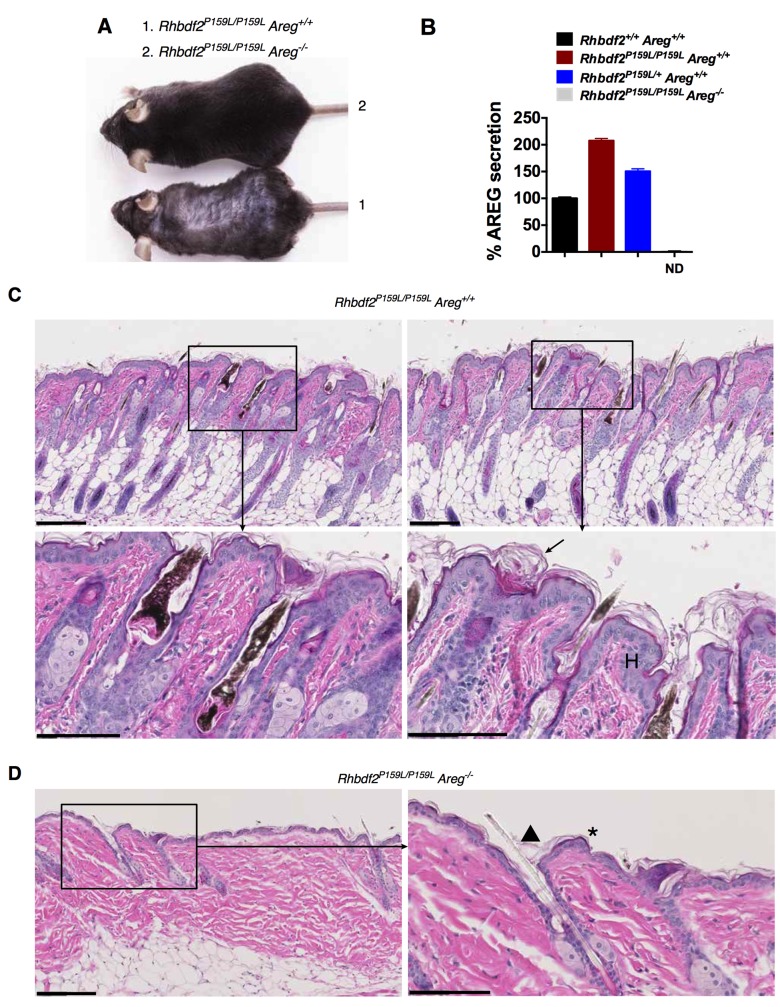
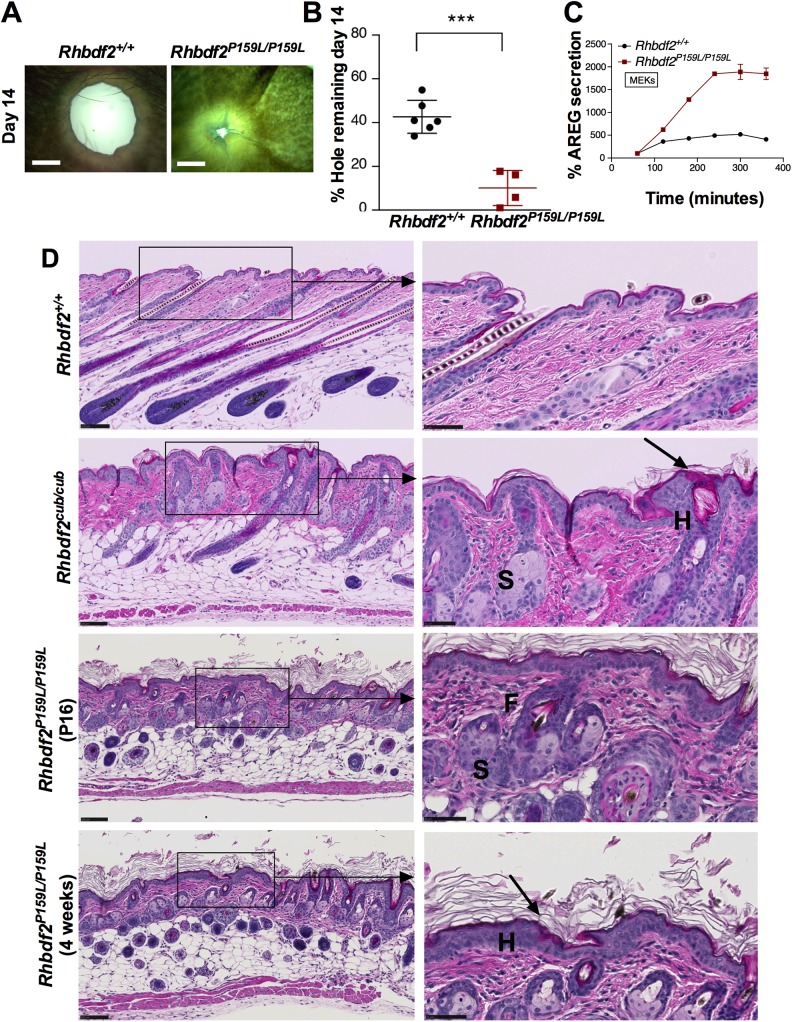
In humans, gain-of-function (GOF) mutations in RHBDF2 cause the skin disease tylosis. We generated a mouse model of human tylosis and show that GOF mutations in RHBDF2 cause tylosis by enhancing the amount of amphiregulin (AREG) secretion. Furthermore, we show that genetic disruption of AREG ameliorates skin pathology in mice carrying the human tylosis disease mutation. Collectively, our data suggest that RHBDF2 plays a critical role in regulating EGFR signaling and its downstream events, including development of tylosis, by facilitating enhanced secretion of AREG. Thus, targeting AREG could have therapeutic benefit in the treatment of tylosis.
在人类中,RHBDF2的功能获得性(GOF)突变会导致皮肤病掌跖角化病。我们构建了人类掌跖角化病的小鼠模型,并表明RHBDF2中的GOF突变通过增加双调蛋白(AREG)的分泌量而导致掌跖角化病。此外,我们还表明,AREG的基因破坏可改善携带人类掌跖角化病疾病突变小鼠的皮肤病理状况。总体而言,我们的数据表明,RHBDF2通过促进AREG的增强分泌,在调节表皮生长因子受体(EGFR)信号及其下游事件(包括掌跖角化病的发展)中起关键作用。因此,靶向AREG可能对掌跖角化病的治疗具有治疗益处。