Bar Céline, Diene Gwenaelle, Molinas Catherine, Bieth Eric, Casper Charlotte, Tauber Maithé
Endocrinology, Obesity, Bone Diseases, Genetics and Gynecology Unit, Children's Hospital, University Hospital Center of Toulouse, 330, avenue de Grande-Bretagne, TSA 40031 - 31059, Toulouse cedex 9, France.
National Reference Center of Prader-Willi Syndrome, Children's Hospital, University Hospital Center of Toulouse, 330, avenue de Grande-Bretagne, TSA 40031 - 31059, Toulouse cedex 9, France.
Orphanet J Rare Dis. 2017 Jun 28;12(1):118. doi: 10.1186/s13023-017-0673-6.
PWS is a severe neurodevelopmental genetic disorder now usually diagnosed in the neonatal period from hypotonia and feeding difficulties. Our study analyzed the birth incidence and care of infants with early diagnosis.
Data were collected on 61 infants with a molecular diagnosis of PWS born in 2012 and 2013 in France.
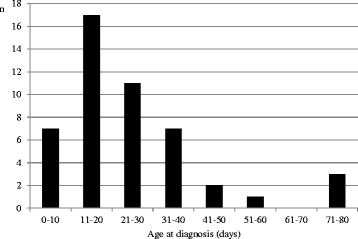
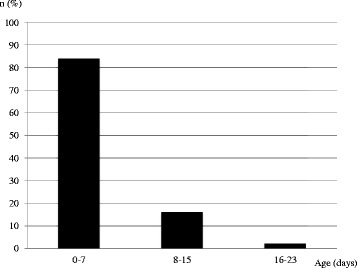
Thirty-eight infants with PWS were born in 2013. The median age at diagnosis was 18 days. Birth incidence calculated for 2013 was 1/21,000 births. No case was diagnosed prenatally, despite 9 amniocenteses, including 4 for polyhydramnios. Five infants had delayed diagnosis, after 3 months of life. For 2 of them, the diagnosis was not suspected at birth and for 3, FISH analysis in the neonatal period was normal, with no further molecular studies. Ninety-three percent of the neonates were hospitalized, and 84% needed nasogastric tube feeding for a median of 38 days. Swallowing assessment was performed for 45%, at a median age of 10 days. Physiotherapy was started for 76% during hospitalization. Eighty percent of those diagnosed within the first 3 months were seen by a pediatric endocrinologist within the first week of life.
Our study is the first to assess the birth incidence of PWS in France, at 1/21,000 births. Some prenatal or neonatal cases remain undiagnosed because of unrecognized clinical signs and the inappropriate choice of the initial molecular test. We also underscore the need to optimize neonatal care of infants with PWS.
普拉德-威利综合征(PWS)是一种严重的神经发育性遗传疾病,目前通常在新生儿期根据肌张力减退和喂养困难进行诊断。我们的研究分析了早期诊断的婴儿的出生发病率及护理情况。
收集了2012年和2013年在法国出生的61例经分子诊断为PWS的婴儿的数据。
2013年有38例PWS婴儿出生。诊断时的中位年龄为18天。2013年计算的出生发病率为1/21,000活产。尽管进行了9次羊膜穿刺术,包括4次因羊水过多进行的穿刺术,但均未在产前确诊。5例婴儿诊断延迟,在出生3个月后确诊。其中2例在出生时未被怀疑患有该病,3例新生儿期的荧光原位杂交(FISH)分析结果正常,未进一步进行分子学研究。93%的新生儿住院治疗,84%的新生儿需要鼻胃管喂养,中位喂养时间为38天。45%的婴儿在中位年龄10天时进行了吞咽评估。76%的婴儿在住院期间开始接受物理治疗。在出生后前3个月内确诊的婴儿中,80%在出生后第一周内就由儿科内分泌专家进行了诊治。
我们的研究首次评估了法国PWS的出生发病率,为1/21,000活产。由于未识别的临床体征和初始分子检测选择不当,一些产前或新生儿病例仍未被诊断出来。我们还强调了优化PWS婴儿新生儿护理的必要性。