Yakimovich Artur, Huttunen Moona, Zehnder Benno, Coulter Lesley J, Gould Victoria, Schneider Christoph, Kopf Manfred, McInnes Colin J, Greber Urs F, Mercer Jason
Institute of Molecular Life Sciences, University of Zurich, Zurich, Switzerland.
MRC Laboratory for Molecular Cell Biology, University College London, London, United Kingdom.
J Virol. 2017 Aug 24;91(18). doi: 10.1128/JVI.00838-17. Print 2017 Sep 15.
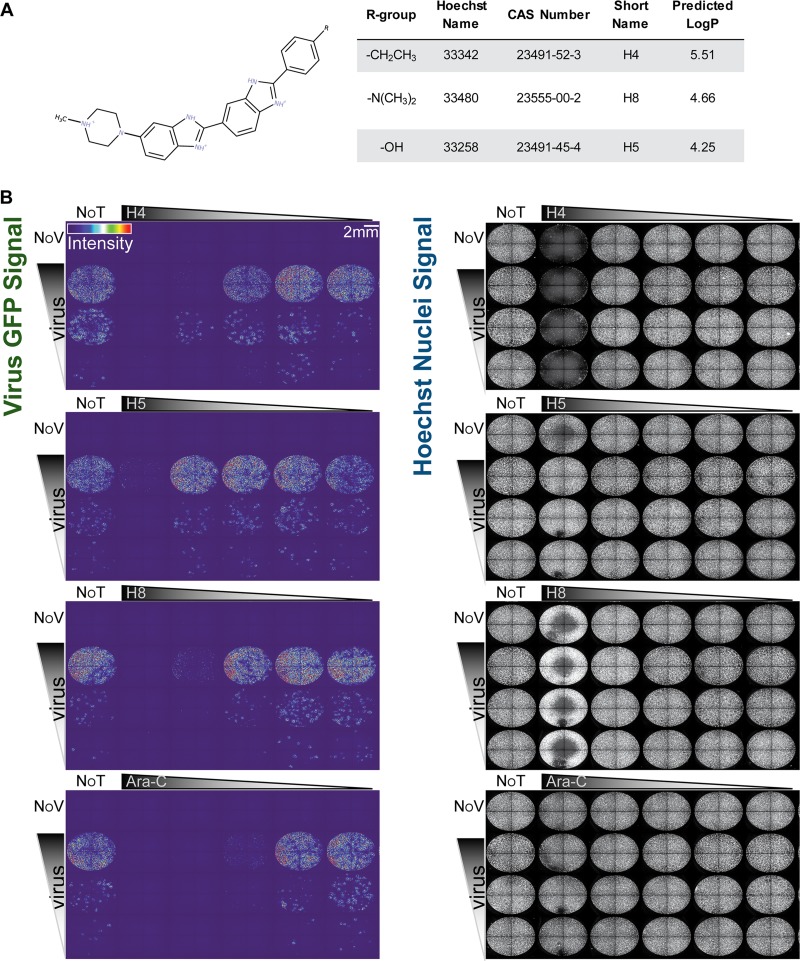
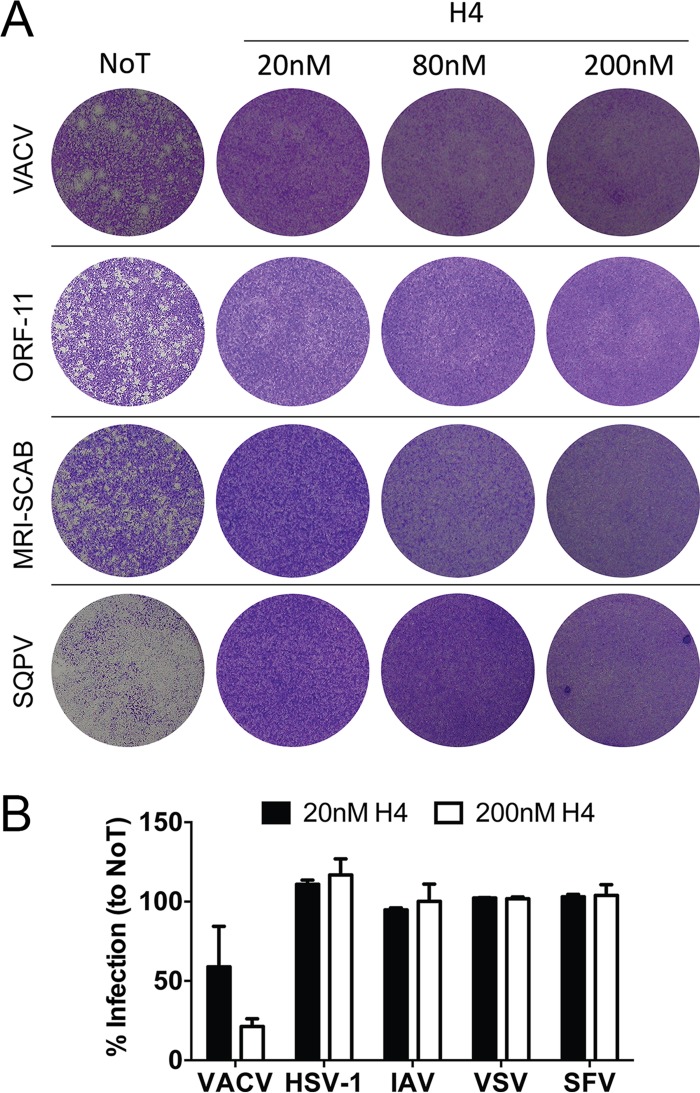
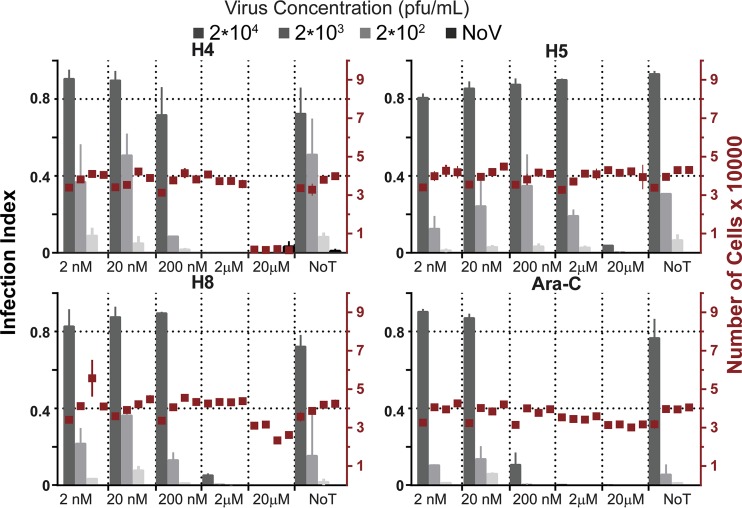
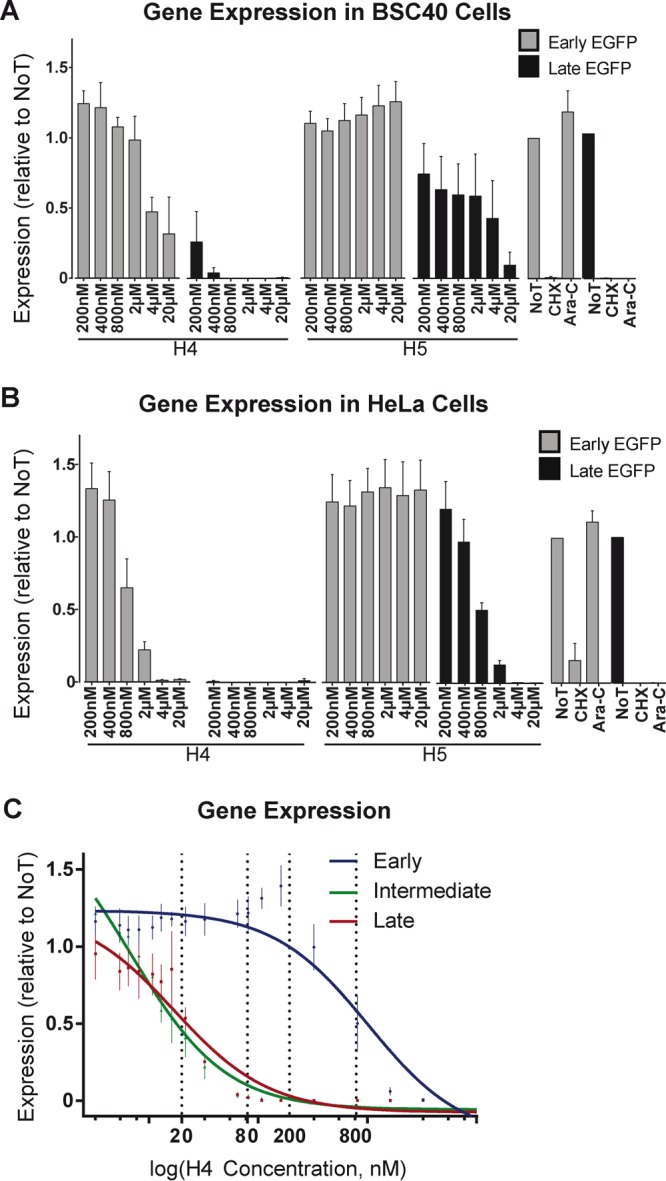
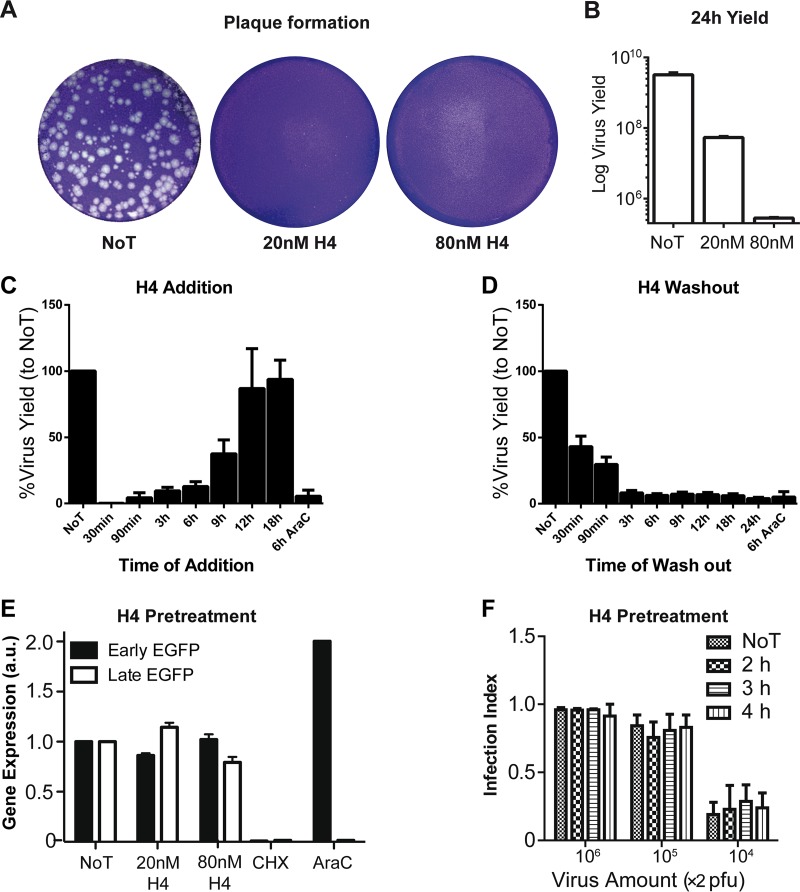
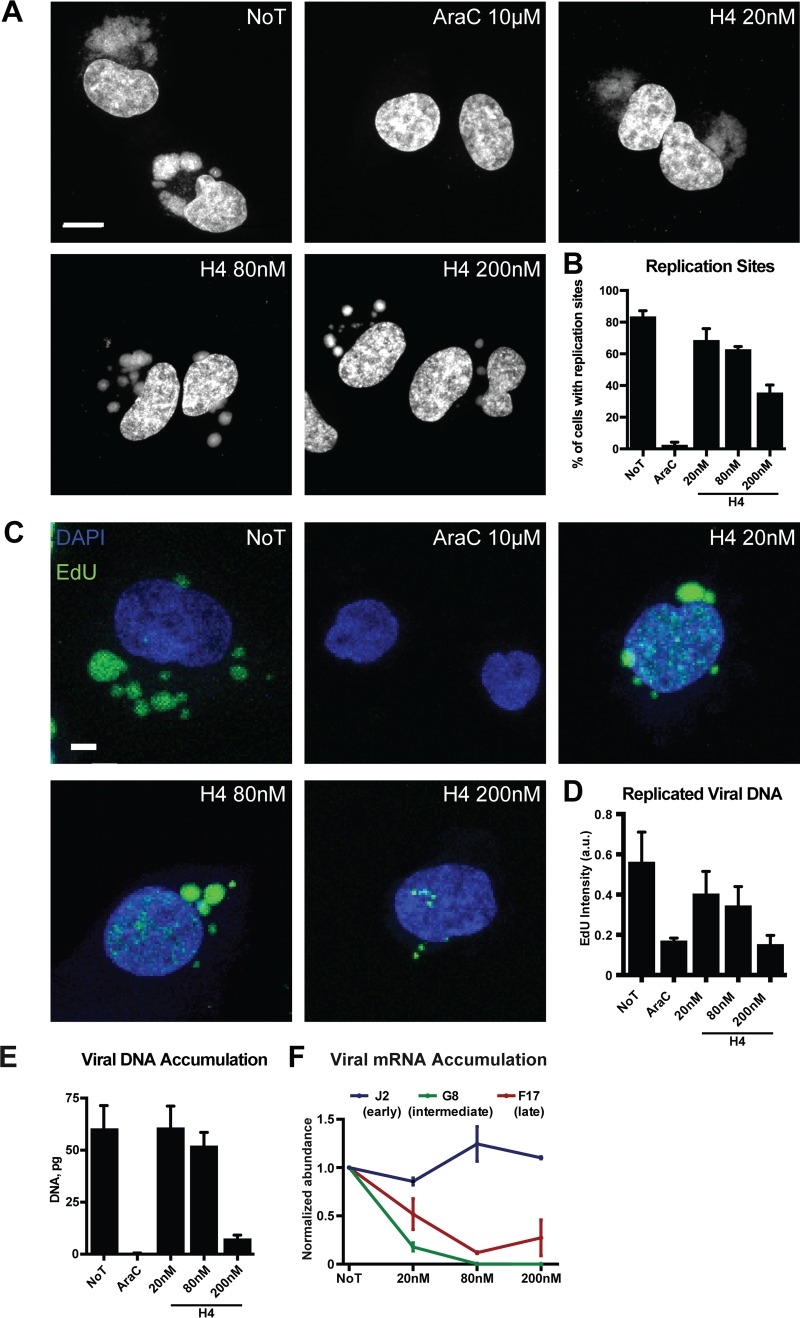
Virus infection of humans and livestock can be devastating for individuals and populations, sometimes resulting in large economic and societal impact. Prevention of virus disease by vaccination or antiviral agents is difficult to achieve. A notable exception was the eradication of human smallpox by vaccination over 30 years ago. Today, humans and animals remain susceptible to poxvirus infections, including zoonotic poxvirus transmission. Here we identified a small molecule, bisbenzimide (bisbenzimidazole), and its derivatives as potent agents against prototypic poxvirus infection in cell culture. We show that bisbenzimide derivatives, which preferentially bind the minor groove of double-stranded DNA, inhibit vaccinia virus infection by blocking viral DNA replication and abrogating postreplicative intermediate and late gene transcription. The bisbenzimide derivatives are potent against vaccinia virus and other poxviruses but ineffective against a range of other DNA and RNA viruses. The bisbenzimide derivatives are the first inhibitors of their class, which appear to directly target the viral genome without affecting cell viability. Smallpox was one of the most devastating diseases in human history until it was eradicated by a worldwide vaccination campaign. Due to discontinuation of routine vaccination more than 30 years ago, the majority of today's human population remains susceptible to infection with poxviruses. Here we present a family of bisbenzimide (bisbenzimidazole) derivatives, known as Hoechst nuclear stains, with high potency against poxvirus infection. Results from a variety of assays used to dissect the poxvirus life cycle demonstrate that bisbenzimides inhibit viral gene expression and genome replication. These findings can lead to the development of novel antiviral drugs that target viral genomes and block viral replication.
病毒对人类和牲畜的感染可能对个人和群体造成毁灭性影响,有时会产生巨大的经济和社会影响。通过接种疫苗或使用抗病毒药物来预防病毒疾病很难实现。一个显著的例外是30多年前通过接种疫苗根除了人类天花。如今,人类和动物仍然易受痘病毒感染,包括人畜共患痘病毒传播。在这里,我们鉴定出一种小分子双苯甲酰亚胺(双苯并咪唑)及其衍生物,它们在细胞培养中是抗典型痘病毒感染的有效药剂。我们表明,优先结合双链DNA小沟的双苯甲酰亚胺衍生物通过阻断病毒DNA复制以及消除复制后中间体和晚期基因转录来抑制痘苗病毒感染。双苯甲酰亚胺衍生物对痘苗病毒和其他痘病毒有效,但对一系列其他DNA和RNA病毒无效。双苯甲酰亚胺衍生物是该类别的首批抑制剂,它们似乎直接靶向病毒基因组而不影响细胞活力。天花是人类历史上最具毁灭性的疾病之一,直到通过全球疫苗接种运动将其根除。由于30多年前停止了常规疫苗接种,如今大多数人群仍然易受痘病毒感染。在这里,我们展示了一类双苯甲酰亚胺(双苯并咪唑)衍生物,即所谓的Hoechst核染色剂,它们对痘病毒感染具有高效力。用于剖析痘病毒生命周期的各种试验结果表明,双苯甲酰亚胺抑制病毒基因表达和基因组复制。这些发现可导致开发靶向病毒基因组并阻断病毒复制的新型抗病毒药物。