Martin Lukas, Gombert Alexander, Chen Jianmin, Liebens Julia, Verleger Julia, Kalder Johannes, Marx Gernot, Jacobs Michael, Thiemermann Christoph, Schuerholz Tobias
Department of Intensive Care and Intermediate Care, RWTH University Hospital Aachen, Aachen, Germany.
The William Harvey Research Institute, Barts and The London School of Medicine and Dentistry, Queen Mary University of London, London, United Kingdom.
Front Immunol. 2017 Jun 12;8:681. doi: 10.3389/fimmu.2017.00681. eCollection 2017.
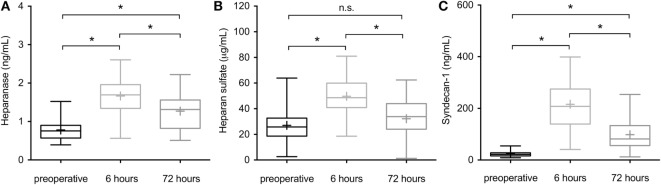
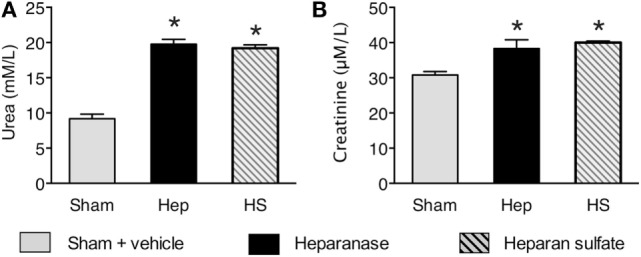
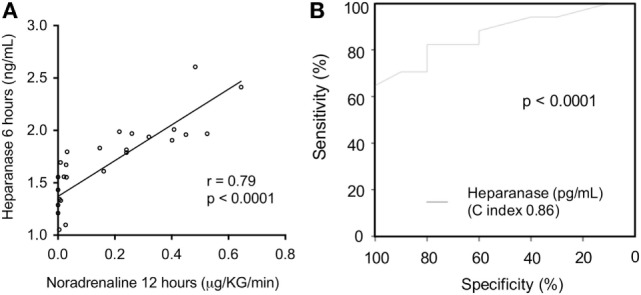
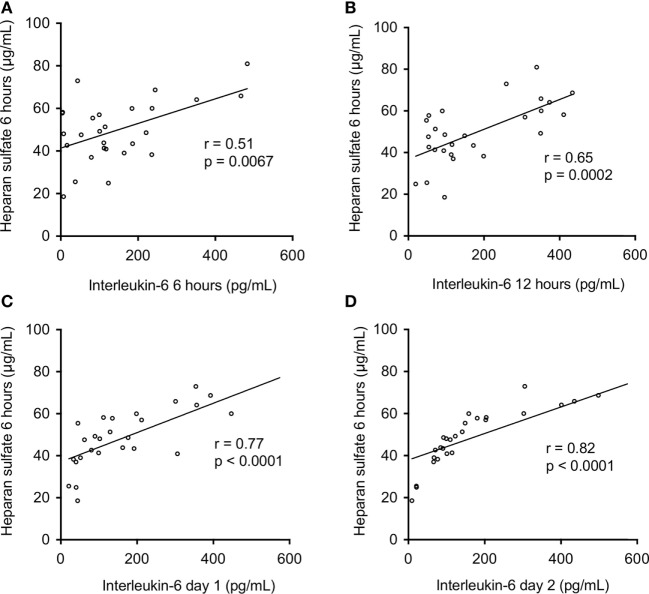
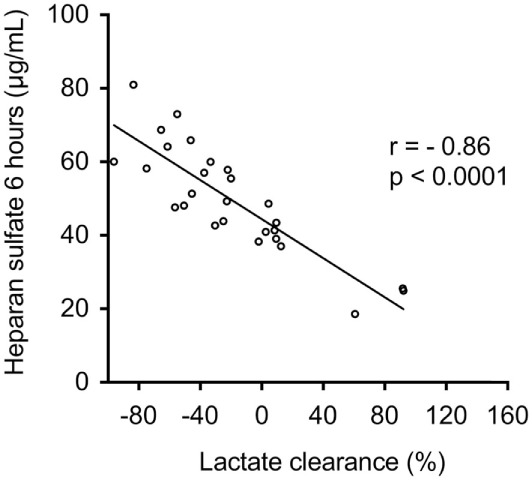
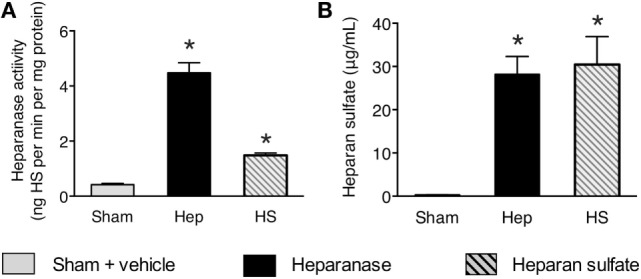
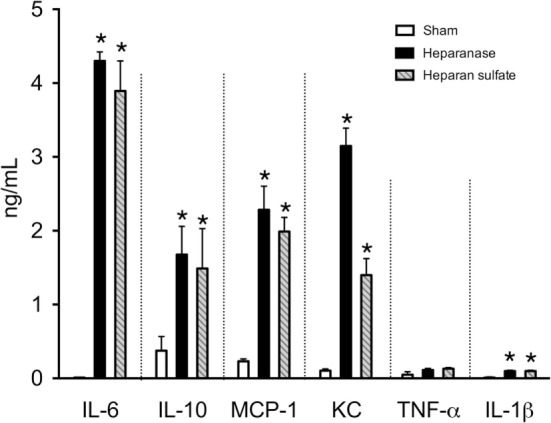
Thoracoabdominal aortic aneurysm (TAAA) is a highly lethal disorder requiring open or endovascular TAAA repair, both of which are rare, but extensive and complex surgical procedures associated with a significant systemic inflammatory response and high post-operative morbidity and mortality. Heparanase is a β-d-endoglucuronidase that remodels the endothelial glycocalyx by degrading heparan sulfate in many diseases/conditions associated with systemic inflammation including sepsis, trauma, and major surgery. We hypothesized that (a) perioperative serum levels of heparanase and heparan sulfate are associated with the clinical course after open or endovascular TAAA repair and (b) induce a systemic inflammatory response and renal injury/dysfunction in mice. Using a reverse-translational approach, we assessed (a) the serum levels of heparanase, heparan sulfate, and the heparan sulfate proteoglycan syndecan-1 preoperatively as well as 6 and 72 h after intensive care unit (ICU) admission in patients undergoing open or endovascular TAAA repair and (b) laboratory and clinical parameters and 90-day survival, and (c) the systemic inflammatory response and renal injury/dysfunction induced by heparanase and heparan sulfate in mice. When compared to preoperative values, the serum levels of heparanase, heparan sulfate, and syndecan-1 significantly transiently increased within 6 h of ICU admission and returned to normal within 72 h after ICU admission. The kinetics of any observed changes in heparanase, heparan sulfate, or syndecan-1 levels, however, did not differ between open and endovascular TAAA-repair. Postoperative heparanase levels positively correlated with noradrenalin dose at 12 h after ICU admission and showed a high predictive value of vasopressor requirements within the first 24 h. Postoperative heparan sulfate showed a strong positive correlation with interleukin-6 levels day 0, 1, and 2 post-ICU admission and a strong negative correlation with lactate clearance during the first 6 h post-ICU admission. Moreover, systemic administration of heparanase and heparan sulfate induced an inflammatory response and a small degree of renal dysfunction in mice. In conclusion, these results suggest that heparanase and heparan sulfate exhibit a substantial role as clinically relevant danger molecules and may serve as both, promising biomarkers and therapeutic targets in patients undergoing open or endovascular TAAA repair and, indeed, other conditions associated with significant systemic inflammation.
胸腹主动脉瘤(TAAA)是一种高致死性疾病,需要进行开放性或血管腔内TAAA修复,这两种修复方式都很罕见,而且是复杂的大手术,会引发显著的全身炎症反应以及较高的术后发病率和死亡率。乙酰肝素酶是一种β -d-内葡萄糖醛酸酶,在包括脓毒症、创伤和大手术在内的许多与全身炎症相关的疾病/病症中,通过降解硫酸乙酰肝素重塑内皮糖萼。我们假设:(a)开放性或血管腔内TAAA修复术后围手术期血清乙酰肝素酶和硫酸乙酰肝素水平与临床病程相关;(b)在小鼠中会引发全身炎症反应和肾损伤/功能障碍。采用反向转化方法,我们评估了:(a)接受开放性或血管腔内TAAA修复患者术前以及重症监护病房(ICU)入院后6小时和72小时的血清乙酰肝素酶、硫酸乙酰肝素和硫酸乙酰肝素蛋白聚糖syndecan-1水平;(b)实验室和临床参数以及90天生存率;(c)乙酰肝素酶和硫酸乙酰肝素在小鼠中引发的全身炎症反应和肾损伤/功能障碍。与术前值相比,ICU入院后6小时内,血清乙酰肝素酶、硫酸乙酰肝素和syndecan-1水平显著短暂升高,并在ICU入院后72小时内恢复正常。然而,开放性和血管腔内TAAA修复之间,乙酰肝素酶、硫酸乙酰肝素或syndecan-1水平的任何观察到的变化动力学并无差异。术后乙酰肝素酶水平与ICU入院后12小时的去甲肾上腺素剂量呈正相关,并显示出对最初24小时内血管升压药需求的高预测价值。术后硫酸乙酰肝素与ICU入院后第0、1和2天的白细胞介素-6水平呈强正相关,与ICU入院后最初6小时内的乳酸清除率呈强负相关。此外,乙酰肝素酶和硫酸乙酰肝素的全身给药在小鼠中引发了炎症反应和轻度肾功能障碍。总之,这些结果表明,乙酰肝素酶和硫酸乙酰肝素作为临床相关的危险分子发挥着重要作用,并且可能成为接受开放性或血管腔内TAAA修复以及其他确实与显著全身炎症相关病症患者有前景的生物标志物和治疗靶点。