Park Cheol, Hong Su Hyun, Choi Yung Hyun
Department of Molecular Biology, College of Natural Sciences, Dongeui University, Busan, Korea.
Department of Biochemistry, Dongeui University College of Korean Medicine, Busan, Korea.
Integr Med Res. 2017 Jun;6(2):179-189. doi: 10.1016/j.imr.2017.03.003. Epub 2017 May 26.
Dae-Hwang-Mok-Dan-Tang (DHMDT), a traditional Korean medicine, contains five species of medicinal plants and has been used to treat patients with digestive tract cancer for hundreds of years; however, its anticancer mechanism is poorly understood. In the present study, we investigated the proapoptotic effects of DHMDT in human colon cancer HCT-116 cells.
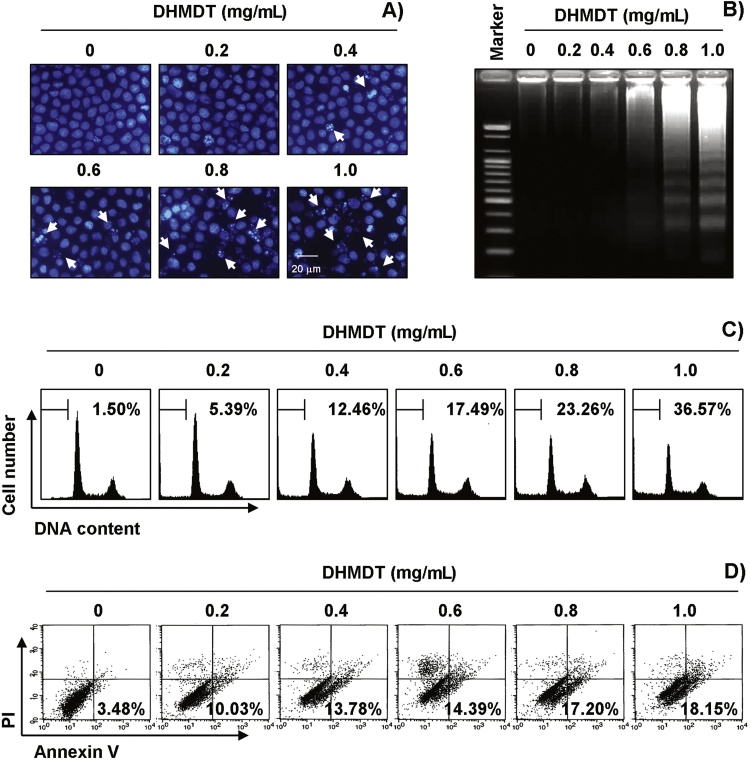
Cytotoxicity was evaluated using the 3-(4,5-dimethyl-2-thiazolyl)-2,5-diphenyl-2-tetrazolium bromide assay. Apoptosis was detected using 4,6-diamidino-2-phenyllindile staining, agarose gel electrophoresis, and flow cytometry. The protein levels were determined using Western blot analysis. Caspase activity was measured using a colorimetric assay.
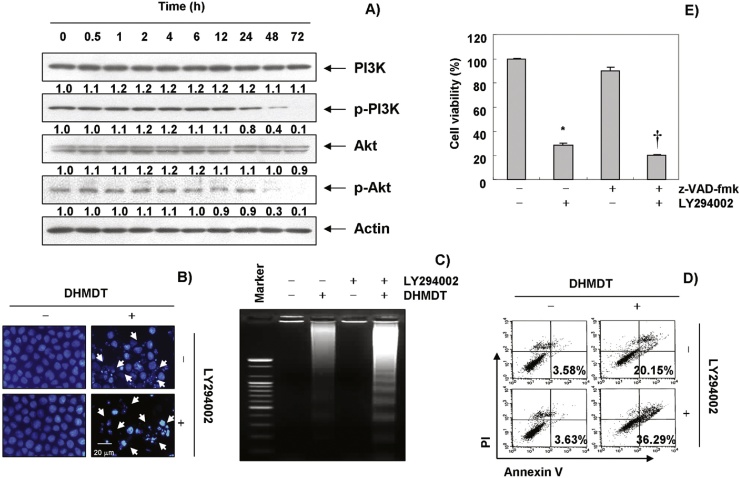
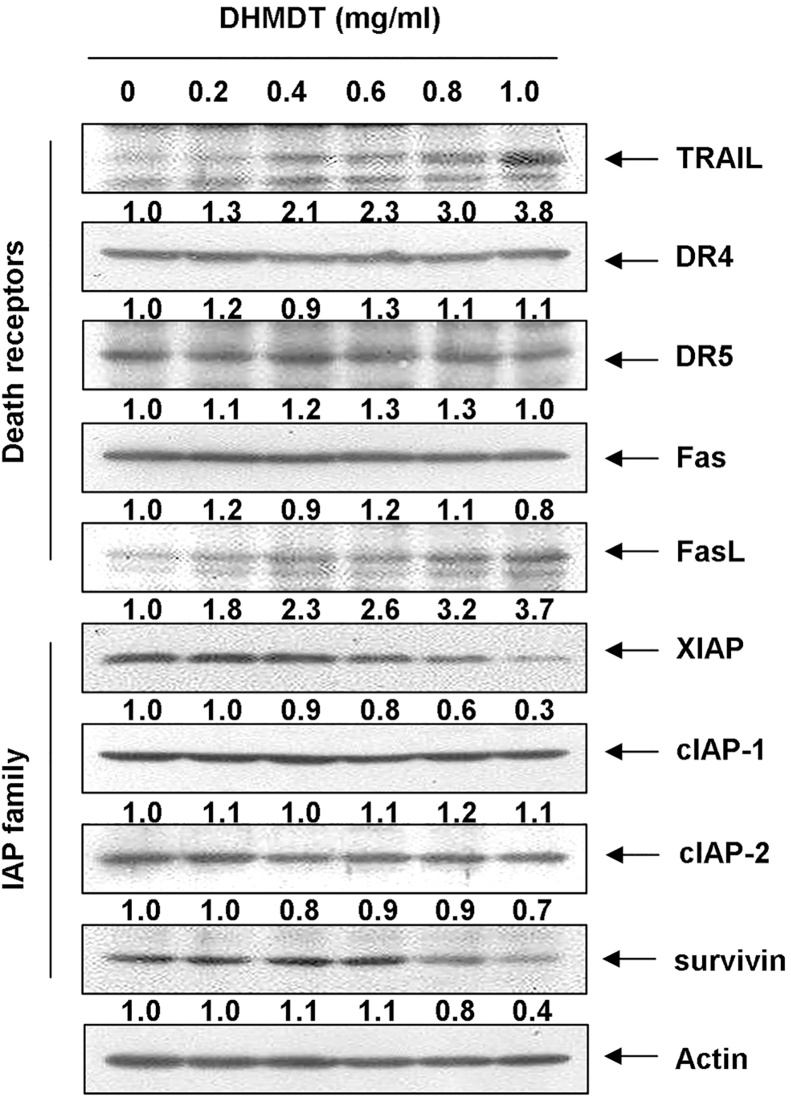
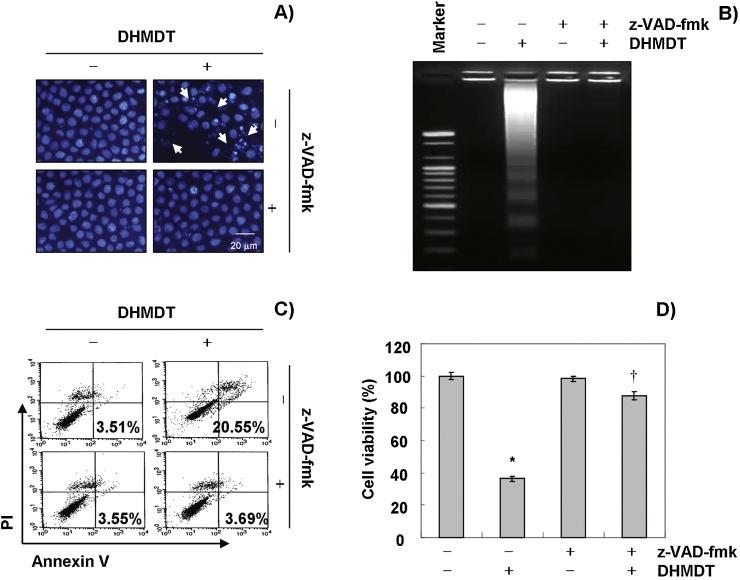
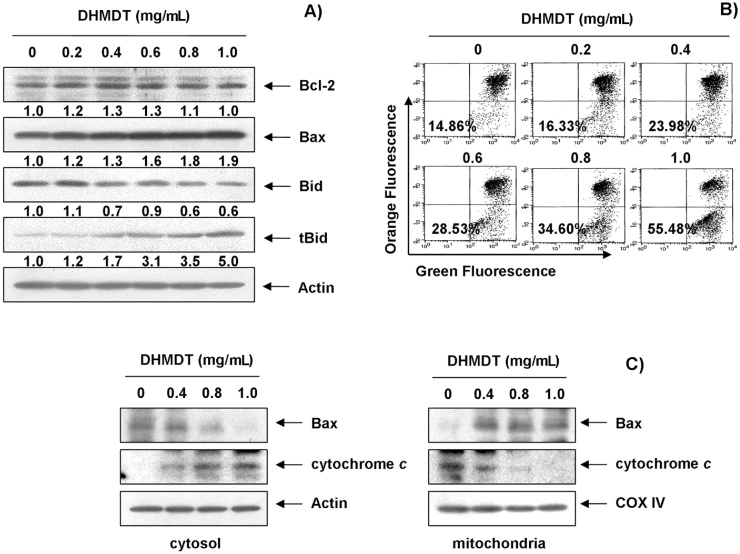
Treatment with DHMDT resulted in a growth inhibition coupled with apoptosis induction, which was associated with the downregulation of members of IAP (inhibitor of apoptosis protein) family, including XIAP and survivin, and the activation of caspase-9 and -3 accompanied by proteolytic degradation of poly(ADP-ribose)-polymerase and phospholipase C-γ1. DHMDT treatment also showed a correlation with the translocation of proapoptotic Bax to mitochondria, the loss of mitochondrial membrane permeabilization, and the cytochrome release from the mitochondria to the cytosol. Moreover, DHMDT increased the levels of death receptor-associated ligands and enhanced activation of caspase-8 and cleavage of its substrate, Bid. However, the pan-caspase inhibitor could reverse DHMDT-induced apoptosis. In addition, DHMDT suppressed the phosphoinositide 3-kinase (PI3K)/Akt pathway, and treatment with a potent inhibitor of PI3K further increased the apoptotic activity of DHMDT.
Our data showed that DHMDT induces HCT-116 cell apoptosis by activating intrinsic and extrinsic apoptosis pathways and by suppressing the PI3K/Akt signal pathway; however, further studies are needed to identify the active compounds.
大黄木丹汤(DHMDT)是一种传统韩药,由五种药用植物组成,数百年来一直用于治疗消化道癌症患者;然而,其抗癌机制尚不清楚。在本研究中,我们研究了DHMDT对人结肠癌HCT-116细胞的促凋亡作用。
使用3-(4,5-二甲基-2-噻唑基)-2,5-二苯基-2-溴化四氮唑蓝法评估细胞毒性。使用4,6-二脒基-2-苯基吲哚染色、琼脂糖凝胶电泳和流式细胞术检测细胞凋亡。使用蛋白质印迹分析测定蛋白质水平。使用比色法测量半胱天冬酶活性。
DHMDT处理导致生长抑制并诱导凋亡,这与凋亡抑制蛋白(IAP)家族成员(包括X连锁凋亡抑制蛋白和生存素)的下调以及半胱天冬酶-9和-3的激活有关,同时伴有聚(ADP-核糖)-聚合酶和磷脂酶C-γ1的蛋白水解降解。DHMDT处理还与促凋亡蛋白Bax转位至线粒体、线粒体膜通透性丧失以及细胞色素从线粒体释放至细胞质相关。此外,DHMDT增加了死亡受体相关配体的水平,并增强了半胱天冬酶-8的激活及其底物Bid的裂解。然而,泛半胱天冬酶抑制剂可逆转DHMDT诱导的凋亡。此外,DHMDT抑制了磷酸肌醇3-激酶(PI3K)/Akt途径,用PI3K的强效抑制剂处理进一步增加了DHMDT的凋亡活性。
我们的数据表明,DHMDT通过激活内源性和外源性凋亡途径以及抑制PI3K/Akt信号通路诱导HCT-116细胞凋亡;然而,需要进一步研究以鉴定活性化合物。