Aoyagi-Scharber Mika, Crippen-Harmon Danielle, Lawrence Roger, Vincelette Jon, Yogalingam Gouri, Prill Heather, Yip Bryan K, Baridon Brian, Vitelli Catherine, Lee Amanda, Gorostiza Olivia, Adintori Evan G, Minto Wesley C, Van Vleet Jeremy L, Yates Bridget, Rigney Sara, Christianson Terri M, Tiger Pascale M N, Lo Melanie J, Holtzinger John, Fitzpatrick Paul A, LeBowitz Jonathan H, Bullens Sherry, Crawford Brett E, Bunting Stuart
Research, BioMarin Pharmaceutical Inc., 105 Digital Drive, Novato, CA 94949, USA.
Mol Ther Methods Clin Dev. 2017 Jun 6;6:43-53. doi: 10.1016/j.omtm.2017.05.009. eCollection 2017 Sep 15.
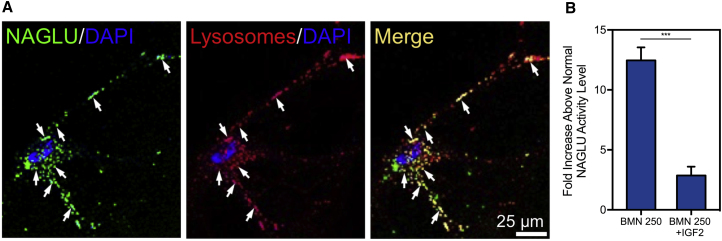
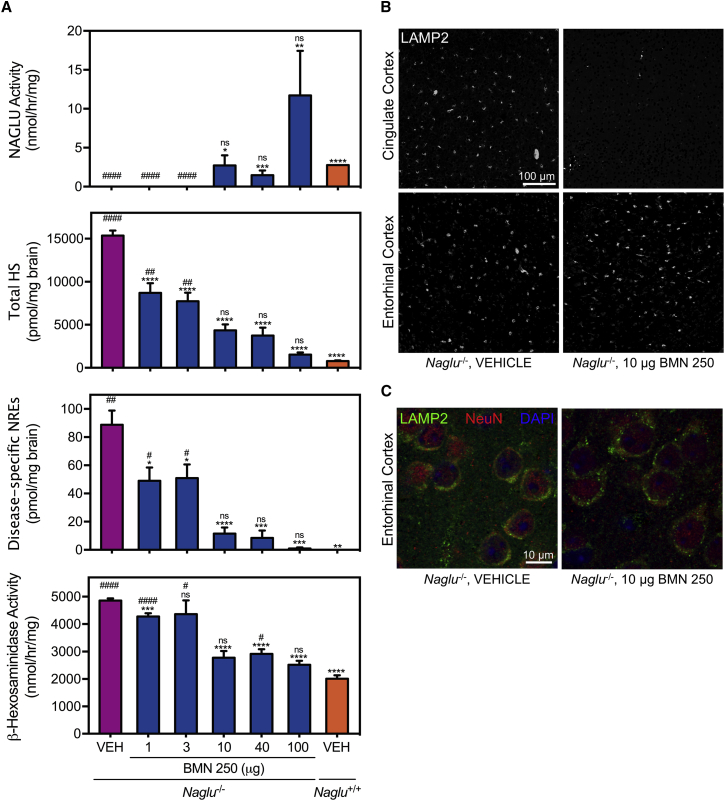
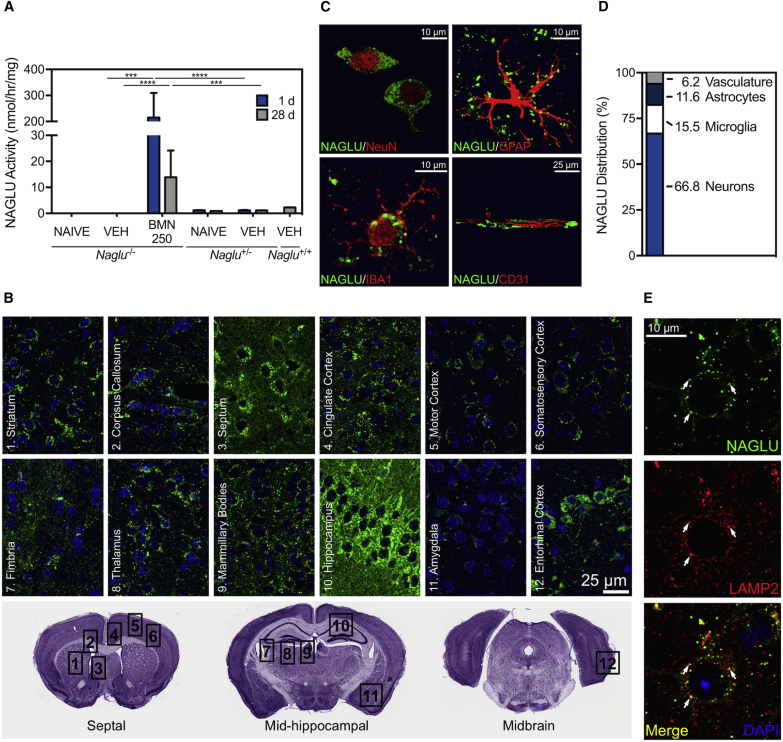
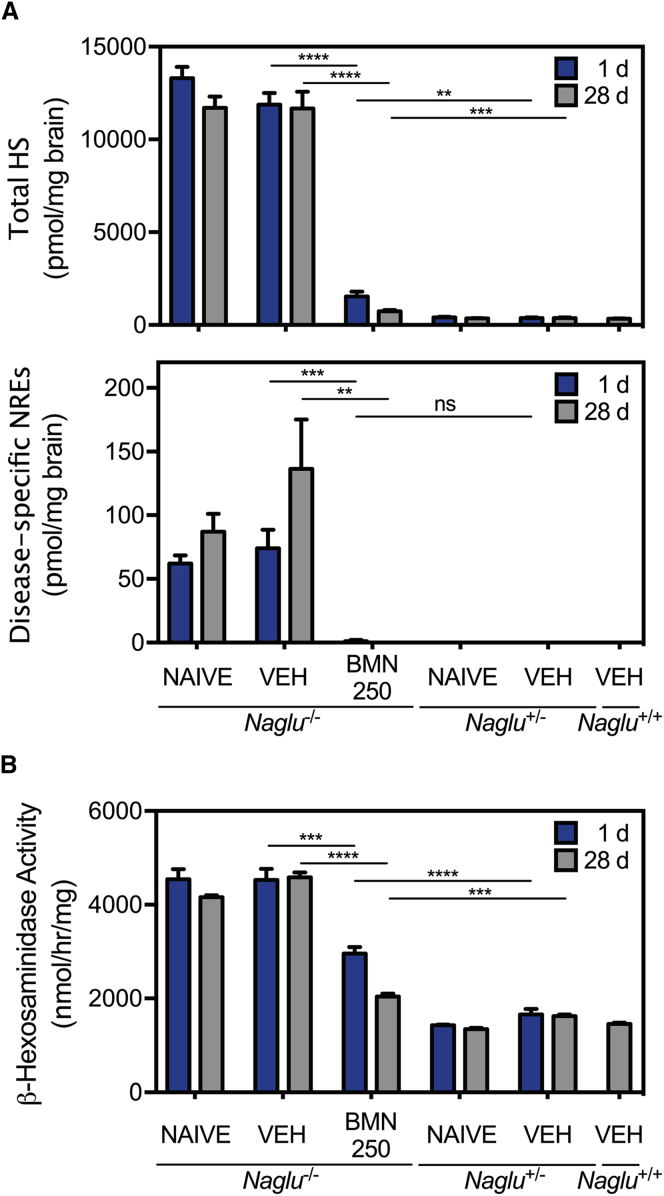
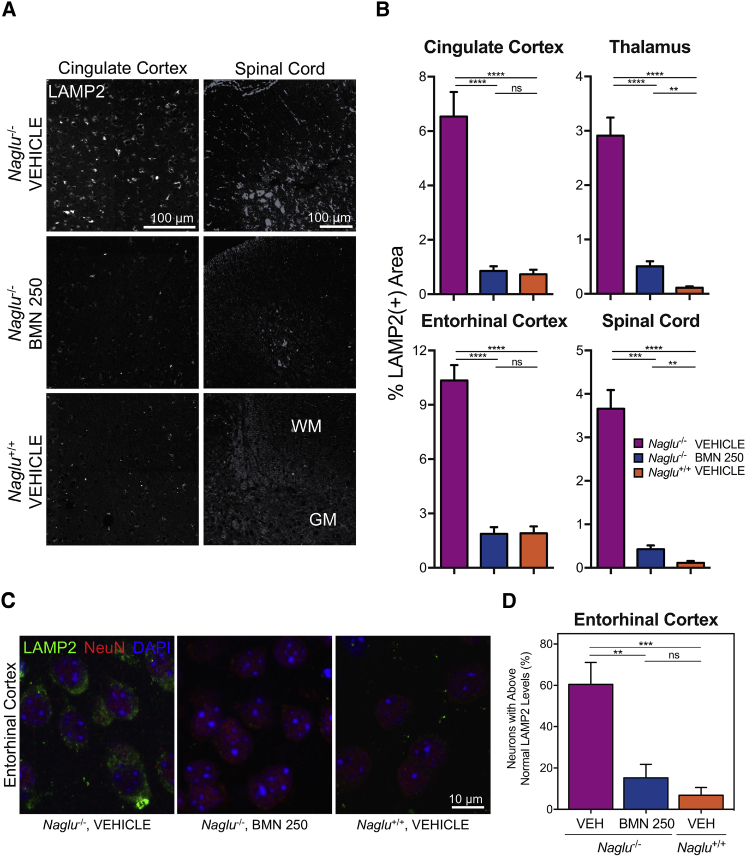
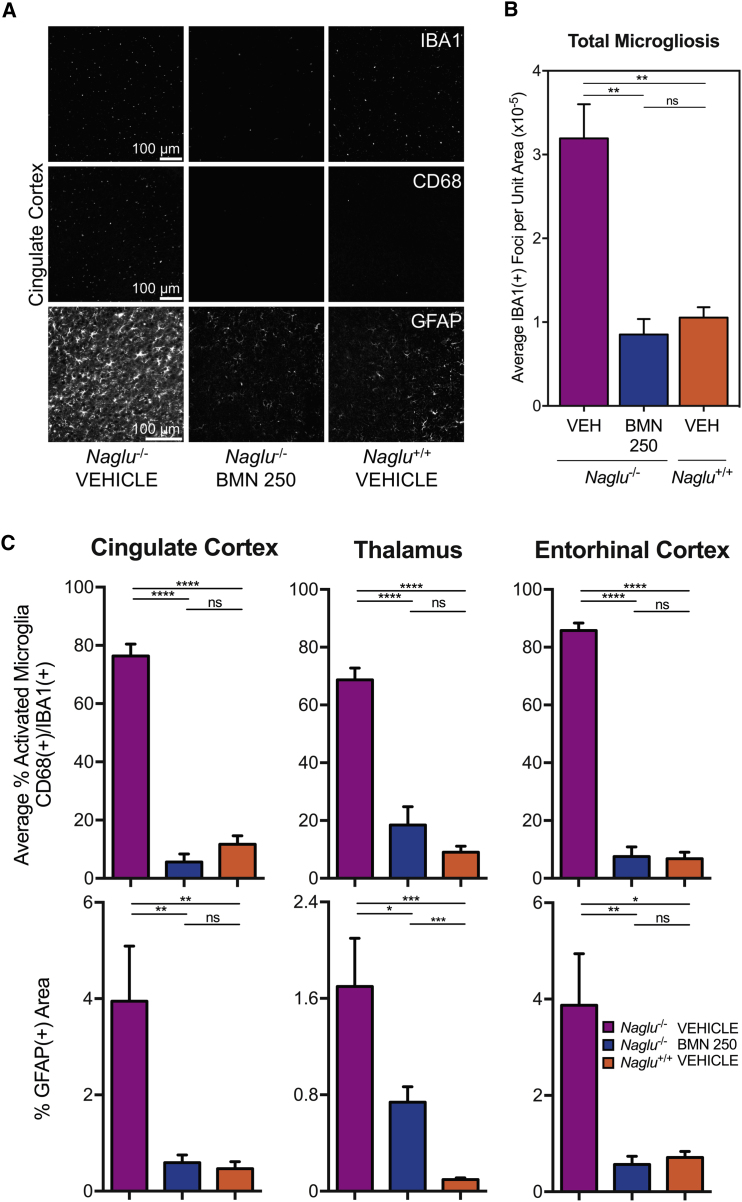
Sanfilippo syndrome type B (mucopolysaccharidosis IIIB), caused by inherited deficiency of α--acetylglucosaminidase (NAGLU), required for lysosomal degradation of heparan sulfate (HS), is a pediatric neurodegenerative disorder with no approved treatment. Intracerebroventricular (ICV) delivery of a modified recombinant NAGLU, consisting of human NAGLU fused with insulin-like growth factor 2 (IGF2) for enhanced lysosomal targeting, was previously shown to result in marked enzyme uptake and clearance of HS storage in the mouse brain. To further evaluate regional, cell type-specific, and dose-dependent biodistribution of NAGLU-IGF2 (BMN 250) and its effects on biochemical and histological pathology, mice were treated with 1-100 μg ICV doses (four times over 2 weeks). 1 day after the last dose, BMN 250 (100 μg doses) resulted in above-normal NAGLU activity levels, broad biodistribution, and uptake in all cell types, with NAGLU predominantly localized to neurons in the mouse brain. This led to complete clearance of disease-specific HS and reduction of secondary lysosomal defects and neuropathology across various brain regions lasting for at least 28 days after the last dose. The substantial brain uptake of NAGLU attainable by this highest ICV dosage was required for nearly complete attenuation of disease-driven storage accumulations and neuropathology throughout the mouse brain.
B型Sanfilippo综合征(黏多糖贮积症IIIB型)由α-N-乙酰氨基葡萄糖苷酶(NAGLU)遗传性缺乏引起,该酶是硫酸乙酰肝素(HS)溶酶体降解所必需的,是一种尚无获批治疗方法的儿科神经退行性疾病。先前的研究表明,脑室内(ICV)递送一种修饰的重组NAGLU(由与人胰岛素样生长因子2(IGF2)融合的人NAGLU组成,用于增强溶酶体靶向性)可导致小鼠脑内显著的酶摄取和HS蓄积的清除。为了进一步评估NAGLU-IGF2(BMN 250)的区域、细胞类型特异性和剂量依赖性生物分布及其对生化和组织病理学的影响,给小鼠脑室内注射1-100μg剂量(2周内注射4次)。最后一次给药后1天,BMN 250(100μg剂量)导致NAGLU活性水平高于正常,生物分布广泛,且在所有细胞类型中均有摄取,NAGLU主要定位于小鼠脑内的神经元。这导致疾病特异性HS完全清除,并减少了不同脑区继发性溶酶体缺陷和神经病理学,且在最后一次给药后至少持续28天。这种最高ICV剂量可实现的NAGLU在脑内的大量摄取对于几乎完全减轻整个小鼠脑内疾病驱动的蓄积和神经病理学是必需的。