An Bobae, Kim Jihye, Park Kyungjoon, Lee Sukwon, Song Sukwoon, Choi Sukwoo
School of Biological Sciences, College of Natural Sciences, Seoul National University, Seoul, Korea.
Department of Neurobiology, Duke University, Durham, United States.
Elife. 2017 Jul 3;6:e25224. doi: 10.7554/eLife.25224.
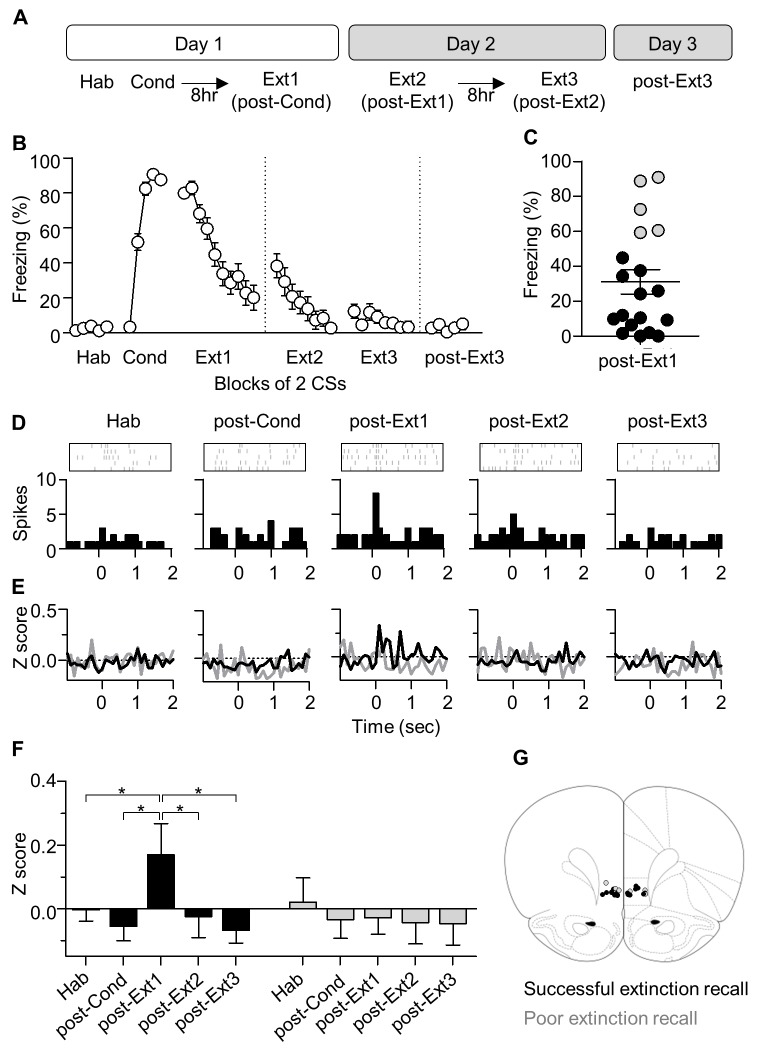
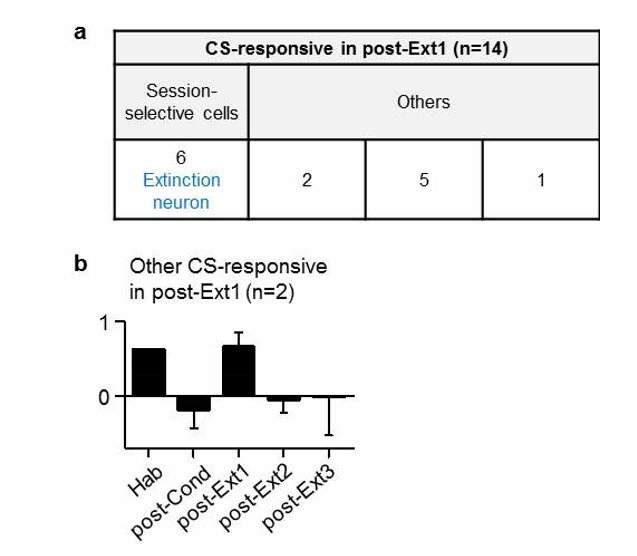
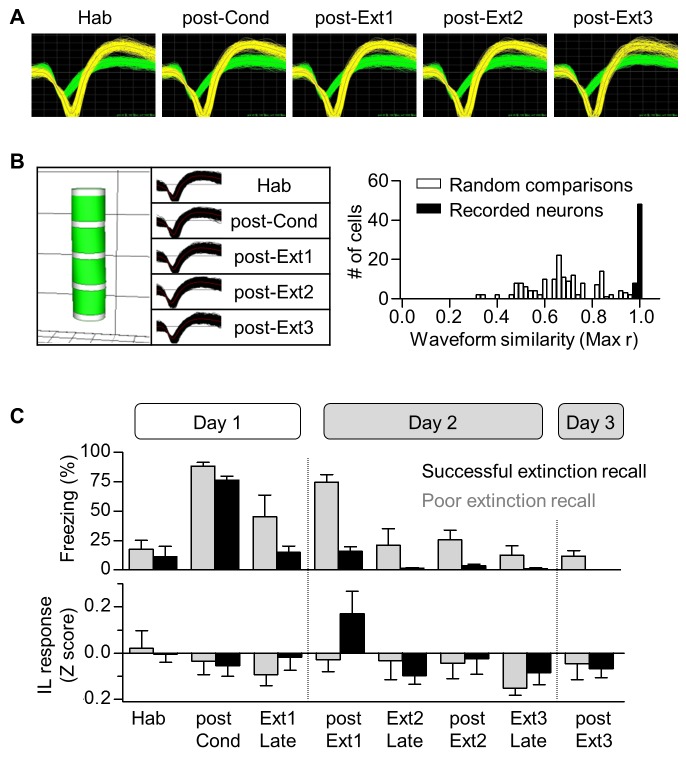
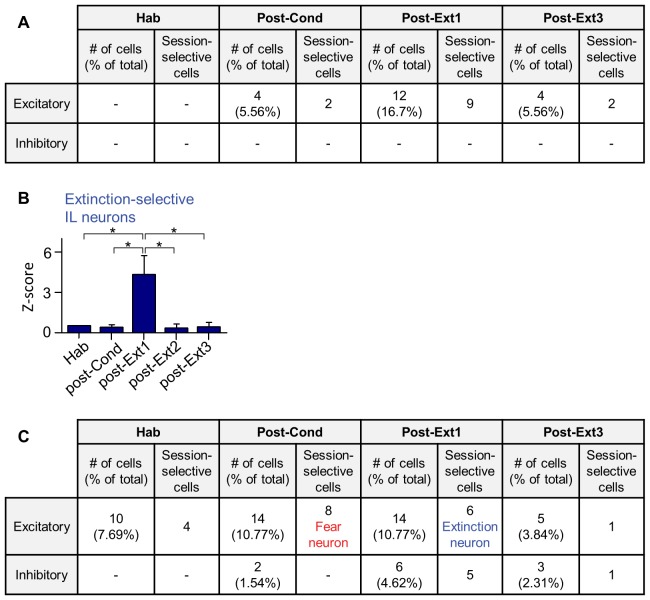
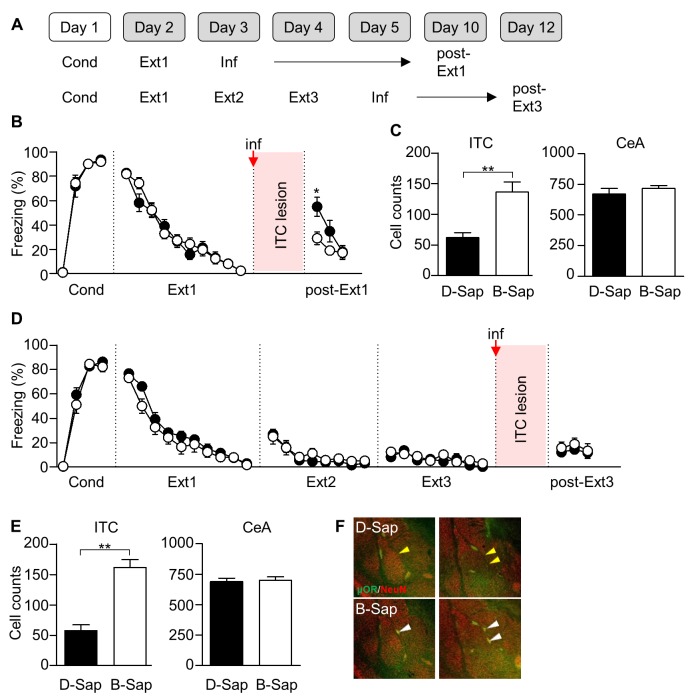
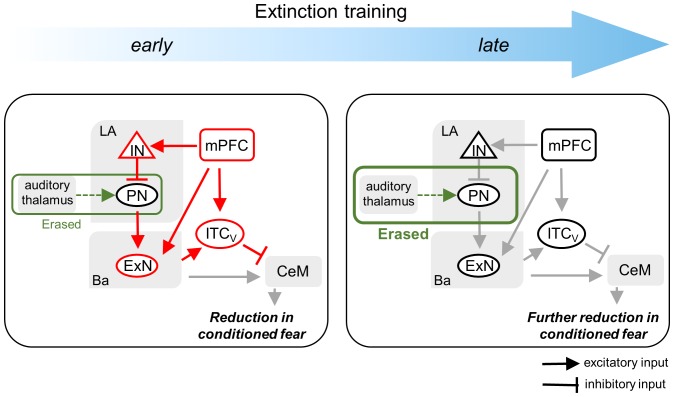
There has been a longstanding debate on whether original fear memory is inhibited or erased after extinction. One possibility that reconciles this uncertainty is that the inhibition and erasure mechanisms are engaged in different phases (early or late) of extinction. In this study, using single-session extinction training and its repetition (multiple-session extinction training), we investigated the inhibition and erasure mechanisms in the prefrontal cortex and amygdala of rats, where neural circuits underlying extinction reside. The inhibition mechanism was prevalent with single-session extinction training but faded when single-session extinction training was repeated. In contrast, the erasure mechanism became prevalent when single-session extinction training was repeated. Moreover, ablating the intercalated neurons of amygdala, which are responsible for maintaining extinction-induced inhibition, was no longer effective in multiple-session extinction training. We propose that the inhibition mechanism operates primarily in the early phase of extinction training, and the erasure mechanism takes over after that.
关于消退后原始恐惧记忆是被抑制还是被消除,一直存在着长期的争论。调和这种不确定性的一种可能性是,抑制和消除机制在消退的不同阶段(早期或晚期)起作用。在本研究中,我们使用单节段消退训练及其重复(多节段消退训练),研究了大鼠前额叶皮层和杏仁核中的抑制和消除机制,消退所涉及的神经回路就位于这些部位。单节段消退训练时抑制机制普遍存在,但当单节段消退训练重复进行时,该机制就会减弱。相反,当单节段消退训练重复进行时,消除机制变得普遍。此外,损毁负责维持消退诱导抑制的杏仁核中间神经元,在多节段消退训练中不再有效。我们提出,抑制机制主要在消退训练的早期阶段起作用,之后由消除机制接管。