Udelhoven Thomas, Schlerf Martin, Segl Karl, Mallick Kaniska, Bossung Christian, Retzlaff Rebecca, Rock Gilles, Fischer Peter, Müller Andreas, Storch Tobias, Eisele Andreas, Weise Dennis, Hupfer Werner, Knigge Thiemo
Department of Environmental Remote Sensing & Geoinformatics, University of Trier, 54286 Trier, Germany.
Luxembourg Institute of Science and Technology (LIST), L-4362 Esch-sur-Alzette, Luxembourg.
Sensors (Basel). 2017 Jul 1;17(7):1542. doi: 10.3390/s17071542.
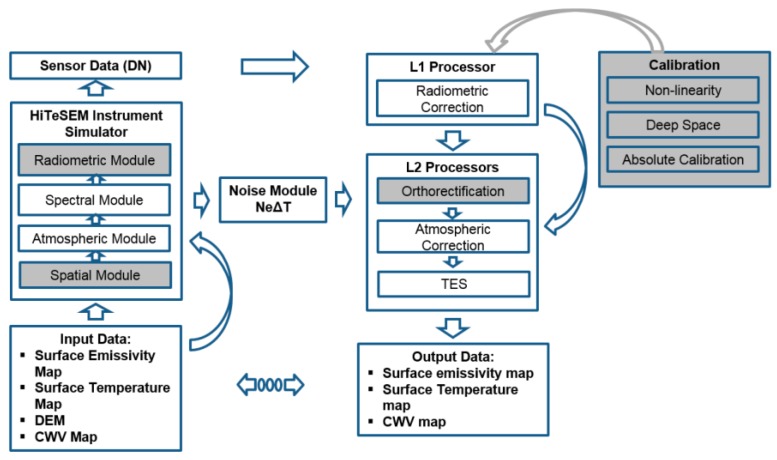
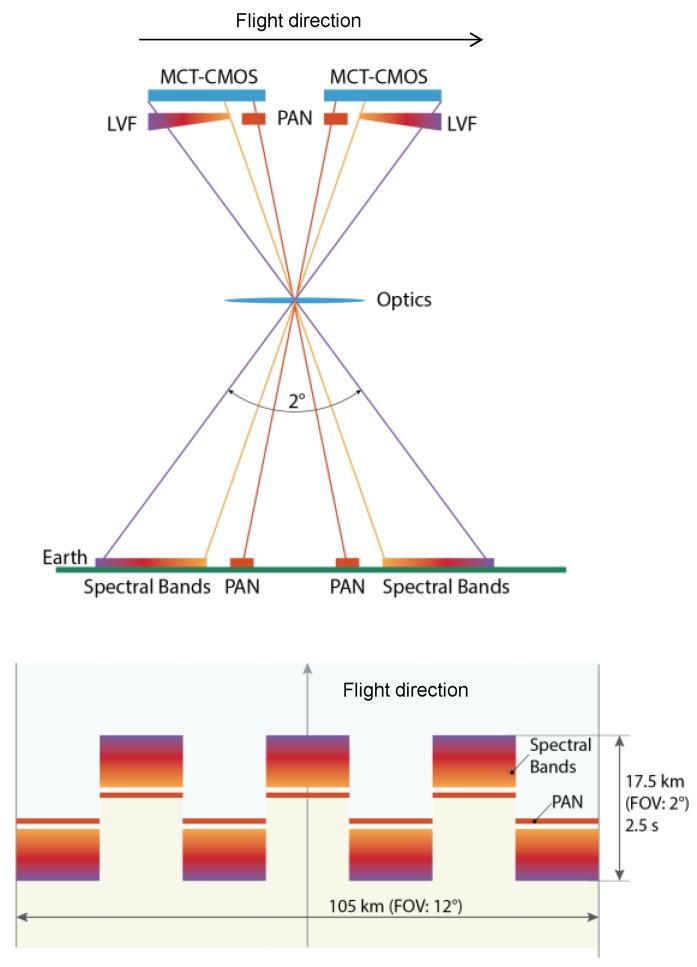
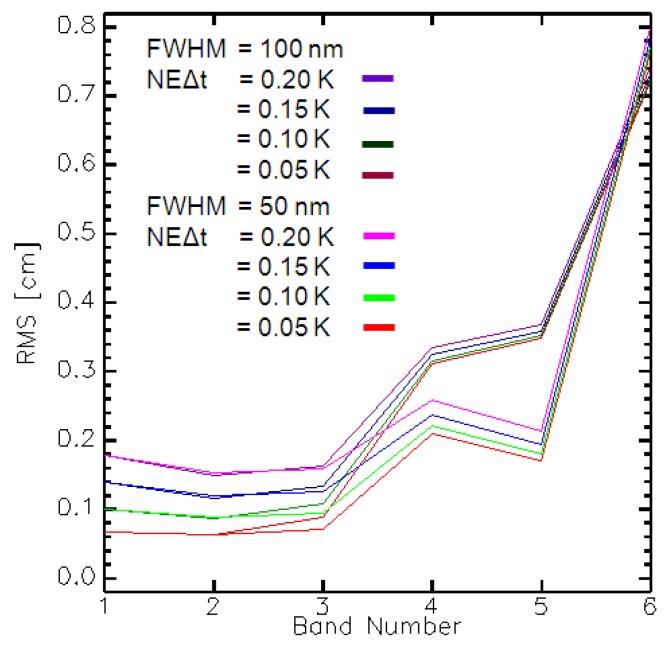
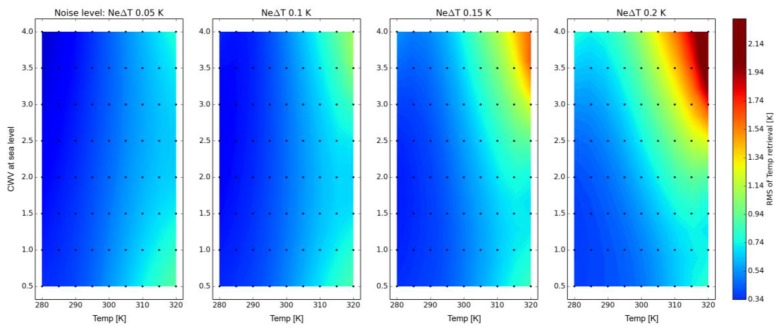
This paper describes the concept of the hyperspectral Earth-observing thermal infrared (TIR) satellite mission HiTeSEM (High-resolution Temperature and Spectral Emissivity Mapping). The scientific goal is to measure specific key variables from the biosphere, hydrosphere, pedosphere, and geosphere related to two global problems of significant societal relevance: food security and human health. The key variables comprise land and sea surface radiation temperature and emissivity, surface moisture, thermal inertia, evapotranspiration, soil minerals and grain size components, soil organic carbon, plant physiological variables, and heat fluxes. The retrieval of this information requires a TIR imaging system with adequate spatial and spectral resolutions and with day-night following observation capability. Another challenge is the monitoring of temporally high dynamic features like energy fluxes, which require adequate revisit time. The suggested solution is a sensor pointing concept to allow high revisit times for selected target regions (1-5 days at off-nadir). At the same time, global observations in the nadir direction are guaranteed with a lower temporal repeat cycle (>1 month). To account for the demand of a high spatial resolution for complex targets, it is suggested to combine in one optic (1) a hyperspectral TIR system with ~75 bands at 7.2-12.5 µm (instrument NEDT 0.05 K-0.1 K) and a ground sampling distance (GSD) of 60 m, and (2) a panchromatic high-resolution TIR-imager with two channels (8.0-10.25 µm and 10.25-12.5 µm) and a GSD of 20 m. The identified science case requires a good correlation of the instrument orbit with Sentinel-2 (maximum delay of 1-3 days) to combine data from the visible and near infrared (VNIR), the shortwave infrared (SWIR) and TIR spectral regions and to refine parameter retrieval.
本文介绍了高光谱地球观测热红外(TIR)卫星任务HiTeSEM(高分辨率温度和光谱发射率测绘)的概念。其科学目标是测量来自生物圈、水圈、土壤圈和地圈的特定关键变量,这些变量与具有重大社会意义的两个全球性问题相关:粮食安全和人类健康。关键变量包括陆地和海洋表面辐射温度及发射率、地表湿度、热惯性、蒸散、土壤矿物质和粒度成分、土壤有机碳、植物生理变量以及热通量。获取这些信息需要一个具有足够空间和光谱分辨率且具备昼夜连续观测能力的热红外成像系统。另一个挑战是监测像能量通量这样具有高时间动态性的特征,这需要足够的重访时间。建议的解决方案是一种传感器指向概念,以使选定目标区域具有高重访时间(偏离天底方向时为1 - 5天)。同时,天底方向的全球观测通过较低的时间重复周期(>1个月)得以保证。为满足复杂目标对高空间分辨率的需求,建议在一个光学系统中结合:(1)一个在7.2 - 12.5 µm波段有~75个波段(仪器噪声等效温差为0.05 K - 0.1 K)且地面采样距离(GSD)为60 m的高光谱热红外系统,以及(2)一个具有两个通道(8.0 - 10.25 µm和10.25 - 12.5 µm)且GSD为20 m的全色高分辨率热红外成像仪。已确定的科学案例要求仪器轨道与哨兵 - 2卫星具有良好的相关性(最大延迟为1 - 3天),以便合并来自可见光和近红外(VNIR)、短波红外(SWIR)和热红外光谱区域的数据,并优化参数反演。