Rice A J, Cortes E, Lachowski D, Cheung B C H, Karim S A, Morton J P, Del Río Hernández A
Cellular and Molecular Biomechanics Laboratory, Department of Bioengineering, Imperial College London, London, UK.
Cancer Research UK Beatson Institute, Glasgow, UK.
Oncogenesis. 2017 Jul 3;6(7):e352. doi: 10.1038/oncsis.2017.54.
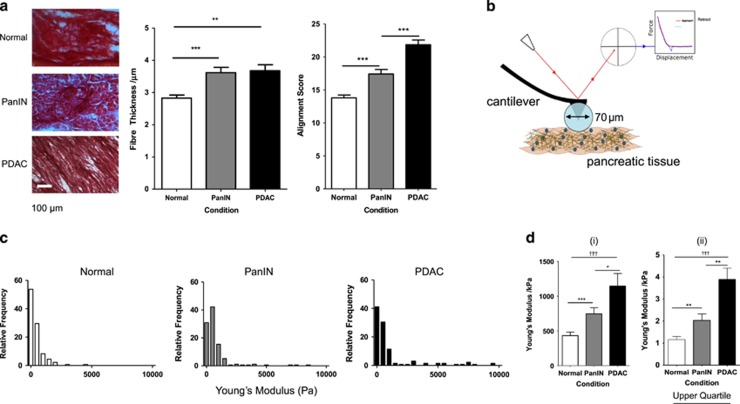
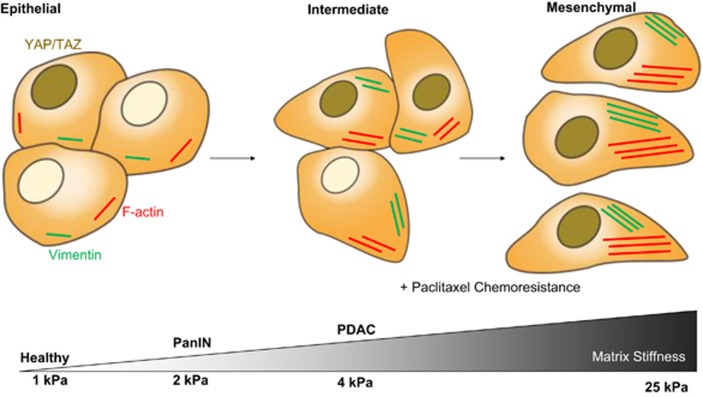
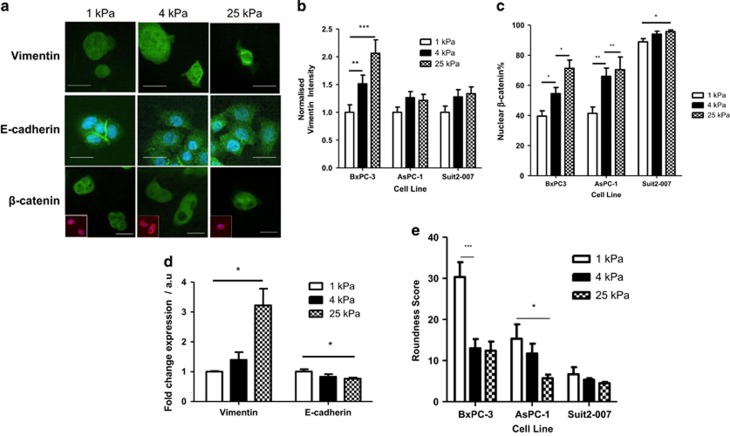
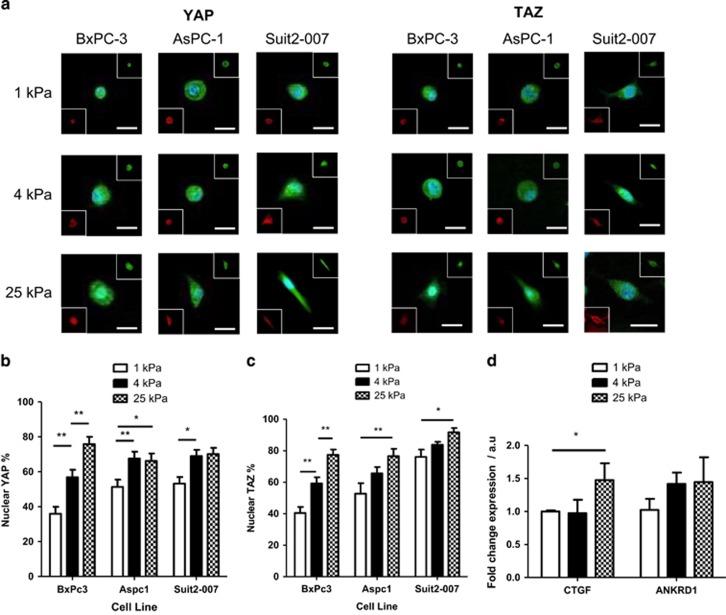
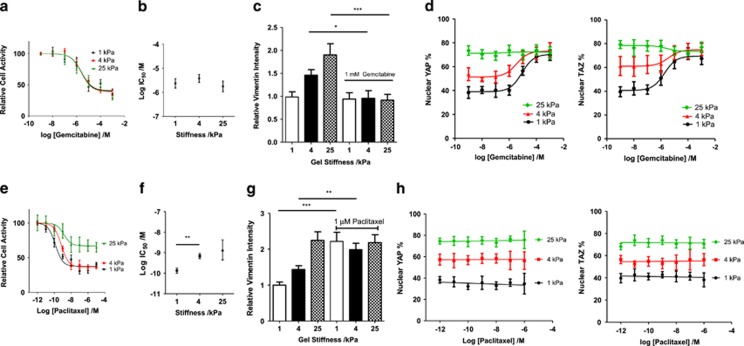
Increased matrix rigidity associated with the fibrotic reaction is documented to stimulate intracellular signalling pathways that promote cancer cell survival and tumour growth. Pancreatic cancer is one of the stiffest of all human solid carcinomas and is characterised by a remarkable desmoplastic reaction. Here we use mouse models, genetically engineered to recapitulate human pancreatic cancer, and several pancreatic cancer cell lines as a model to investigate the effect of matrix stiffness in epithelial-mesenchymal transition (EMT) and resistance to chemotherapeutics. We found that recapitulation of the fibrotic rigidities found in pancreatic cancer tissues promote elements of EMT, including increases in vimentin expression, decreases in E-cadherin expression, nuclear localisation of β-catenin, YAP and TAZ and changes in cell shape towards a mesenchymal phenotype. We also report that stiffness induces chemoresistance to paclitaxel, but not to gemcitabine, both commonly used therapeutics, suggesting that environmental rigidity underlies an aspect of chemoresistance.
有文献记载,与纤维化反应相关的基质硬度增加会刺激细胞内信号通路,促进癌细胞存活和肿瘤生长。胰腺癌是所有人类实体癌中硬度最大的癌症之一,其特征是显著的促结缔组织增生反应。在这里,我们使用经过基因工程改造以模拟人类胰腺癌的小鼠模型以及几种胰腺癌细胞系作为模型,来研究基质硬度在上皮-间质转化(EMT)和化疗耐药性中的作用。我们发现,重现胰腺癌组织中发现的纤维化硬度会促进EMT的发生,包括波形蛋白表达增加、E-钙黏蛋白表达减少、β-连环蛋白、YAP和TAZ的核定位以及细胞形态向间充质表型的变化。我们还报告称,硬度会诱导对紫杉醇的化疗耐药性,但对常用治疗药物吉西他滨则不会,这表明环境硬度是化疗耐药性的一个方面的基础。