Lupu-Plesu M, Claren A, Martial S, N'Diaye P-D, Lebrigand K, Pons N, Ambrosetti D, Peyrottes I, Feuillade J, Hérault J, Dufies M, Doyen J, Pagès G
University of Nice Sophia Antipolis, Nice, France.
Institute for Research on Cancer and Aging, Nice, CNRS UMR 7284, INSERM U1081, Nice, France.
Oncogenesis. 2017 Jul 3;6(7):e354. doi: 10.1038/oncsis.2017.56.
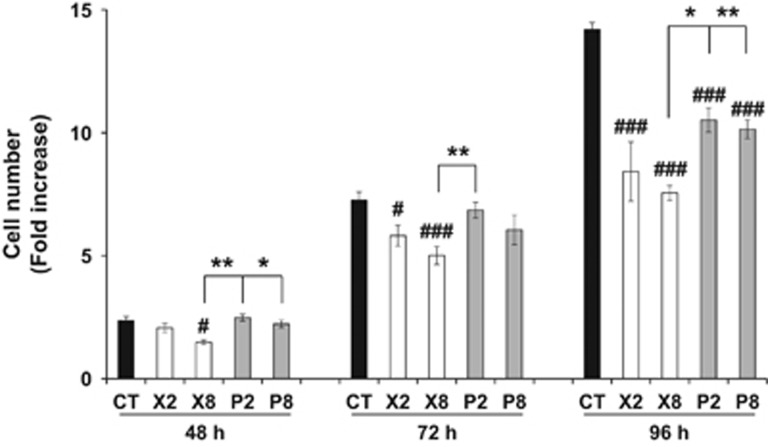
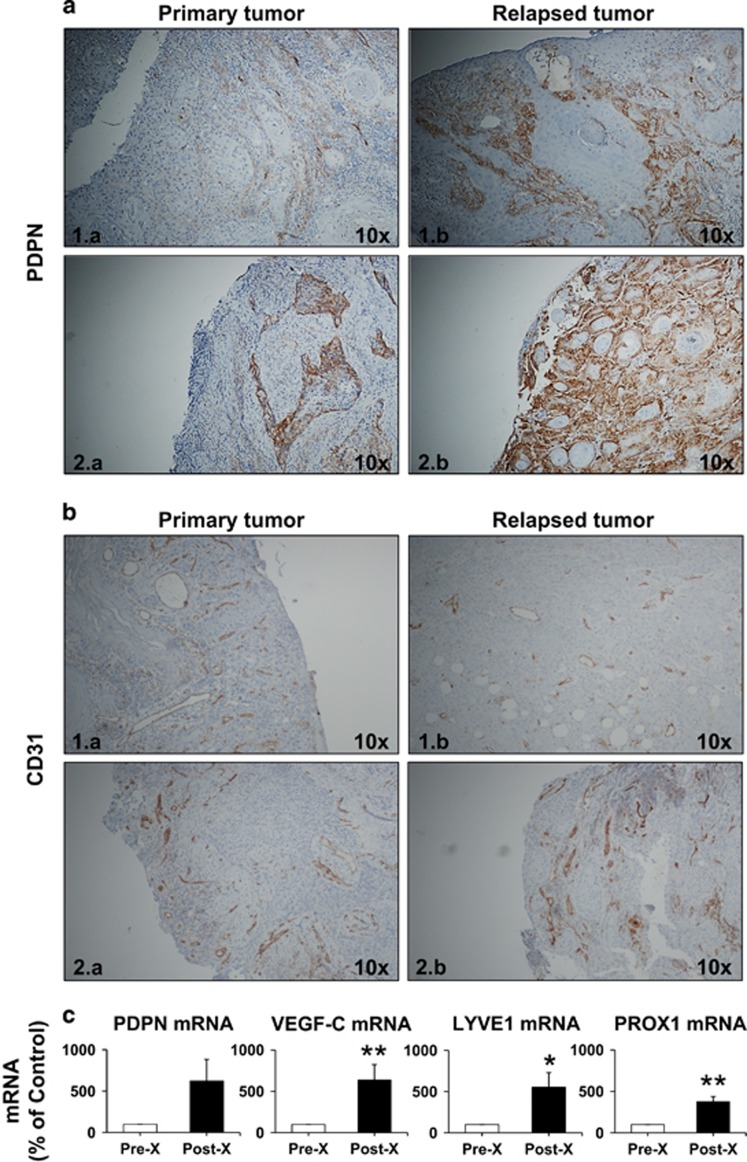
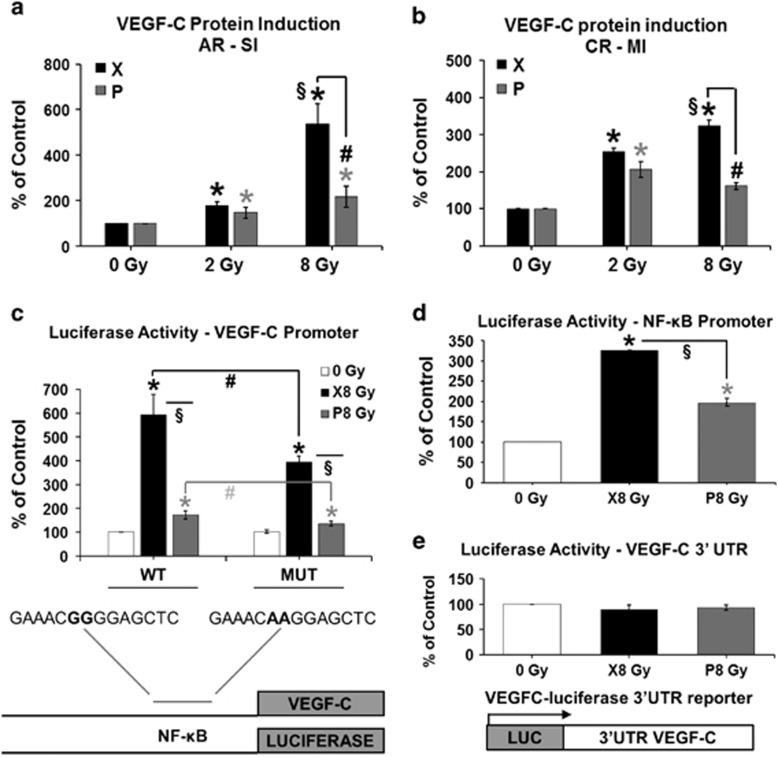
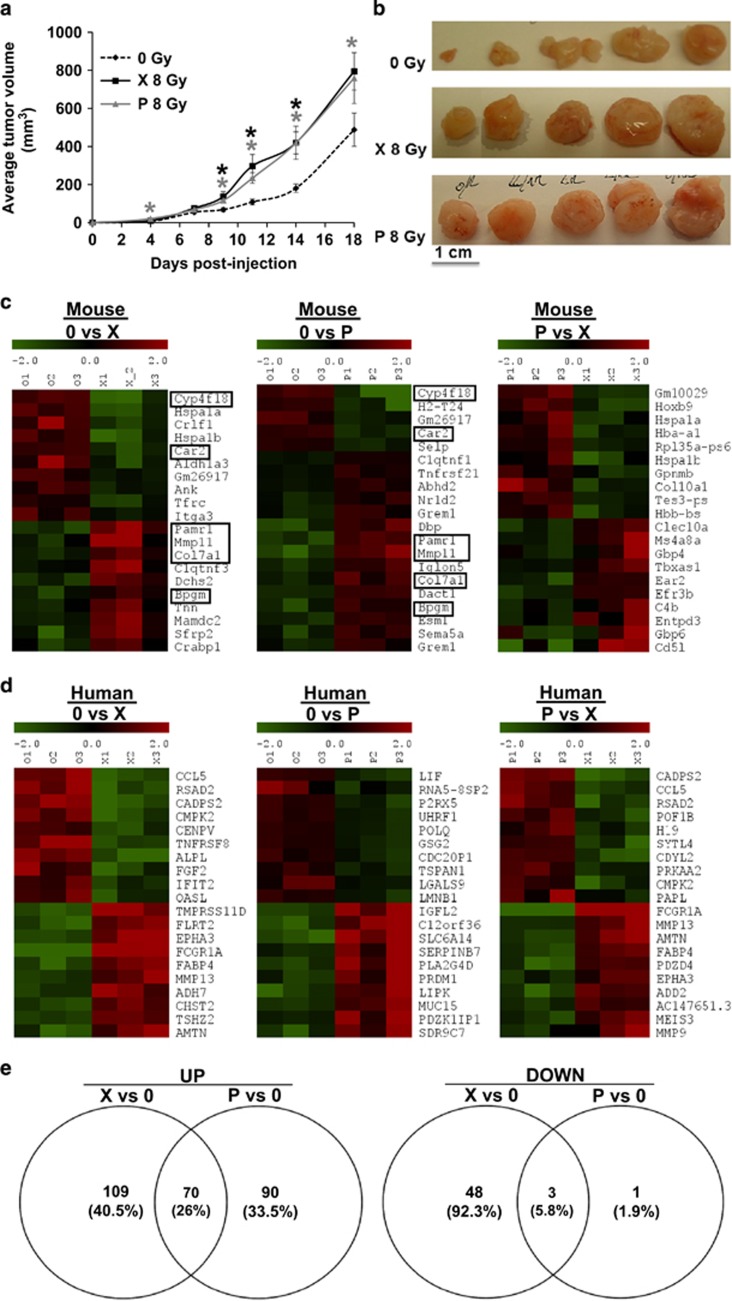
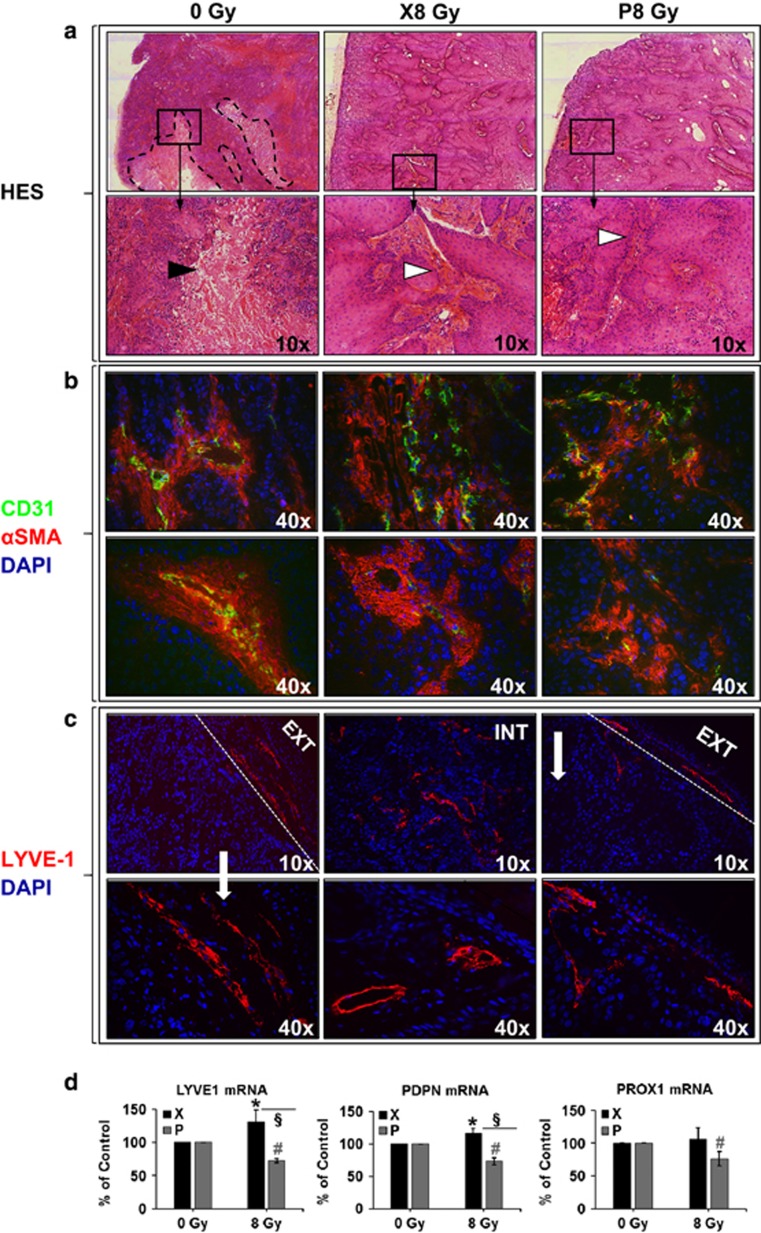
The proximity of organs at risk makes the treatment of head and neck squamous cell carcinoma (HNSCC) challenging by standard radiotherapy. The higher precision in tumor targeting of proton (P) therapy could promote it as the treatment of choice for HNSCC. Besides the physical advantage in dose deposition, few is known about the biological impact of P versus photons (X) in this setting. To investigate the comparative biological effects of P versus X radiation in HNSCC cells, we assessed the relative biological effectiveness (RBE), viability, proliferation and mRNA levels for genes involved in (lymph)angiogenesis, inflammation, proliferation and anti-tumor immunity. These parameters, particularly VEGF-C protein levels and regulations, were documented in freshly irradiated and/or long-term surviving cells receiving low/high-dose, single (SI)/multiple (MI) irradiations with P/X. The RBE was found to be 1.1 Key (lymph)angiogenesis and inflammation genes were downregulated (except for vegf-c) after P and upregulated after X irradiation in MI surviving cells, demonstrating a more favorable profile after P irradiation. Both irradiation types stimulated vegf-c promoter activity in a NF-κB-dependent transcriptional regulation manner, but at a lesser extent after P, as compared to X irradiation, which correlated with mRNA and protein levels. The cells surviving to MI by P or X generated tumors with higher volume, anarchic architecture and increased density of blood vessels. Increased lymphangiogenesis and a transcriptomic analysis in favor of a more aggressive phenotype were observed in tumors generated with X-irradiated cells. Increased detection of lymphatic vessels in relapsed tumors from patients receiving X radiotherapy was consistent with these findings. This study provides new data about the biological advantage of P, as compared to X irradiation. In addition to its physical advantage in dose deposition, P irradiation may help to improve treatment approaches for HNSCC.
由于危及器官位置相邻,对头颈部鳞状细胞癌(HNSCC)进行标准放射治疗具有挑战性。质子(P)治疗在肿瘤靶向方面具有更高的精度,这可能使其成为HNSCC的首选治疗方法。除了剂量沉积方面的物理优势外,在这种情况下,关于P与光子(X)的生物学影响知之甚少。为了研究P与X射线在HNSCC细胞中的相对生物学效应,我们评估了参与(淋巴)血管生成、炎症、增殖和抗肿瘤免疫的基因的相对生物学效能(RBE)、活力、增殖和mRNA水平。这些参数,特别是VEGF-C蛋白水平和调控,在接受低/高剂量、单次(SI)/多次(MI)P/X照射的新鲜照射和/或长期存活细胞中进行了记录。发现RBE为1.1。在MI存活细胞中,关键的(淋巴)血管生成和炎症基因在P照射后下调(vegf-c除外),在X照射后上调,表明P照射后具有更有利的特征。两种照射类型均以NF-κB依赖性转录调控方式刺激vegf-c启动子活性,但与X照射相比,P照射后刺激程度较小,这与mRNA和蛋白水平相关。通过P或X照射存活至MI的细胞产生的肿瘤体积更大、结构紊乱且血管密度增加。在用X射线照射的细胞产生的肿瘤中观察到淋巴管生成增加和转录组分析显示更具侵袭性的表型。在接受X放疗的患者复发肿瘤中淋巴管检测增加与这些发现一致。这项研究提供了关于P与X照射相比的生物学优势的新数据。除了在剂量沉积方面的物理优势外,P照射可能有助于改善HNSCC的治疗方法。