Chen Wenzheng, Liu Qingfeng, Lv Yunxia, Xu Debin, Chen Wanzhi, Yu Jichun
Department of Thyroid and Neck Surgery, The Second Affiliated Hospital of Nanchang University, Nanchang, Jiangxi Province, 330006, China.
Department of General Surgery, The People's Hospital of Liaoning Province, Shenyang, 110016, China.
World J Surg Oncol. 2017 Jul 3;15(1):119. doi: 10.1186/s12957-017-1190-8.
Papillary thyroid carcinoma (PTC) is the most common malignancy in thyroid tissue, and the number of patients with PTC has been increasing in recent years. Discovering the mechanism of PTC genesis and progression and finding new potential diagnostic biomarkers/therapeutic target genes of PTC are of great significance.
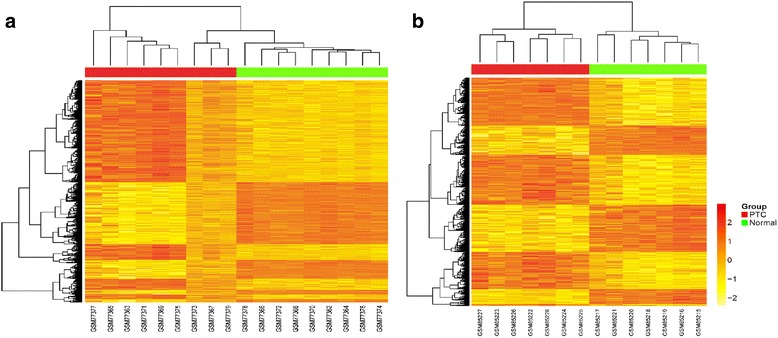
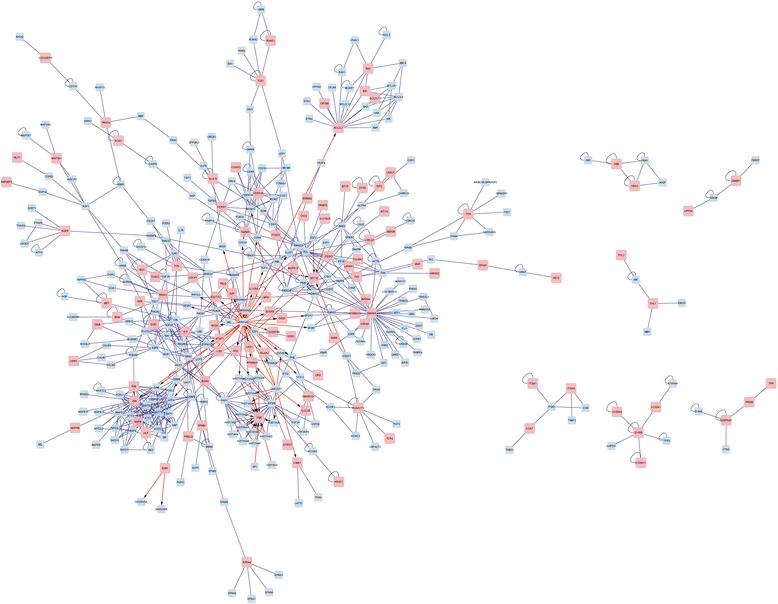
In this work, the datasets GSE3467 and GSE3678 were downloaded from the Gene Expression Omnibus (GEO) database. Differentially expressed genes (DEGs) were identified with the limma package in R. GO function and KEGG pathway enrichment were conducted with DAVID tool. The interaction network of the DEGs and other genes was performed with Cytoscape plugin BisoGenet, while clustering analysis was performed with Cytoscape plugin ClusterOne.
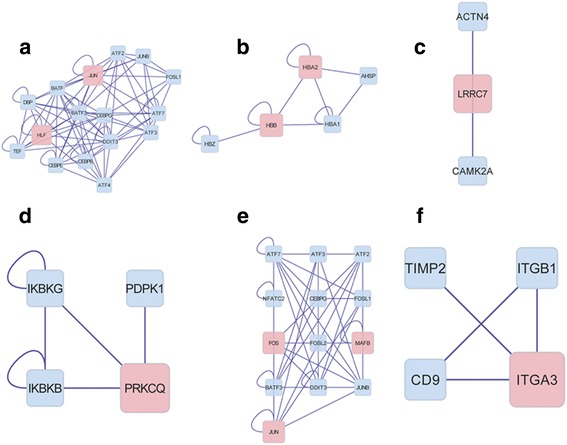
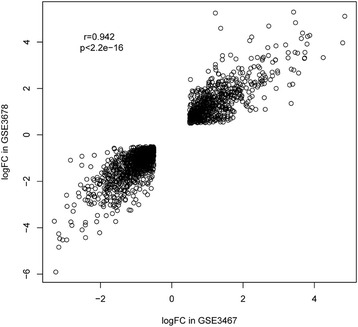
A total of 1800 overlapped DEGs were detected in two datasets. Enrichment analysis of the DEGs found that the top three enriched GO terms in three ontologies and four significantly enriched KEGG pathways were mainly concerned with intercellular junction and extracellular matrix components. Interaction network analysis found that transcription factor hepatocyte nuclear factor 4, alpha (HNF4A) and DEG JUN had higher connection degrees. Clustering analysis indicated that two function modules, in which JUN was playing a central role, were highly relevant to PTC genesis and progression.
JUN may be used as a specific diagnostic biomarker/therapeutic molecular target of PTC. However, further experiments are still needed to confirm our results.
甲状腺乳头状癌(PTC)是甲状腺组织中最常见的恶性肿瘤,近年来PTC患者数量一直在增加。探索PTC发生发展的机制并寻找新的潜在诊断生物标志物/治疗靶点基因具有重要意义。
在本研究中,从基因表达综合数据库(GEO)下载了数据集GSE3467和GSE3678。使用R语言中的limma软件包鉴定差异表达基因(DEGs)。使用DAVID工具进行基因本体(GO)功能和京都基因与基因组百科全书(KEGG)通路富集分析。使用Cytoscape插件BisoGenet构建DEGs与其他基因的相互作用网络,同时使用Cytoscape插件ClusterOne进行聚类分析。
在两个数据集中共检测到1800个重叠的DEGs。对DEGs的富集分析发现,三个本体论中富集程度最高的前三个GO术语和四个显著富集的KEGG通路主要与细胞间连接和细胞外基质成分有关。相互作用网络分析发现转录因子肝细胞核因子4α(HNF4A)和DEG JUN具有较高的连接度。聚类分析表明,两个以JUN为核心的功能模块与PTC的发生发展高度相关。
JUN可能作为PTC的特异性诊断生物标志物/治疗分子靶点。然而,仍需要进一步的实验来证实我们的结果。