Posada-Quintero Hugo F, Bolkhovsky Jeffrey B, Reljin Natasa, Chon Ki H
Biomedical Engineering Department, University of ConnecticutStorrs, CT, United States.
Front Physiol. 2017 Jun 20;8:409. doi: 10.3389/fphys.2017.00409. eCollection 2017.
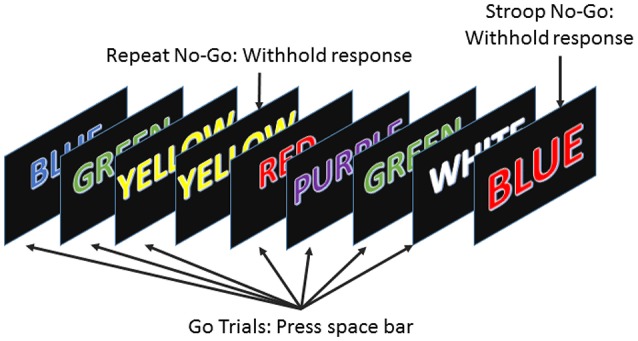
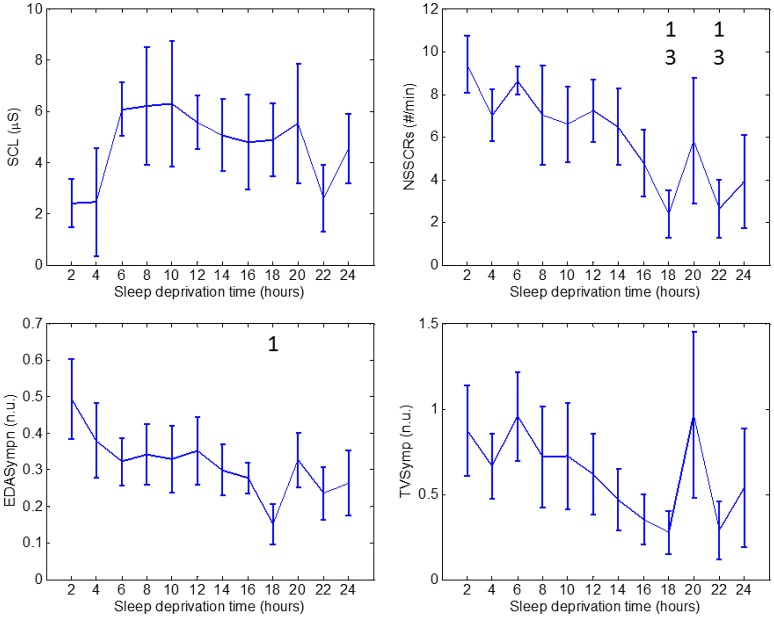
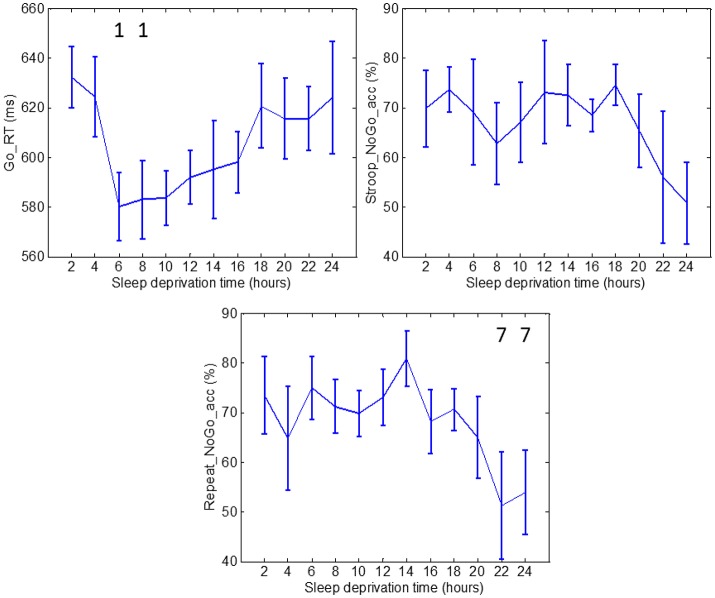
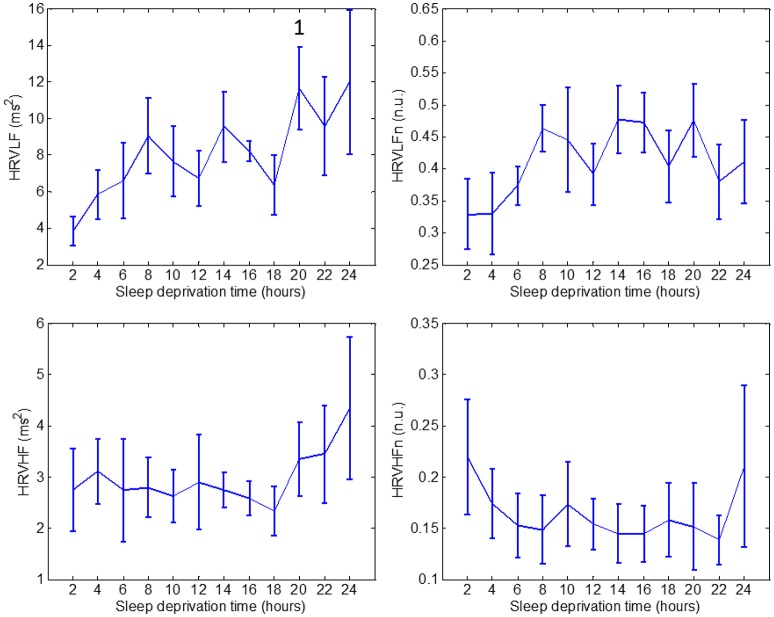
We analyzed multiple measures of the autonomic nervous system (ANS) based on electrodermal activity (EDA) and heart rate variability (HRV) for young healthy subjects undergoing 24-h sleep deprivation. In this study, we have utilized the error awareness test (EAT) every 2 h (13 runs total), to evaluate the deterioration of performance. EAT consists of trials where the subject is presented words representing colors. Subjects are instructed to press a button ("Go" trials) or withhold the response if the word presented and the color of the word mismatch ("Stroop No-Go" trial), or the screen is repeated ("Repeat No-Go" trials). We measured subjects' ( = 10) reaction time to the "Go" trials, and accuracy to the "Stroop No-Go" and "Repeat No-Go" trials. Simultaneously, changes in EDA and HRV indices were evaluated. Furthermore, the relationship between reactiveness and vigilance measures and indices of sympathetic control based on HRV were analyzed. We found the performance improved to a stable level from 6 through 16 h of deprivation, with a subsequently sustained impairment after 18 h. Indices of higher frequencies of EDA related more to vigilance measures, whereas lower frequencies index (skin conductance leve, SCL) measured the reactiveness of the subject. We conclude that indices of EDA, including those of the higher frequencies, termed TVSymp, EDASymp, and NSSCRs, provide information to better understand the effect of sleep deprivation on subjects' autonomic response and performance.
我们基于皮肤电活动(EDA)和心率变异性(HRV),对经历24小时睡眠剥夺的年轻健康受试者的自主神经系统(ANS)的多种指标进行了分析。在本研究中,我们每2小时(共13次测试)采用错误意识测试(EAT)来评估表现的恶化情况。EAT由一系列试验组成,向受试者呈现代表颜色的单词。受试者被指示在单词呈现且单词颜色匹配时按下按钮(“执行”试验),或者在单词呈现与单词颜色不匹配(“斯特鲁普不执行”试验)或屏幕重复(“重复不执行”试验)时不做出反应。我们测量了受试者(n = 10)对“执行”试验的反应时间,以及对“斯特鲁普不执行”和“重复不执行”试验的准确性。同时,评估了EDA和HRV指标的变化。此外,还分析了反应性和警觉性测量与基于HRV的交感神经控制指标之间的关系。我们发现,在剥夺6至16小时期间,表现提高到一个稳定水平,而在18小时后随后持续受损。EDA较高频率的指标与警觉性测量的相关性更强,而较低频率指标(皮肤电导水平,SCL)测量的是受试者的反应性。我们得出结论,包括较高频率指标(称为TVSymp、EDASymp和NSSCRs)在内的EDA指标,为更好地理解睡眠剥夺对受试者自主反应和表现的影响提供了信息。