Tohidpour Abolghasem, Morgun Andrey V, Boitsova Elizaveta B, Malinovskaya Natalia A, Martynova Galina P, Khilazheva Elena D, Kopylevich Natalia V, Gertsog Galina E, Salmina Alla B
Research Institute of Molecular Medicine and Pathobiochemistry, Krasnoyarsk State Medical University named after Prof. V.F. Voino-YasenetskyKrasnoyarsk, Russia.
Department of Paediatrics, Krasnoyarsk State Medical University named after Prof. V.F. Voino-YasenetskyKrasnoyarsk, Russia.
Front Cell Infect Microbiol. 2017 Jun 20;7:276. doi: 10.3389/fcimb.2017.00276. eCollection 2017.
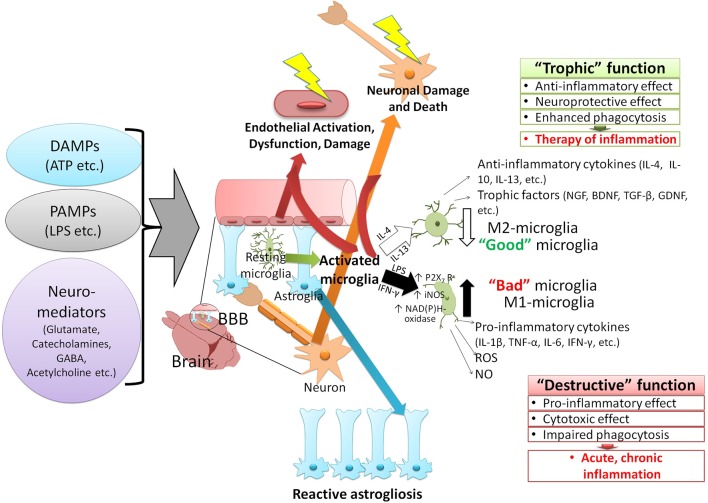
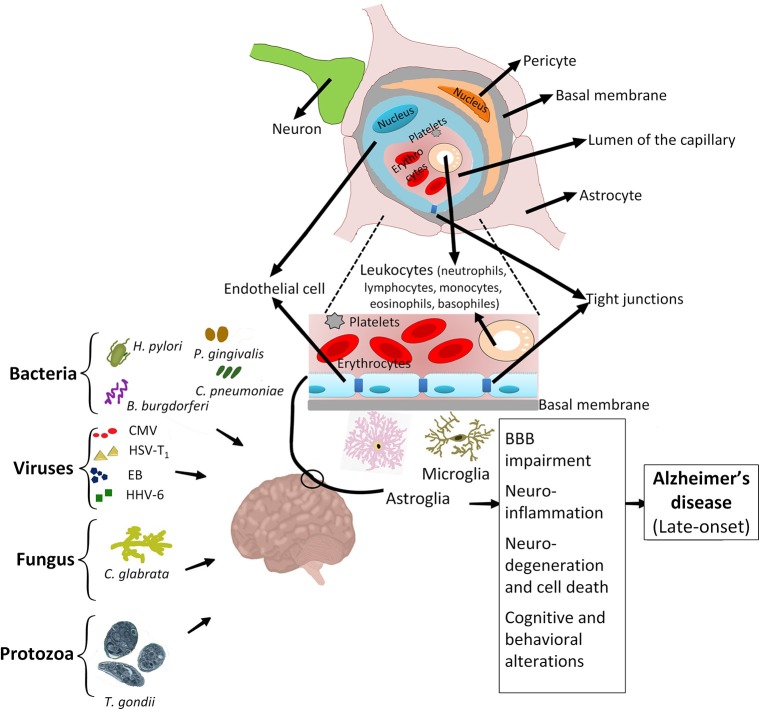
Neuroinflammation is a complex inflammatory process in the central nervous system, which is sought to play an important defensive role against various pathogens, toxins or factors that induce neurodegeneration. The onset of neurodegenerative diseases and various microbial infections are counted as stimuli that can challenge the host immune system and trigger the development of neuroinflammation. The homeostatic nature of neuroinflammation is essential to maintain the neuroplasticity. Neuroinflammation is regulated by the activity of neuronal, glial, and endothelial cells within the neurovascular unit, which serves as a "platform" for the coordinated action of pro- and anti-inflammatory mechanisms. Production of inflammatory mediators (cytokines, chemokines, reactive oxygen species) by brain resident cells or cells migrating from the peripheral blood, results in the impairment of blood-brain barrier integrity, thereby further affecting the course of local inflammation. In this review, we analyzed the most recent data on the central nervous system inflammation and focused on major mechanisms of neurovascular unit dysfunction caused by neuroinflammation and infections.
神经炎症是中枢神经系统中的一种复杂炎症过程,旨在对各种病原体、毒素或诱导神经退行性变的因素发挥重要的防御作用。神经退行性疾病的发作和各种微生物感染被视为能够挑战宿主免疫系统并引发神经炎症发展的刺激因素。神经炎症的稳态性质对于维持神经可塑性至关重要。神经炎症由神经血管单元内神经元、胶质细胞和内皮细胞的活动调节,神经血管单元作为促炎和抗炎机制协同作用的“平台”。脑内驻留细胞或从外周血迁移来的细胞产生炎症介质(细胞因子、趋化因子、活性氧),导致血脑屏障完整性受损,从而进一步影响局部炎症的进程。在本综述中,我们分析了关于中枢神经系统炎症的最新数据,并重点关注了由神经炎症和感染引起的神经血管单元功能障碍的主要机制。