Cahill Michael M, O'Shea Kevin D, Pierce Larry T, Winfield Hannah J, Eccles Kevin S, Lawrence Simon E, McCarthy Florence O
School of Chemistry, Analytical and Biological Chemistry Research Facility, University College Cork, Western Road, Cork T12 YN60, Ireland.
Pharmaceuticals (Basel). 2017 Jul 5;10(3):62. doi: 10.3390/ph10030062.
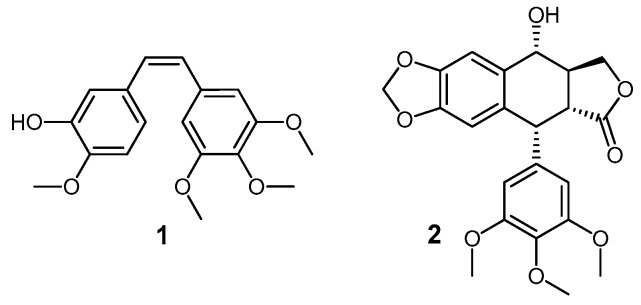
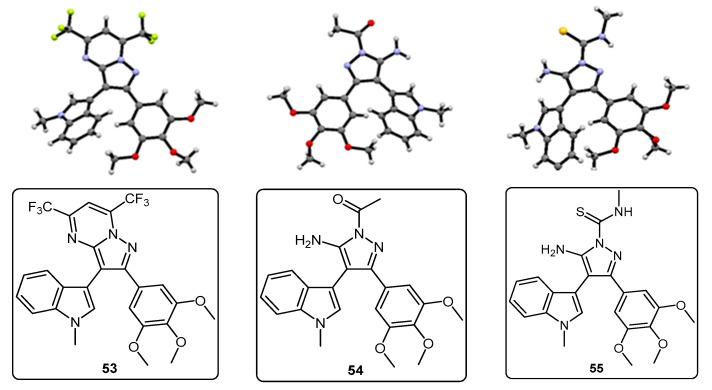
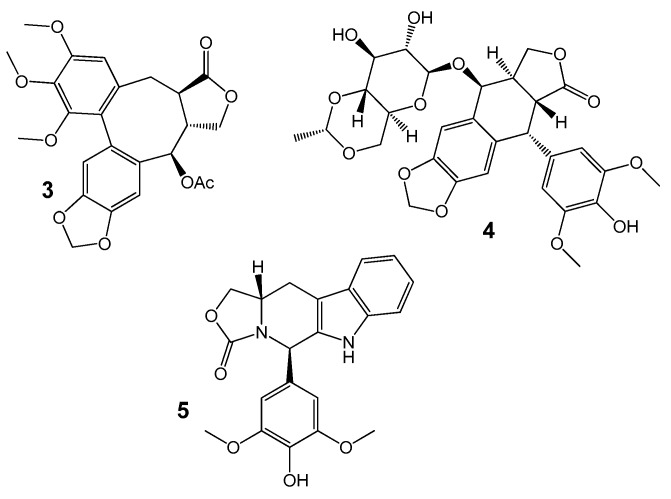
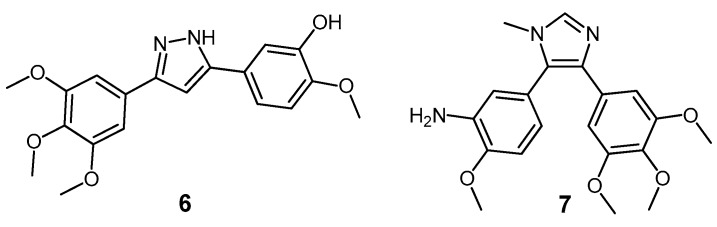
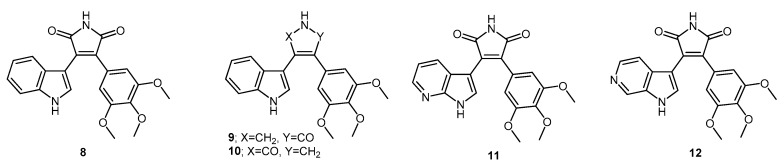
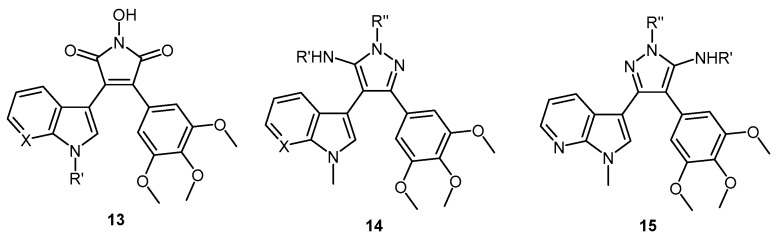
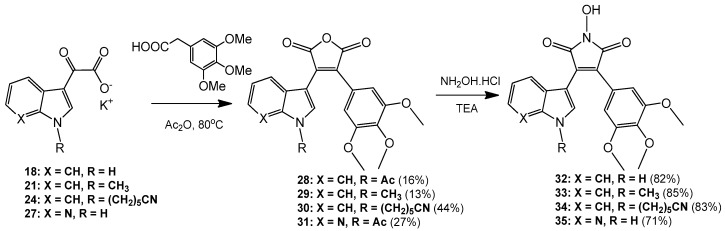
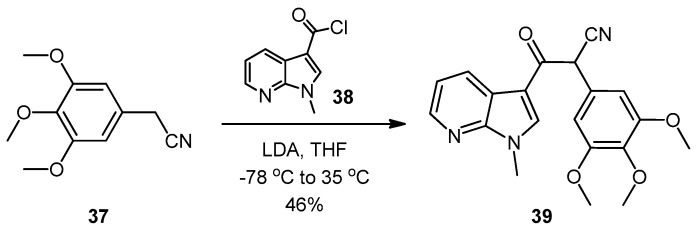
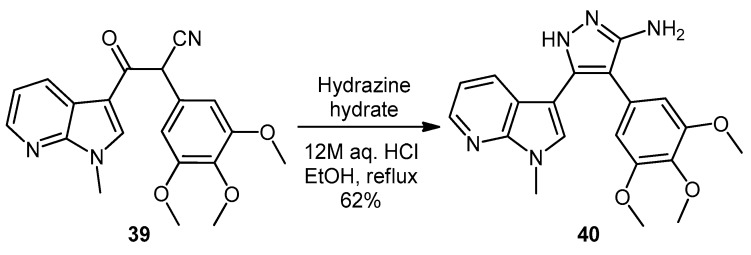
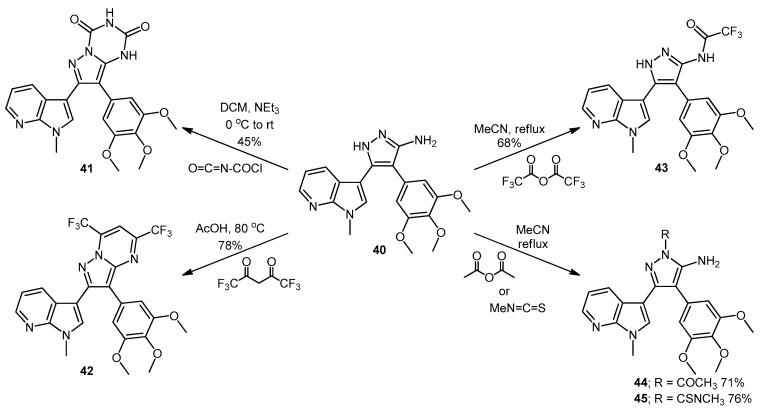
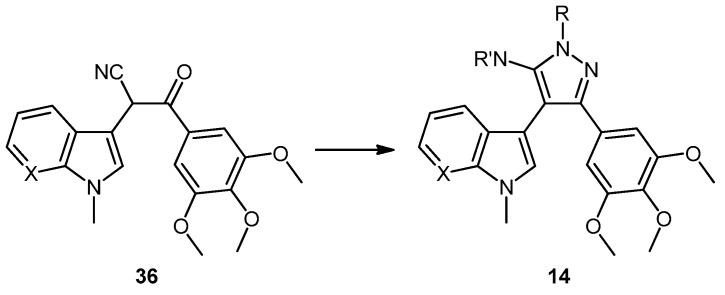
The synthesis and biological evaluation of a series of novel heterocyclic indole derivatives is described. The consolidation of the combretastatin and bisindolylmaleimide templates towards the inclusion of a novel heterocyclic ring proffered a versatile pharmacophore with which to pursue chemical diversification. Given literature precedent, maleimide was initially investigated in this role and the bioactivity assessed by measurement of NCI-60 cell panel growth. Subsequently, a range of 5-aminopyrazoles was designed and developed to explore the specific effect of heterocycle hydrogen bonding on cell growth. The unique electronic nature of the 5-aminopyrazole moiety allowed for regiospecific monosubstitution on different sites of the ring, such as thiourea substitution at the N(1) position for derivative or trifluoroacetylation on the 5-amino position for . Further derivatisation led to the ultimate development of bicyclic pyrazolotriazinedione and pyrimidine systems. The antiproliferative activities of these 3,4-diaryl-5-aminopyrazoles were assessed using the NCI-60 cell screen, disclosing the discovery of distinct selectivity profiles towards a number of cell lines, such as SNB-75 CNS cancer, UO-31 and CAKI-1 renal cancer cells. A series of DNA topological assays discounted the interaction with topoisomerase II as a putative mechanism of action.
描述了一系列新型杂环吲哚衍生物的合成及生物学评价。将康普他汀和双吲哚基马来酰亚胺模板合并以纳入新型杂环,提供了一个通用的药效基团,可用于进行化学多样化研究。根据文献先例,最初对马来酰亚胺在该角色中的作用进行了研究,并通过测量NCI - 60细胞系生长来评估其生物活性。随后,设计并开发了一系列5 - 氨基吡唑,以探索杂环氢键对细胞生长的特定影响。5 - 氨基吡唑部分独特的电子性质允许在环的不同位点进行区域特异性单取代,例如衍生物在N(1)位进行硫脲取代,或在5 - 氨基位进行三氟乙酰化。进一步衍生化导致了双环吡唑并三嗪二酮和嘧啶体系的最终开发。使用NCI - 60细胞筛选评估了这些3,4 - 二芳基 - 5 - 氨基吡唑的抗增殖活性,揭示了对许多细胞系具有不同的选择性谱,如SNB - 75中枢神经系统癌、UO - 31和CAKI - 1肾癌细胞。一系列DNA拓扑分析排除了与拓扑异构酶II相互作用作为一种假定的作用机制。