Mustaffa Khairul M F, Storm Janet, Whittaker Megan, Szestak Tadge, Craig Alister G
Institute for Research in Molecular Medicine, Universiti Sains Malaysia, 16150, Kubang Kerian, Kelantan, Malaysia.
Liverpool School of Tropical Medicine, Pembroke Place, Liverpool, L3 5QA, UK.
Malar J. 2017 Jul 5;16(1):279. doi: 10.1186/s12936-017-1930-9.
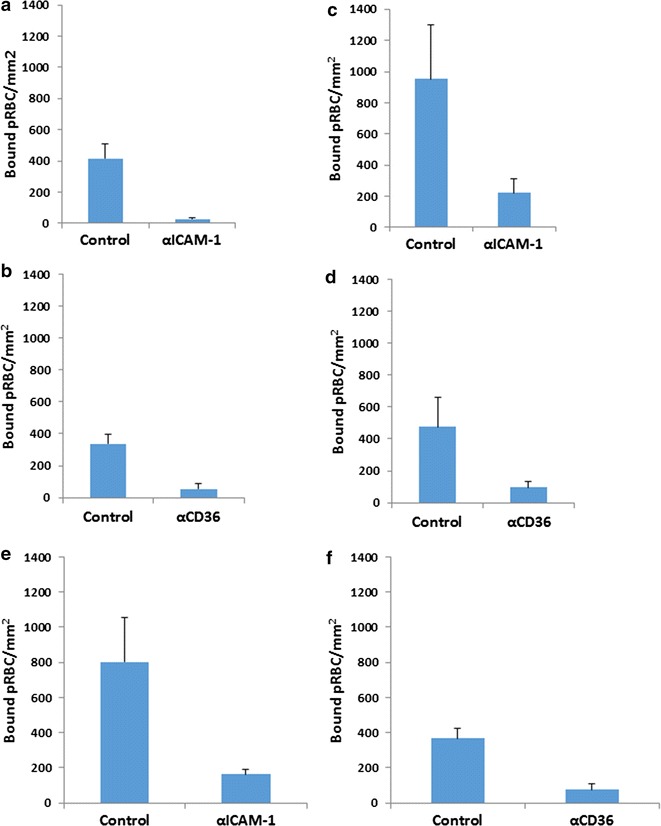
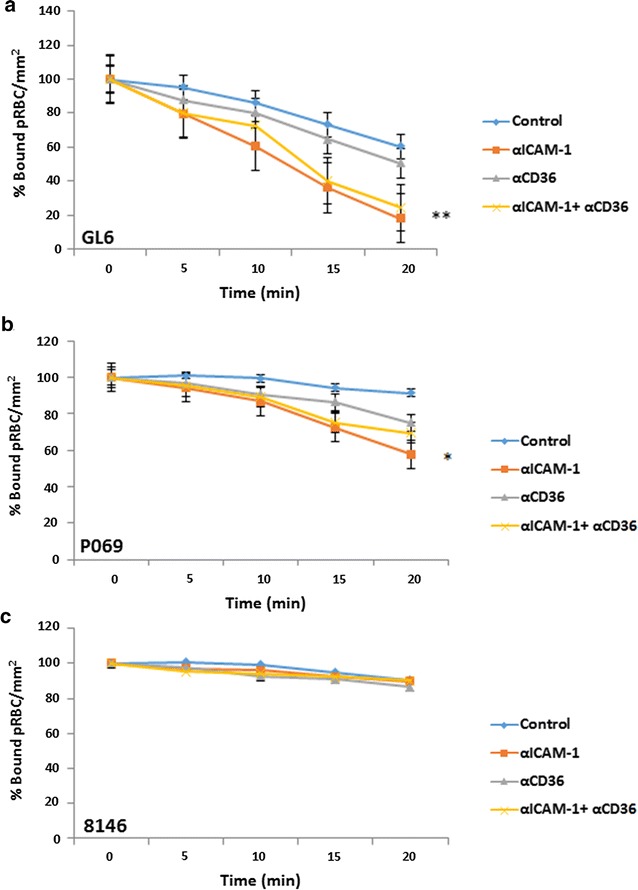
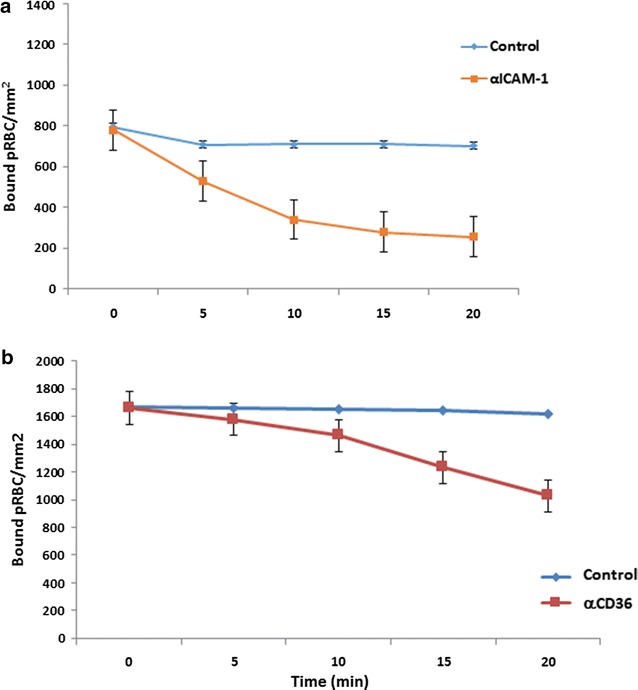
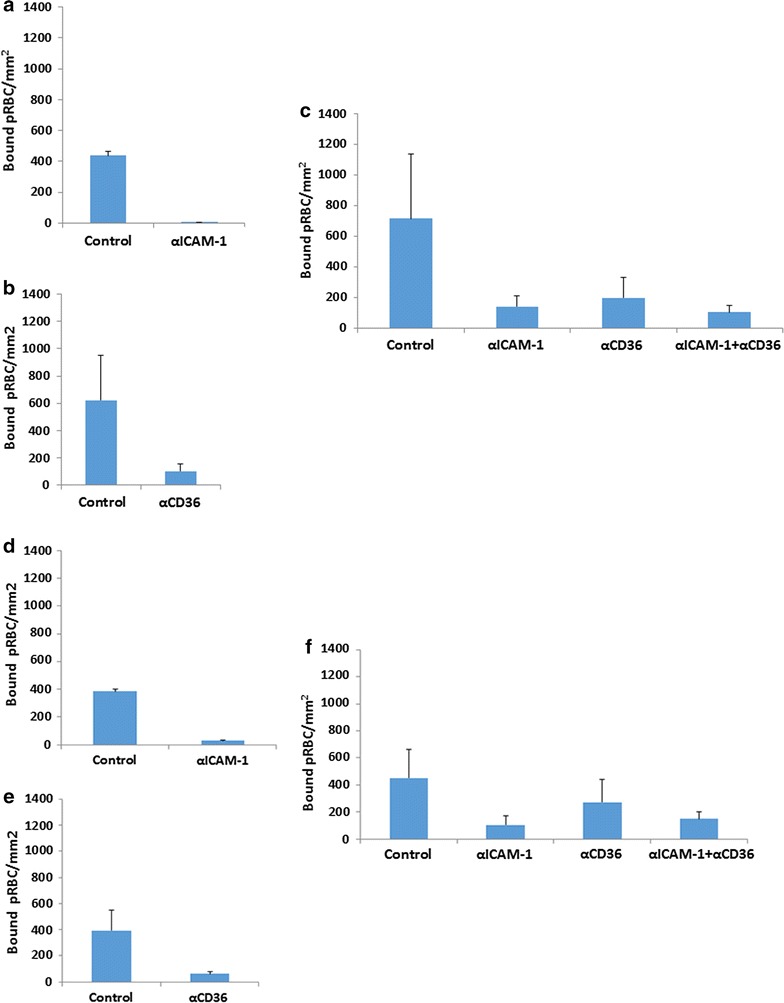
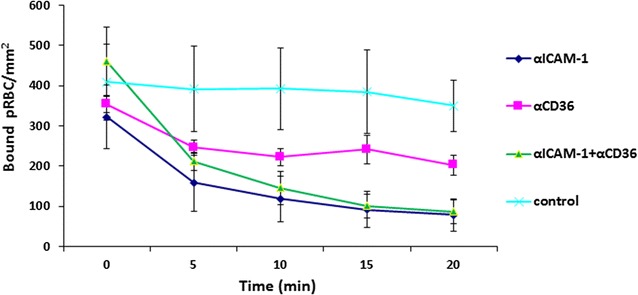
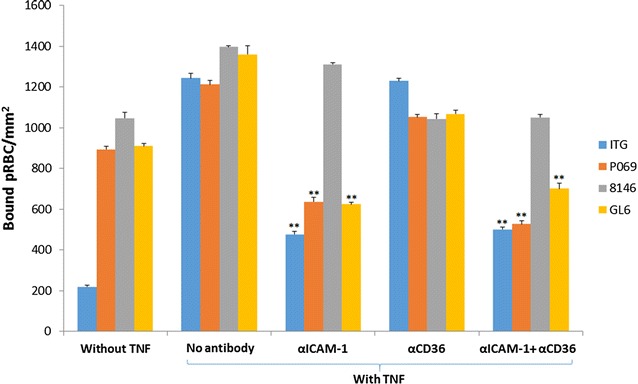
Sequestration of parasitized red blood cells from the peripheral circulation during an infection with Plasmodium falciparum is caused by an interaction between the parasite protein PfEMP1 and receptors on the surface of host endothelial cells, known as cytoadherence. Several lines of evidence point to a link between the pathology of severe malaria and cytoadherence, therefore blocking adhesion receptors involved in this process could be a good target to inhibit pRBC sequestration and prevent disease. In a malaria endemic setting this is likely to be used as an adjunct therapy by reversing existing cytoadherence. Two well-characterized parasite lines plus three recently derived patient isolates were tested for their cytoadherence to purified receptors (CD36 and ICAM-1) as well as endothelial cells. Monoclonal antibodies against human CD36 and ICAM-1 were used to inhibit and reverse infected erythrocyte binding in static and flow-based adhesion assays.
Anti-ICAM-1 and CD36 monoclonal antibodies were able to inhibit and reverse P. falciparum binding of lab and recently adapted patient isolates in vitro. However, reversal of binding was incomplete and varied in its efficiency between parasite isolates.
The results show that, as a proof of concept, disturbing existing ligand-receptor interactions is possible and could have potential therapeutic value for severe malaria. The variation seen in the degree of reversing existing binding with different parasite isolates and the incomplete nature of reversal, despite the use of high affinity inhibitors, suggest that anti-adhesion approaches as adjunct therapies for severe malaria may not be effective, and the focus may need to be on inhibitory approaches such as vaccines.
恶性疟原虫感染期间,寄生的红细胞从外周循环中隔离是由寄生虫蛋白PfEMP1与宿主内皮细胞表面受体之间的相互作用引起的,这一过程称为细胞黏附。多条证据表明严重疟疾的病理学与细胞黏附之间存在联系,因此阻断参与该过程的黏附受体可能是抑制寄生红细胞隔离和预防疾病的良好靶点。在疟疾流行地区,这可能会通过逆转现有的细胞黏附用作辅助治疗。对两个特征明确的寄生虫株以及三个最近从患者中分离得到的菌株进行了检测,观察它们对纯化受体(CD36和ICAM-1)以及内皮细胞的细胞黏附情况。在静态和基于流动的黏附试验中,使用抗人CD36和ICAM-1单克隆抗体来抑制和逆转感染红细胞的结合。
抗ICAM-1和CD36单克隆抗体能够在体外抑制和逆转恶性疟原虫对实验室菌株以及最近适应的患者分离株的结合。然而,结合的逆转并不完全,且在不同寄生虫分离株之间效率有所不同。
结果表明,作为概念验证,干扰现有的配体-受体相互作用是可能的,并且可能对严重疟疾具有潜在治疗价值。尽管使用了高亲和力抑制剂,但在不同寄生虫分离株中现有结合逆转程度存在差异以及逆转的不完全性表明,抗黏附方法作为严重疟疾的辅助治疗可能无效,重点可能需要放在疫苗等抑制性方法上。