Sidorova Yulia A, Bespalov Maxim M, Wong Agnes W, Kambur Oleg, Jokinen Viljami, Lilius Tuomas O, Suleymanova Ilida, Karelson Gunnar, Rauhala Pekka V, Karelson Mati, Osborne Peregrine B, Keast Janet R, Kalso Eija A, Saarma Mart
Laboratory of Molecular Neuroscience, Institute of Biotechnology, University of HelsinkiHelsinki, Finland.
Department of Anatomy and Neuroscience, The University of MelbourneMelbourne, VIC, Australia.
Front Pharmacol. 2017 Jun 21;8:365. doi: 10.3389/fphar.2017.00365. eCollection 2017.
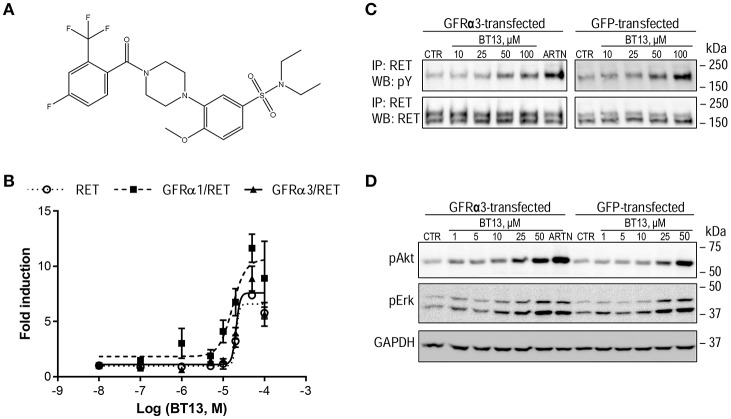
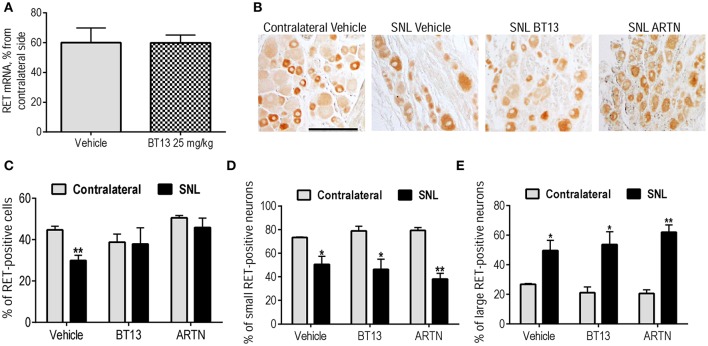
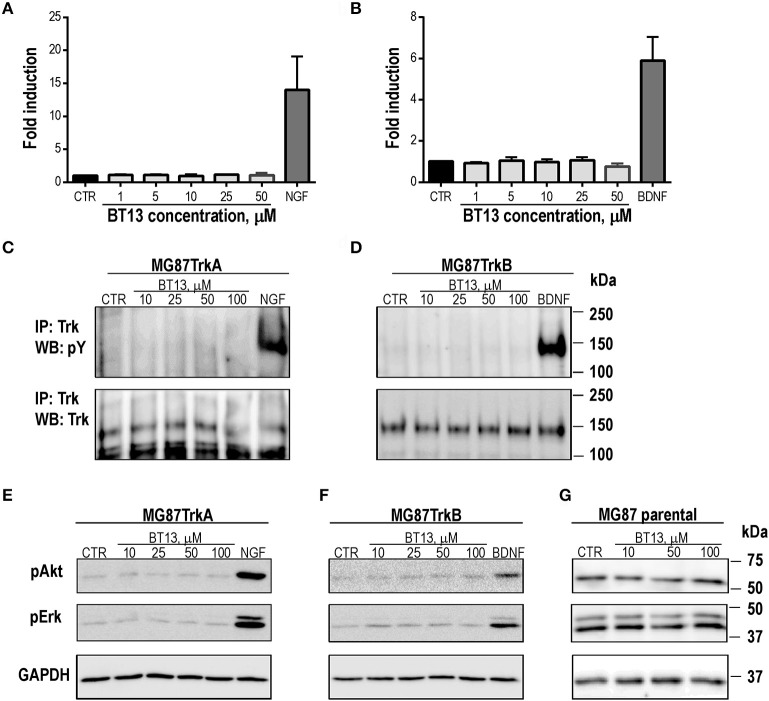
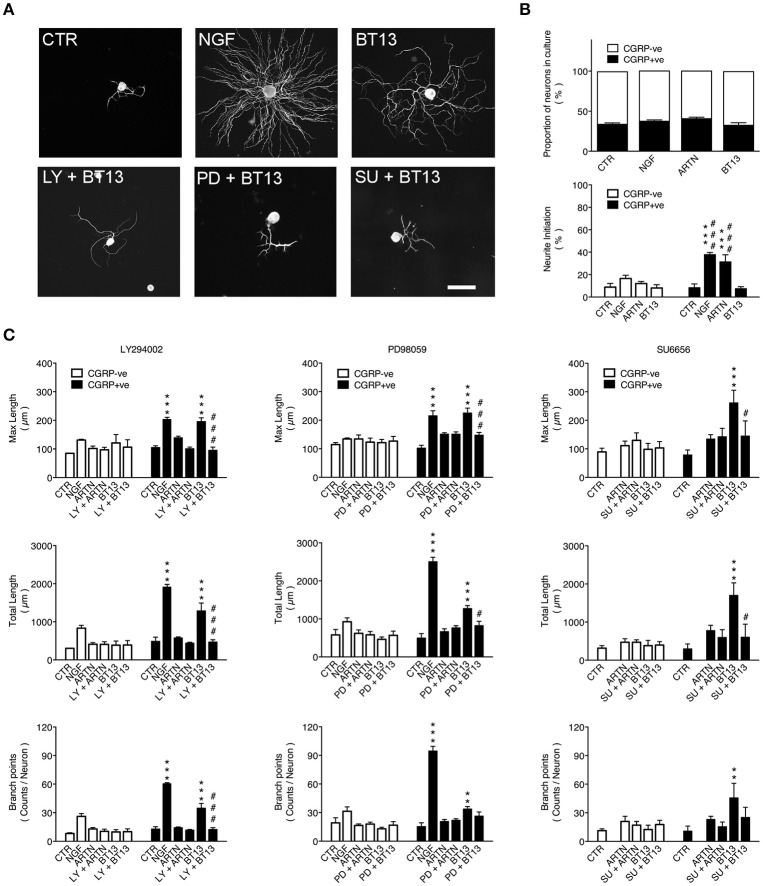
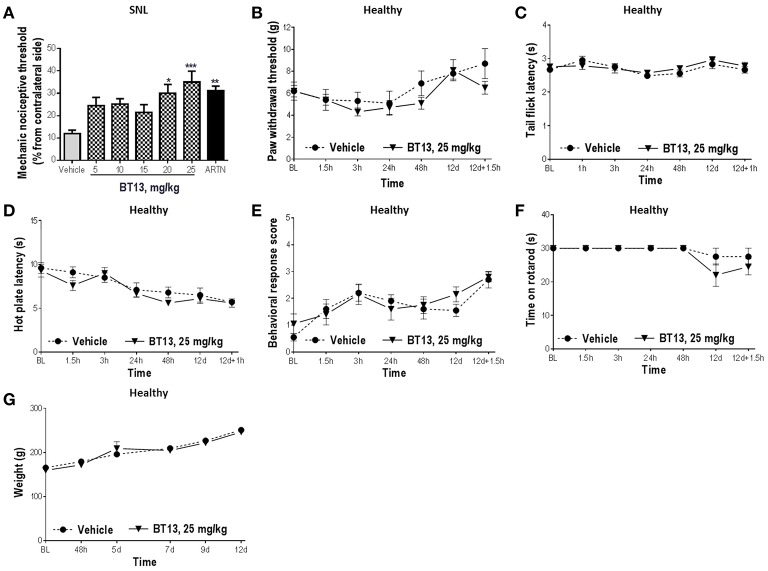
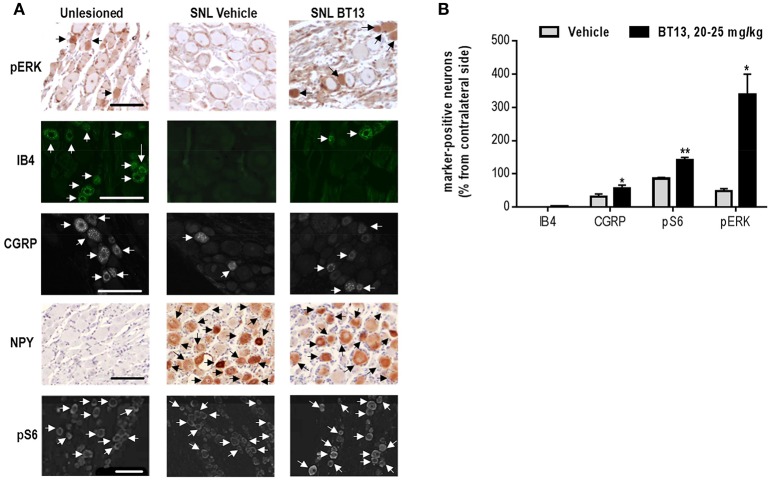
Neuropathic pain caused by nerve damage is a common and severe class of chronic pain. Disease-modifying clinical therapies are needed as current treatments typically provide only symptomatic relief; show varying clinical efficacy; and most have significant adverse effects. One approach is targeting either neurotrophic factors or their receptors that normalize sensory neuron function and stimulate regeneration after nerve damage. Two candidate targets are glial cell line-derived neurotrophic factor (GDNF) and artemin (ARTN), as these GDNF family ligands (GFLs) show efficacy in animal models of neuropathic pain (Boucher et al., 2000; Gardell et al., 2003; Wang et al., 2008, 2014). As these protein ligands have poor drug-like properties and are expensive to produce for clinical use, we screened 18,400 drug-like compounds to develop small molecules that act similarly to GFLs (GDNF mimetics). This screening identified BT13 as a compound that selectively targeted GFL receptor RET to activate downstream signaling cascades. BT13 was similar to NGF and ARTN in selectively promoting neurite outgrowth from the peptidergic class of adult sensory neurons in culture, but was opposite to ARTN in causing neurite elongation without affecting initiation. When administered after spinal nerve ligation in a rat model of neuropathic pain, 20 and 25 mg/kg of BT13 decreased mechanical hypersensitivity and normalized expression of sensory neuron markers in dorsal root ganglia. In control rats, BT13 had no effect on baseline mechanical or thermal sensitivity, motor coordination, or weight gain. Thus, small molecule BT13 selectively activates RET and offers opportunities for developing novel disease-modifying medications to treat neuropathic pain.
由神经损伤引起的神经性疼痛是一类常见且严重的慢性疼痛。由于目前的治疗通常仅提供症状缓解,临床疗效各异,且大多数具有显著的不良反应,因此需要改变疾病进程的临床治疗方法。一种方法是靶向神经营养因子或其受体,使感觉神经元功能正常化并刺激神经损伤后的再生。两个候选靶点是胶质细胞源性神经营养因子(GDNF)和Artemin(ARTN),因为这些GDNF家族配体(GFLs)在神经性疼痛动物模型中显示出疗效(Boucher等人,2000年;Gardell等人,2003年;Wang等人,2008年、2014年)。由于这些蛋白质配体具有较差的类药物性质且生产成本高昂,无法用于临床,我们筛选了18400种类药物化合物,以开发与GFLs作用相似的小分子(GDNF模拟物)。该筛选确定BT13是一种选择性靶向GFL受体RET以激活下游信号级联反应的化合物。BT13在选择性促进培养的成年感觉神经元肽能类神经元的神经突生长方面与NGF和ARTN相似,但在导致神经突伸长而不影响起始方面与ARTN相反。在神经性疼痛大鼠模型中进行脊神经结扎后给予BT13,20和25mg/kg的BT13可降低机械性超敏反应,并使背根神经节中感觉神经元标志物的表达正常化。在对照大鼠中,BT13对基线机械或热敏感性、运动协调性或体重增加没有影响。因此,小分子BT13选择性激活RET,为开发治疗神经性疼痛的新型疾病修饰药物提供了机会。