Morrison John F, Vakharia Kunal, Moreland Douglas B
Department of Neurosurgery, Jacobs School of Medicine and Biomedical Sciences, University at Buffalo, State University of New York, New York, USA.
Department of Neurosurgery, Buffalo General Medical Center at Kaleida Health Buffalo, New York, USA.
Surg Neurol Int. 2017 Jun 13;8:112. doi: 10.4103/sni.sni_133_17. eCollection 2017.
Animals held in captivity tend to live longer than do their wild counterparts, and as such, are prone to developing age-related degenerative injuries. Here, we present a case of an adult female polar bear with symptomatic lumbar stenosis. There is a paucity of literature on large mammalian spine surgery, and anatomical differences between humans and other vertebrates must be taken into consideration.
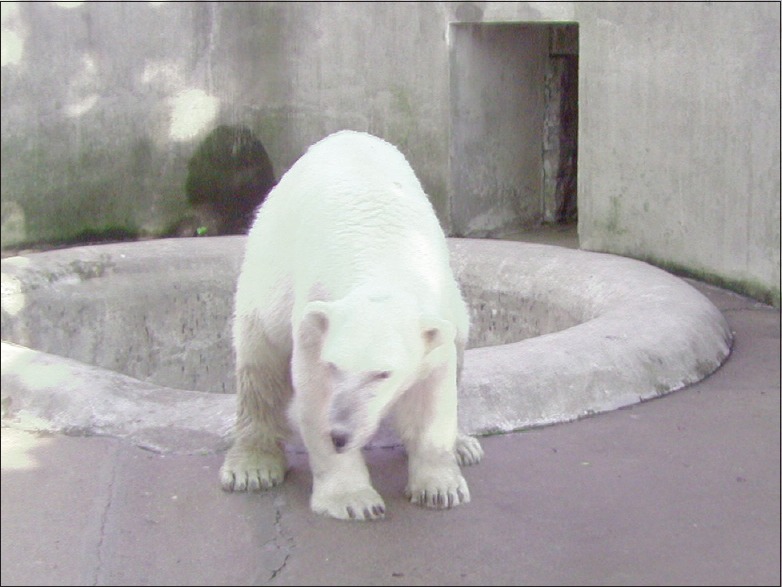
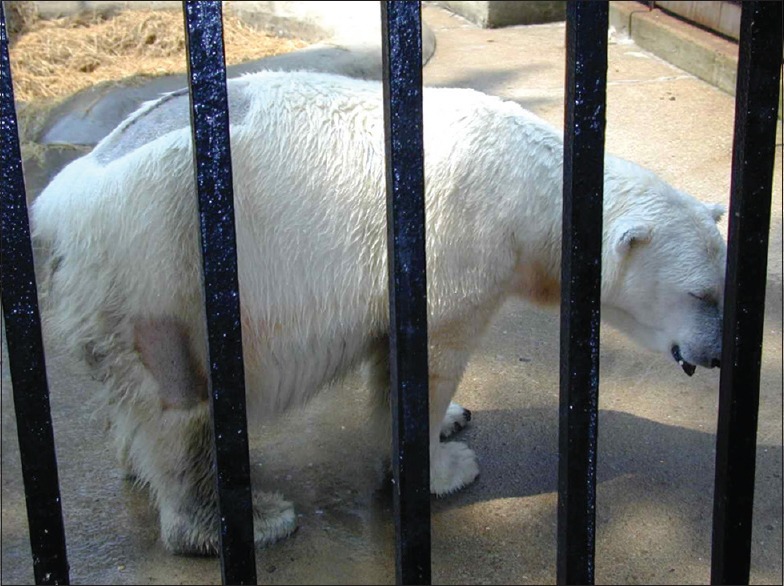
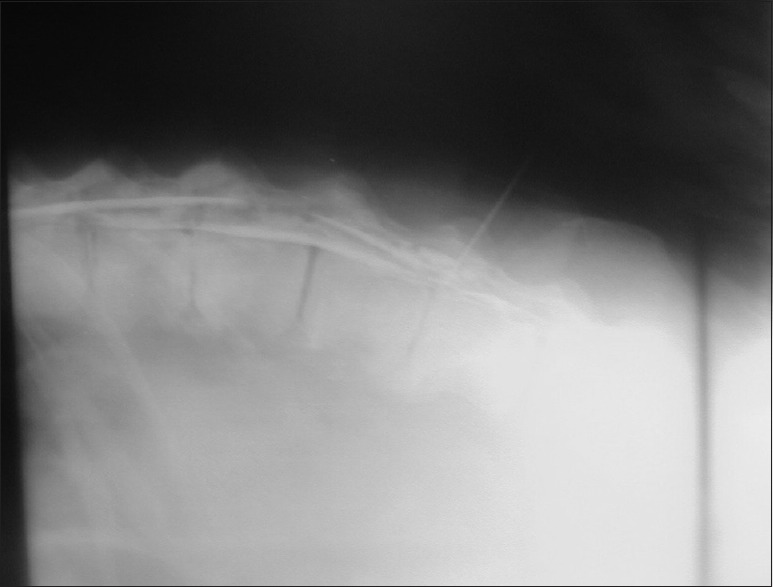
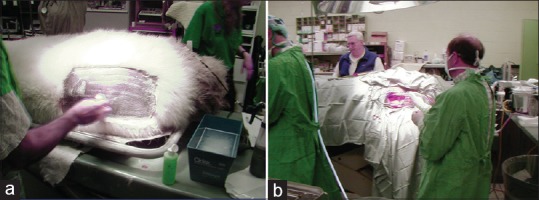
A 24-year-old female polar bear residing at the zoo was found to have decreased motor function in her hind legs. Diagnostic myelography performed at the L7/S1 level demonstrated lumbar stenosis at L5/6 for which a laminectomy was performed. Postoperatively, she returned to premorbid functional level, with no apparent associated adverse sequelae.
To our knowledge, this is the first reported case of spine surgery in a polar bear and demonstrates that neurosurgical diagnostic and operative techniques developed for humans can also be applied to large mammals with successful results.
圈养动物往往比野生同类活得更长,因此容易出现与年龄相关的退行性损伤。在此,我们报告一例成年雌性北极熊出现症状性腰椎管狭窄的病例。关于大型哺乳动物脊柱手术的文献较少,必须考虑人类与其他脊椎动物之间的解剖差异。
一只生活在动物园的24岁雌性北极熊被发现后腿运动功能减退。在L7/S1水平进行的诊断性脊髓造影显示L5/6水平存在腰椎管狭窄,并为此实施了椎板切除术。术后,它恢复到病前的功能水平,没有明显的相关不良后遗症。
据我们所知,这是首次报道的北极熊脊柱手术病例,表明为人类开发的神经外科诊断和手术技术也可应用于大型哺乳动物并取得成功结果。