Department of Laboratory Medicine, Faculty of Medicine, University of Debrecen, 98 Nagyerdei krt., Debrecen 4032, Hungary.
Department of Physiology, Faculty of Medicine, University of Debrecen, 98 Nagyerdei krt., Debrecen 4032, Hungary.
Biomed Res Int. 2017;2017:9795271. doi: 10.1155/2017/9795271. Epub 2017 Jun 7.
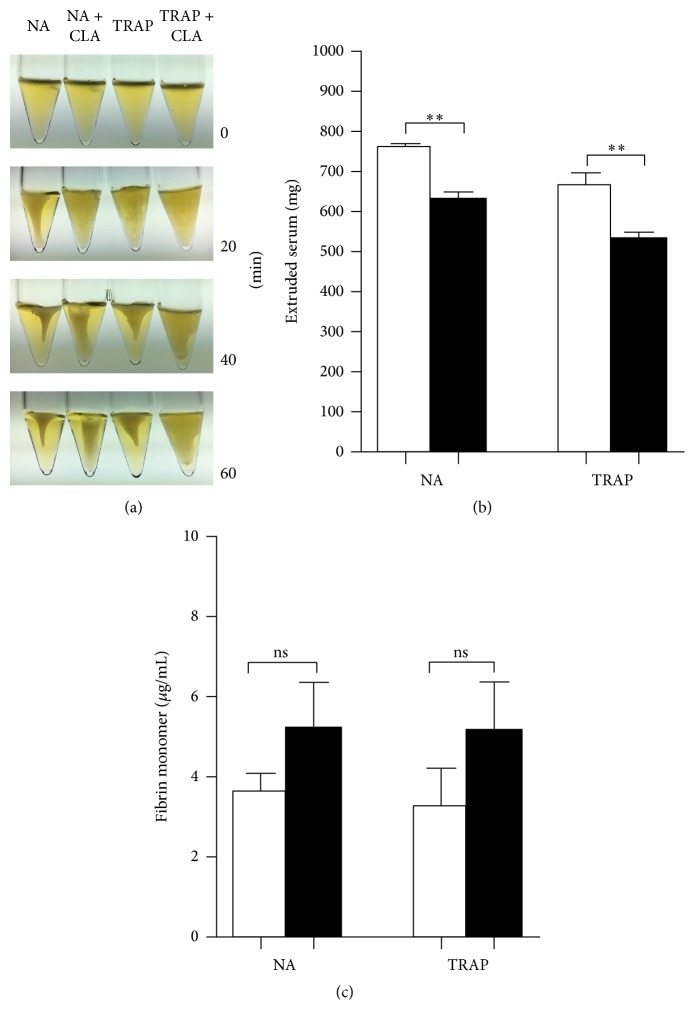
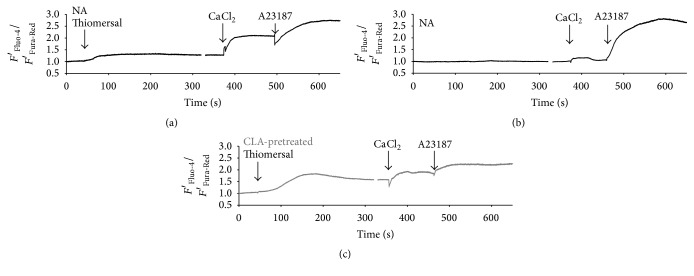
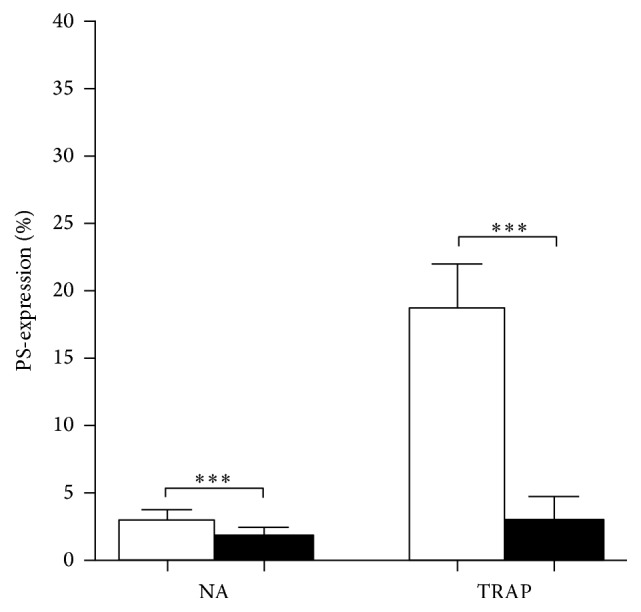
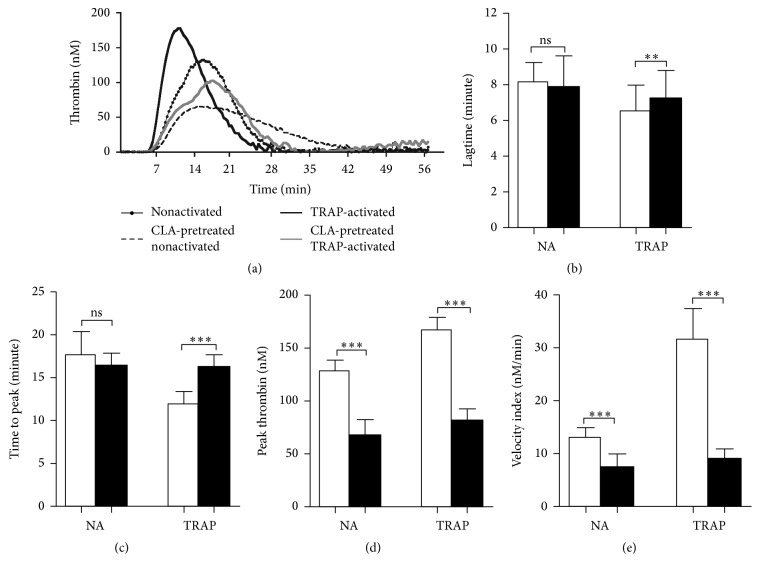
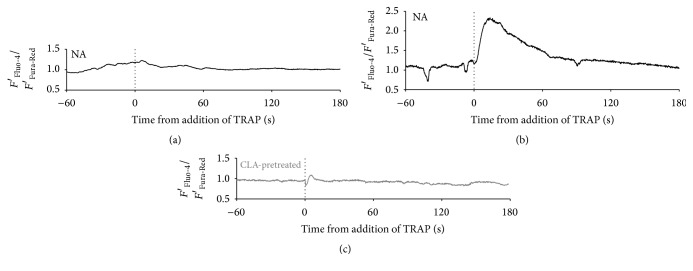
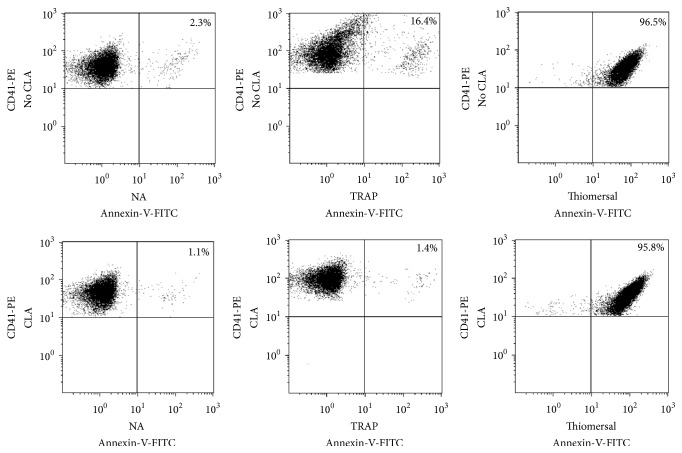
The aim of this study was to investigate the effect of the serine/threonine protein phosphatase inhibitor, calyculin-A (CLA), on clot formation and on the procoagulant activity of human platelets. Platelet-rich plasma (PRP) samples were preincubated with buffer or CLA and subsequently platelets were activated by the protease-activated receptor 1 (PAR-1) activator, thrombin receptor activating peptide (TRAP). Clot retraction was detected by observing clot morphology up to 1 hour, phosphatidylserine- (PS-) expression was studied by flow cytometry, and thrombin generation was measured by a fluorimetric assay. For the intracellular Ca assay, platelets were loaded with calcium-indicator dyes and the measurements were carried out using a ratiometric method with real-time confocal microscopy. CLA preincubation inhibited clot retraction, PS-expression, and thrombin formation. TRAP activation elicited Ca response and PS-expression in a subset of platelets. The activated PRP displayed significantly faster and enhanced thrombin generation compared to nonactivated samples. CLA pretreatment abrogated PS-exposure and clot retraction also in TRAP-activated samples. As a consequence of the inhibitory effect on calcium elevation and PS-expression, CLA significantly downregulated thrombin generation in PRP. Our results show that CLA pretreatment may be a useful tool to investigate platelet activation mechanisms that contribute to clot formation and thrombin generation.
本研究旨在探讨丝氨酸/苏氨酸蛋白磷酸酶抑制剂 calyculin-A(CLA)对血栓形成和人血小板促凝活性的影响。富血小板血浆(PRP)样本用缓冲液或 CLA 预先孵育,然后通过蛋白酶激活受体 1(PAR-1)激活剂血栓素受体激活肽(TRAP)激活血小板。通过观察高达 1 小时的血栓形态来检测血栓收缩,通过流式细胞术研究血小板磷脂酰丝氨酸(PS)表达,通过荧光测定法测量凝血酶生成。对于细胞内 Ca 测定,用钙指示剂染料加载血小板,并使用实时共焦显微镜的比率法进行测量。CLA 预处理抑制血栓收缩、PS 表达和凝血酶形成。TRAP 激活在血小板的一部分中引发 Ca 反应和 PS 表达。与非激活样品相比,激活的 PRP 显示出明显更快和增强的凝血酶生成。CLA 预处理还可消除 TRAP 激活样品中的 PS 暴露和血栓收缩。由于对钙升高和 PS 表达的抑制作用,CLA 显著下调了 PRP 中的凝血酶生成。我们的结果表明,CLA 预处理可能是研究有助于血栓形成和凝血酶生成的血小板激活机制的有用工具。