• 文献检索
  • 文档翻译
  • 深度研究
  • 学术资讯
  • Suppr Zotero 插件Zotero 插件
  • 邀请有礼
  • 套餐&价格
  • 历史记录
应用&插件
Suppr Zotero 插件Zotero 插件浏览器插件Mac 客户端Windows 客户端微信小程序
定价
高级版会员购买积分包购买API积分包
服务
文献检索文档翻译深度研究API 文档MCP 服务
关于我们
关于 Suppr公司介绍联系我们用户协议隐私条款
关注我们

Suppr 超能文献

核心技术专利:CN118964589B侵权必究
粤ICP备2023148730 号-1Suppr @ 2026

文献检索

告别复杂PubMed语法,用中文像聊天一样搜索,搜遍4000万医学文献。AI智能推荐,让科研检索更轻松。

立即免费搜索

文件翻译

保留排版,准确专业,支持PDF/Word/PPT等文件格式,支持 12+语言互译。

免费翻译文档

深度研究

AI帮你快速写综述,25分钟生成高质量综述,智能提取关键信息,辅助科研写作。

立即免费体验

基于逆运动学和自整定模糊PID的全驱动自主水下航行器轨迹跟踪与稳定控制

Trajectory following and stabilization control of fully actuated AUV using inverse kinematics and self-tuning fuzzy PID.

作者信息

Hammad Mohanad M, Elshenawy Ahmed K, El Singaby M I

机构信息

Electrical and Control Engineering, Arab Academy for Science, Technology and Maritime Transport, Alexandria, Egypt.

出版信息

PLoS One. 2017 Jul 6;12(7):e0179611. doi: 10.1371/journal.pone.0179611. eCollection 2017.

DOI:10.1371/journal.pone.0179611
PMID:28683071
原文链接:https://pmc.ncbi.nlm.nih.gov/articles/PMC5500310/
Abstract

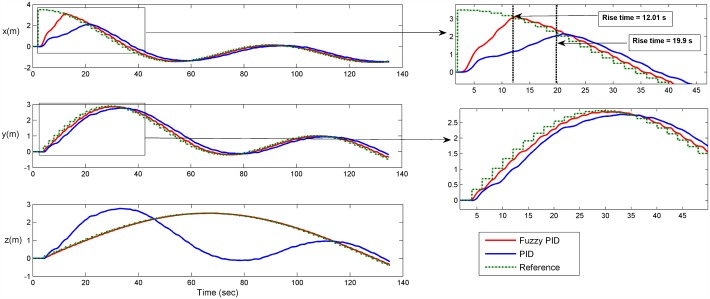
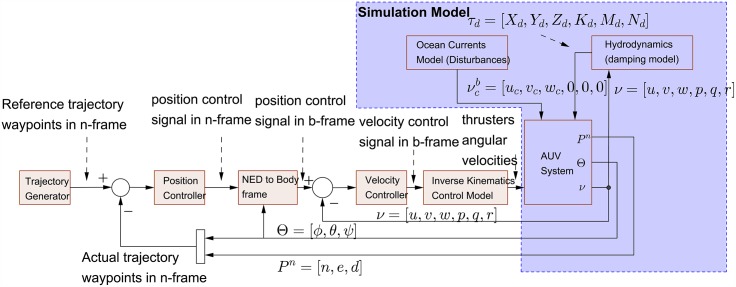
In this work a design for self-tuning non-linear Fuzzy Proportional Integral Derivative (FPID) controller is presented to control position and speed of Multiple Input Multiple Output (MIMO) fully-actuated Autonomous Underwater Vehicles (AUV) to follow desired trajectories. Non-linearity that results from the hydrodynamics and the coupled AUV dynamics makes the design of a stable controller a very difficult task. In this study, the control scheme in a simulation environment is validated using dynamic and kinematic equations for the AUV model and hydrodynamic damping equations. An AUV configuration with eight thrusters and an inverse kinematic model from a previous work is utilized in the simulation. In the proposed controller, Mamdani fuzzy rules are used to tune the parameters of the PID. Nonlinear fuzzy Gaussian membership functions are selected to give better performance and response in the non-linear system. A control architecture with two feedback loops is designed such that the inner loop is for velocity control and outer loop is for position control. Several test scenarios are executed to validate the controller performance including different complex trajectories with and without injection of ocean current disturbances. A comparison between the proposed FPID controller and the conventional PID controller is studied and shows that the FPID controller has a faster response to the reference signal and more stable behavior in a disturbed non-linear environment.

摘要

在这项工作中,提出了一种自整定非线性模糊比例积分微分(FPID)控制器的设计,用于控制多输入多输出(MIMO)全驱动自主水下航行器(AUV)的位置和速度,使其跟踪期望轨迹。水动力和耦合的AUV动力学所导致的非线性使得设计一个稳定的控制器成为一项非常困难的任务。在本研究中,使用AUV模型的动力学和运动学方程以及水动力阻尼方程,在仿真环境中验证了控制方案。在仿真中采用了具有八个推进器的AUV配置和先前工作中的逆运动学模型。在所提出的控制器中,使用Mamdani模糊规则来调整PID的参数。选择非线性模糊高斯隶属函数,以便在非线性系统中获得更好的性能和响应。设计了一种具有两个反馈回路的控制架构,使得内环用于速度控制,外环用于位置控制。执行了几个测试场景来验证控制器性能,包括有和没有注入洋流干扰的不同复杂轨迹。研究了所提出的FPID控制器与传统PID控制器之间的比较,结果表明,FPID控制器对参考信号的响应更快,并且在受干扰的非线性环境中具有更稳定的行为。
https://cdn.ncbi.nlm.nih.gov/pmc/blobs/9ba4/5500310/f7beac49ae02/pone.0179611.g030.jpg
https://cdn.ncbi.nlm.nih.gov/pmc/blobs/9ba4/5500310/5f5c870e74e7/pone.0179611.g001.jpg
https://cdn.ncbi.nlm.nih.gov/pmc/blobs/9ba4/5500310/1d6659ca83fb/pone.0179611.g002.jpg
https://cdn.ncbi.nlm.nih.gov/pmc/blobs/9ba4/5500310/6ea20dd445ae/pone.0179611.g003.jpg
https://cdn.ncbi.nlm.nih.gov/pmc/blobs/9ba4/5500310/c49d1581b8c6/pone.0179611.g004.jpg
https://cdn.ncbi.nlm.nih.gov/pmc/blobs/9ba4/5500310/895b6db2880f/pone.0179611.g005.jpg
https://cdn.ncbi.nlm.nih.gov/pmc/blobs/9ba4/5500310/42f084e90f97/pone.0179611.g006.jpg
https://cdn.ncbi.nlm.nih.gov/pmc/blobs/9ba4/5500310/06b394b93cd7/pone.0179611.g007.jpg
https://cdn.ncbi.nlm.nih.gov/pmc/blobs/9ba4/5500310/ee606fb3b873/pone.0179611.g008.jpg
https://cdn.ncbi.nlm.nih.gov/pmc/blobs/9ba4/5500310/5ba021806e43/pone.0179611.g009.jpg
https://cdn.ncbi.nlm.nih.gov/pmc/blobs/9ba4/5500310/024edf9098c9/pone.0179611.g010.jpg
https://cdn.ncbi.nlm.nih.gov/pmc/blobs/9ba4/5500310/39f765cdcbcb/pone.0179611.g011.jpg
https://cdn.ncbi.nlm.nih.gov/pmc/blobs/9ba4/5500310/b46d13efa7a1/pone.0179611.g012.jpg
https://cdn.ncbi.nlm.nih.gov/pmc/blobs/9ba4/5500310/c21375b76258/pone.0179611.g013.jpg
https://cdn.ncbi.nlm.nih.gov/pmc/blobs/9ba4/5500310/ab789bb039b7/pone.0179611.g014.jpg
https://cdn.ncbi.nlm.nih.gov/pmc/blobs/9ba4/5500310/9a7f86b5c3a1/pone.0179611.g015.jpg
https://cdn.ncbi.nlm.nih.gov/pmc/blobs/9ba4/5500310/38acc532939d/pone.0179611.g016.jpg
https://cdn.ncbi.nlm.nih.gov/pmc/blobs/9ba4/5500310/c08b788125b9/pone.0179611.g017.jpg
https://cdn.ncbi.nlm.nih.gov/pmc/blobs/9ba4/5500310/5bf590424bee/pone.0179611.g018.jpg
https://cdn.ncbi.nlm.nih.gov/pmc/blobs/9ba4/5500310/c655c03618b9/pone.0179611.g019.jpg
https://cdn.ncbi.nlm.nih.gov/pmc/blobs/9ba4/5500310/e46dfac49215/pone.0179611.g020.jpg
https://cdn.ncbi.nlm.nih.gov/pmc/blobs/9ba4/5500310/20aefc9d026d/pone.0179611.g021.jpg
https://cdn.ncbi.nlm.nih.gov/pmc/blobs/9ba4/5500310/87ba9b09afa2/pone.0179611.g022.jpg
https://cdn.ncbi.nlm.nih.gov/pmc/blobs/9ba4/5500310/d15d557874f3/pone.0179611.g023.jpg
https://cdn.ncbi.nlm.nih.gov/pmc/blobs/9ba4/5500310/820019845b8c/pone.0179611.g024.jpg
https://cdn.ncbi.nlm.nih.gov/pmc/blobs/9ba4/5500310/ac44c3e4db0b/pone.0179611.g025.jpg
https://cdn.ncbi.nlm.nih.gov/pmc/blobs/9ba4/5500310/04a722d6b302/pone.0179611.g026.jpg
https://cdn.ncbi.nlm.nih.gov/pmc/blobs/9ba4/5500310/74068201fc48/pone.0179611.g027.jpg
https://cdn.ncbi.nlm.nih.gov/pmc/blobs/9ba4/5500310/bdb61f593a32/pone.0179611.g028.jpg
https://cdn.ncbi.nlm.nih.gov/pmc/blobs/9ba4/5500310/a00c2558c8ef/pone.0179611.g029.jpg
https://cdn.ncbi.nlm.nih.gov/pmc/blobs/9ba4/5500310/f7beac49ae02/pone.0179611.g030.jpg
https://cdn.ncbi.nlm.nih.gov/pmc/blobs/9ba4/5500310/5f5c870e74e7/pone.0179611.g001.jpg
https://cdn.ncbi.nlm.nih.gov/pmc/blobs/9ba4/5500310/1d6659ca83fb/pone.0179611.g002.jpg
https://cdn.ncbi.nlm.nih.gov/pmc/blobs/9ba4/5500310/6ea20dd445ae/pone.0179611.g003.jpg
https://cdn.ncbi.nlm.nih.gov/pmc/blobs/9ba4/5500310/c49d1581b8c6/pone.0179611.g004.jpg
https://cdn.ncbi.nlm.nih.gov/pmc/blobs/9ba4/5500310/895b6db2880f/pone.0179611.g005.jpg
https://cdn.ncbi.nlm.nih.gov/pmc/blobs/9ba4/5500310/42f084e90f97/pone.0179611.g006.jpg
https://cdn.ncbi.nlm.nih.gov/pmc/blobs/9ba4/5500310/06b394b93cd7/pone.0179611.g007.jpg
https://cdn.ncbi.nlm.nih.gov/pmc/blobs/9ba4/5500310/ee606fb3b873/pone.0179611.g008.jpg
https://cdn.ncbi.nlm.nih.gov/pmc/blobs/9ba4/5500310/5ba021806e43/pone.0179611.g009.jpg
https://cdn.ncbi.nlm.nih.gov/pmc/blobs/9ba4/5500310/024edf9098c9/pone.0179611.g010.jpg
https://cdn.ncbi.nlm.nih.gov/pmc/blobs/9ba4/5500310/39f765cdcbcb/pone.0179611.g011.jpg
https://cdn.ncbi.nlm.nih.gov/pmc/blobs/9ba4/5500310/b46d13efa7a1/pone.0179611.g012.jpg
https://cdn.ncbi.nlm.nih.gov/pmc/blobs/9ba4/5500310/c21375b76258/pone.0179611.g013.jpg
https://cdn.ncbi.nlm.nih.gov/pmc/blobs/9ba4/5500310/ab789bb039b7/pone.0179611.g014.jpg
https://cdn.ncbi.nlm.nih.gov/pmc/blobs/9ba4/5500310/9a7f86b5c3a1/pone.0179611.g015.jpg
https://cdn.ncbi.nlm.nih.gov/pmc/blobs/9ba4/5500310/38acc532939d/pone.0179611.g016.jpg
https://cdn.ncbi.nlm.nih.gov/pmc/blobs/9ba4/5500310/c08b788125b9/pone.0179611.g017.jpg
https://cdn.ncbi.nlm.nih.gov/pmc/blobs/9ba4/5500310/5bf590424bee/pone.0179611.g018.jpg
https://cdn.ncbi.nlm.nih.gov/pmc/blobs/9ba4/5500310/c655c03618b9/pone.0179611.g019.jpg
https://cdn.ncbi.nlm.nih.gov/pmc/blobs/9ba4/5500310/e46dfac49215/pone.0179611.g020.jpg
https://cdn.ncbi.nlm.nih.gov/pmc/blobs/9ba4/5500310/20aefc9d026d/pone.0179611.g021.jpg
https://cdn.ncbi.nlm.nih.gov/pmc/blobs/9ba4/5500310/87ba9b09afa2/pone.0179611.g022.jpg
https://cdn.ncbi.nlm.nih.gov/pmc/blobs/9ba4/5500310/d15d557874f3/pone.0179611.g023.jpg
https://cdn.ncbi.nlm.nih.gov/pmc/blobs/9ba4/5500310/820019845b8c/pone.0179611.g024.jpg
https://cdn.ncbi.nlm.nih.gov/pmc/blobs/9ba4/5500310/ac44c3e4db0b/pone.0179611.g025.jpg
https://cdn.ncbi.nlm.nih.gov/pmc/blobs/9ba4/5500310/04a722d6b302/pone.0179611.g026.jpg
https://cdn.ncbi.nlm.nih.gov/pmc/blobs/9ba4/5500310/74068201fc48/pone.0179611.g027.jpg
https://cdn.ncbi.nlm.nih.gov/pmc/blobs/9ba4/5500310/bdb61f593a32/pone.0179611.g028.jpg
https://cdn.ncbi.nlm.nih.gov/pmc/blobs/9ba4/5500310/a00c2558c8ef/pone.0179611.g029.jpg
https://cdn.ncbi.nlm.nih.gov/pmc/blobs/9ba4/5500310/f7beac49ae02/pone.0179611.g030.jpg

相似文献

1
Trajectory following and stabilization control of fully actuated AUV using inverse kinematics and self-tuning fuzzy PID.基于逆运动学和自整定模糊PID的全驱动自主水下航行器轨迹跟踪与稳定控制
PLoS One. 2017 Jul 6;12(7):e0179611. doi: 10.1371/journal.pone.0179611. eCollection 2017.
2
A novel interval type-2 fractional order fuzzy PID controller: Design, performance evaluation, and its optimal time domain tuning.一种新型区间二型分数阶模糊PID控制器:设计、性能评估及其最优时域整定
ISA Trans. 2017 May;68:251-275. doi: 10.1016/j.isatra.2017.03.022. Epub 2017 Mar 31.
3
Performance Analysis of Fuzzy-PID Controller for Blood Glucose Regulation in Type-1 Diabetic Patients.1型糖尿病患者血糖调节的模糊PID控制器性能分析
J Med Syst. 2016 Dec;40(12):254. doi: 10.1007/s10916-016-0602-6. Epub 2016 Oct 6.
4
Fuzzy auto-tuning PID control of multiple joint robot driven by ultrasonic motors.基于超声电机驱动的多关节机器人模糊自整定PID控制
Ultrasonics. 2007 Nov;46(4):303-12. doi: 10.1016/j.ultras.2007.04.001. Epub 2007 Apr 21.
5
Analysis of direct action fuzzy PID controller structures.直接作用模糊PID控制器结构分析
IEEE Trans Syst Man Cybern B Cybern. 1999;29(3):371-88. doi: 10.1109/3477.764871.
6
Nonlinear control of an activated sludge aeration process: use of fuzzy techniques for tuning PID controllers.活性污泥曝气过程的非线性控制:运用模糊技术整定PID控制器
ISA Trans. 1999;38(3):231-41. doi: 10.1016/s0019-0578(99)00018-x.
7
Comparative study of a learning fuzzy PID controller and a self-tuning controller.学习型模糊PID控制器与自整定控制器的比较研究
ISA Trans. 2001;40(3):245-53. doi: 10.1016/s0019-0578(00)00056-2.
8
An optimal interval type-2 fuzzy logic control based closed-loop drug administration to regulate the mean arterial blood pressure.基于最优区间型 2 模糊逻辑控制的闭环给药调节平均动脉血压。
Comput Methods Programs Biomed. 2020 Mar;185:105167. doi: 10.1016/j.cmpb.2019.105167. Epub 2019 Oct 31.
9
Design of interval type-2 fuzzy precompensated PID controller applied to two-DOF robotic manipulator with variable payload.应用于具有可变负载的两自由度机器人操纵器的区间二型模糊预补偿PID控制器设计
ISA Trans. 2019 Jun;89:169-185. doi: 10.1016/j.isatra.2018.12.030. Epub 2018 Dec 27.
10
Mathematical analysis of a simplified general type-2 fuzzy PID controller.简化通用型 2 型模糊 PID 控制器的数学分析。
Math Biosci Eng. 2020 Nov 12;17(6):7994-8036. doi: 10.3934/mbe.2020406.

引用本文的文献

1
Attitude Stabilization Control of Autonomous Underwater Vehicle Based on Decoupling Algorithm and PSO-ADRC.基于解耦算法和粒子群优化自抗扰控制的自主水下航行器姿态稳定控制
Front Bioeng Biotechnol. 2022 Feb 28;10:843020. doi: 10.3389/fbioe.2022.843020. eCollection 2022.
2
New Vectorial Propulsion System and Trajectory Control Designs for Improved AUV Mission Autonomy.用于提高自主水下航行器任务自主性的新型矢量推进系统与轨迹控制设计
Sensors (Basel). 2018 Apr 17;18(4):1241. doi: 10.3390/s18041241.

本文引用的文献

1
Systematic design of membership functions for fuzzy-logic control: A case study on one-stage partial nitritation/anammox treatment systems.模糊逻辑控制的隶属函数系统设计:单级部分亚硝化/厌氧氨氧化处理系统的案例研究。
Water Res. 2016 Oct 1;102:346-361. doi: 10.1016/j.watres.2016.06.047. Epub 2016 Jun 25.